
How to Improve Dissertation Structure for Better Academic Communication
The purpose of this guide is to offer eight practical tips in order to improve dissertation structure for better academic communication. Whether you are planning the purpose of each chapter or need dissertation writing help, these strategies will enable you to transform or convert your thesis into a coherent and compelling academic document.

You may have spent months researching, analysing data, and drafting chapters, only to read it back and sense that something is not quite right. Arguments feel disconnected. Ideas do not seem to build on one another. When a dissertation lacks structural clarity, even the most rigorous research can fail to communicate its full value to the examiner. Haritay conducted research that indicates 74% of students experience significant stress during their academic writing. Structural uncertainty is a key contributor to this. This guide outlines some practical principles you can use to improve dissertation structure for better academic communication. Because structure can undermine even the strongest research. Many students choose to seek dissertation writing help to ensure their writing reaches its full potential. This guide will help you go through the process step by step, with 8 simple tips that may help you make your document an interesting academic narrative.
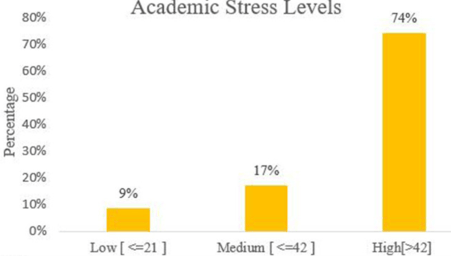
Source: Haritay
Core Ideas at a Glance
- Dissertation structure is the foundation of effective academic communication. Without it, even strong research fails to make its full impact.
- Each chapter has a distinct and clearly defined purpose that must be understood before writing begins.
- Clarity, coherence, and clarity are the three qualities examiners look for in a well-structured dissertation.
Why Dissertation Structure Matters for Academic Communication
Dissertation structure is the logical organisation of chapters and arguments within your thesis. Think of it as the architectural framework on which your entire research rests. You can easily follow your research process from problem identification to the presentation of the solution through a clear structure that guides the reader. It facilitates academic communication and critical thinking and gives the examiner confidence in the rigour of your work.
8 Tips to Improve Your Dissertation Structure
Tip 1: Understand the Purpose of Each Chapter
Before structuring your dissertation, it is essential to understand the role each chapter plays in the overall argument. The introduction provides context. The literature review establishes the academic foundation for your research. The methodology chapter explains your research approach and design. The findings chapter presents your results. The discussion interprets those results in relation to your research question. And the conclusion ties the entire study together and highlights its contribution to the field.
Tip 2: Create a Comprehensive Outline Before You Write
Think of your dissertation outline as a roadmap. It allows you to visualize the overall structure and the logical sequence of ideas before you begin writing. For each chapter, identify key sections or sub-sections, and arrange ideas logically in a coherent order. A thorough outline prevents topic drift, strengthens coherence, and makes the writing process significantly more efficient.
Tip 3: Write a Strong Introduction and Thesis Statement
Your introduction must do three things clearly: it must establish the research problem, justify why it is worth investigating, and present a well-defined thesis statement that signals to the reader the entire dissertation. It should provide the reader with a concise overview of what each subsequent chapter will cover. A strong introduction sets the academic tone and prepares the examiner for what follows.
Tip 4: Ensure Logical Flow Between Chapters
Each chapter of your dissertation should connect seamlessly to the next, functioning collectively as a single, unified argument rather than a series of isolated sections. Incorporate transition sentences at the beginning of each chapter that link it to the preceding chapter and signal what the reader can expect next. Logical flow is one of the defining characteristics of any well-structured dissertation. And comparatively, this is one of the first things that an examiner will notice. The Academic Papers UK’s dissertation editing help ensures logical consistency throughout your work. It also identifies gaps in argumentation, strengthens transitions, and guarantees that your research narrative flows clearly from beginning to end.
Tip 5: Use Clear and Consistent Headings
Headings and subheadings are the navigational signposts of your dissertation. They guide the reader through your document. It makes a scannable professional structure. Clear and concise hierarchy of headings, breaking up large text blocks, and an overall consistent style help the reader to identify any section of interest in your dissertation at first glance.
Tip 6: Focus on Paragraph Coherence
Each paragraph should be built around a single, clearly stated main idea. Open with a topic sentence that introduces the paragraph’s argument, follow with the supporting evidence or analysis, and close with a sentence that connects back to the broader chapter argument. Using transitional words and phrases helps sentences flow together logically. Coherent paragraphs are the building blocks of a well-structured dissertation.
Tip 7: Write a Conclusion that Ties Everything Together
Your conclusion should do more than simply summarise the dissertation. It must consolidate your main arguments, directly answer the research question, and discuss the broader implications of your findings. Address the “so what?” factor. Explain why your research matters and what it contributes to the field, and what future research it opens up.
Tip 8: Seek Feedback and Revise
It is actually very easy to miss the fact that there are some problems in your writing structure, even when you plan carefully. Seeking feedback from a peer, colleague, or supervisor provides an external perspective on both the structure and clarity of your argument. Many students also benefit from professional dissertation proofreading help, where an experienced academic editor assesses structure and language, as well as the overall logical progression of the work.
Conclusion
It is extremely important to have the structure of your dissertation improved for the sake of your academic success. The eight tips outlined in this guide address the most common structural challenges faced by postgraduate students and provide a clear, actionable path toward a more coherent and examiner-ready dissertation.
If you find the structural process challenging, or simply want expert guidance, professional dissertation help london available. The Academic Papers UK ensures your work is thoroughly proofread and refined to the highest academic standard.
Frequently Asked Questions (FAQs)
Q: How does a good dissertation structure improve academic communication?
A well-structured dissertation provides a logical framework for the reader, enabling a clear understanding of the research narrative, the evidence presented, and the conclusions drawn. Structure directly determines how effectively the argument communicates to the examiner.
Q: What is the difference between proofreading and editing a dissertation?
Proofreading addresses surface-level errors such as spelling, grammar, and punctuation. Editing is a more detailed and substantial process that improves clarity, flow, structure, and academic tone.
References
Haritay, S., Angolkar, M., Koparde, V., Oswal, D. and Carvalho, A., 2025. Academic stress in adolescents: findings from a school-based study in Belagavi district. Frontiers in Public Health, 13, p.1631136.
Popular on OTW Right Now!




About The Author

Gagan Bhangu
Founder of otechworld.com and managing editor. He is a tech geek, web-developer, and blogger. He holds a master's degree in computer applications and making money online since 2015.