
How to Actually Tell If Your VPN Is Keeping Your Data Private
Every VPN on the market says roughly the same thing. Military-grade encryption. Total privacy. Your data, protected. The language is confident, the promises are broad, and none of it tells you very much — because a company saying it protects your privacy is not the same as a company that actually does.
The difficult part is that sometimes you don’t know how to check. You start the VPN, a green light appears, and you believe it’s functioning in stealth mode. For most VPN providers,s it is justifiable. For others, though, it’s not. Most importantly, their marketing jargon will not help you.
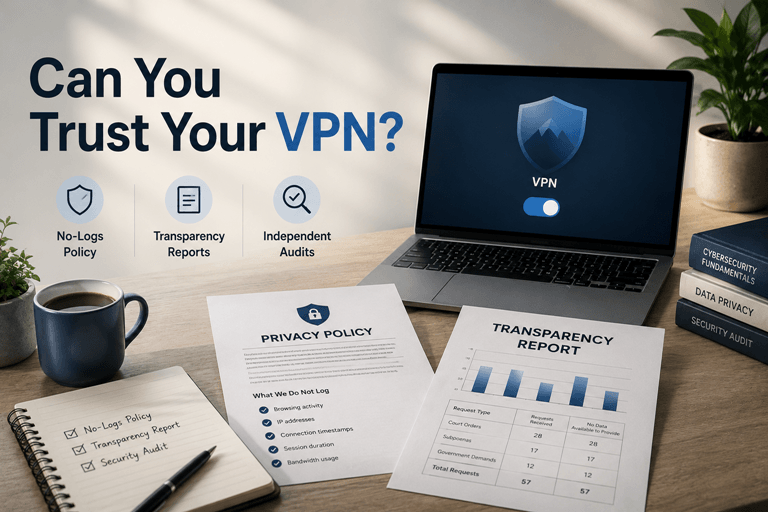
There are a few things, however, that you can still check to see if it is real. Not promises nor fancy feature lists. True proof is needed. The following should be examined:
The First Question: What Does This Company Actually Record?
Using a VPN makes the internet traffic pass through the servers of the VPN provider. This can include the sites you visit, connection lengths, device information, browsing sessions, etc., which the provider can use to track your activity. It’s important to consider whether they store this data when selecting a VPN.
This is what a no-logs policy addresses. A no-logs VPN does not store records of your browsing activity or connection data. No timestamps, no IP addresses, no session logs. If a government agency or legal authority came asking, there would be nothing to hand over — not because the company refused, but because the data simply doesn’t exist.
But a lot of businesses nowadays employ “no logs” as a catch-cry. Some services continue to maintain connection information, such as the date and duration of your Internet connection, or where you were logging on from. All that information remains relevant. Patterns of behavior can be uncovered with metadata. In some instances, it can even help identify users without ever seeing content being browsed. Hence, if you read a privacy policy, go through the fine print. Beware of general statements.
If you’re seeking some useful information, ask for a privacy policy that explicitly states that they don’t record your browsing history, IP address, session length, or time of visit. But a line such as “we care about your privacy” isn’t really much to go on. One provides proof,f and the other provides marketing words.
The Second Question: What Happened When Someone Asked for User Data?
No-log policy is an explanation of what a company will do. But as the company was put under pressure, a transparency report reveals what actually happened.
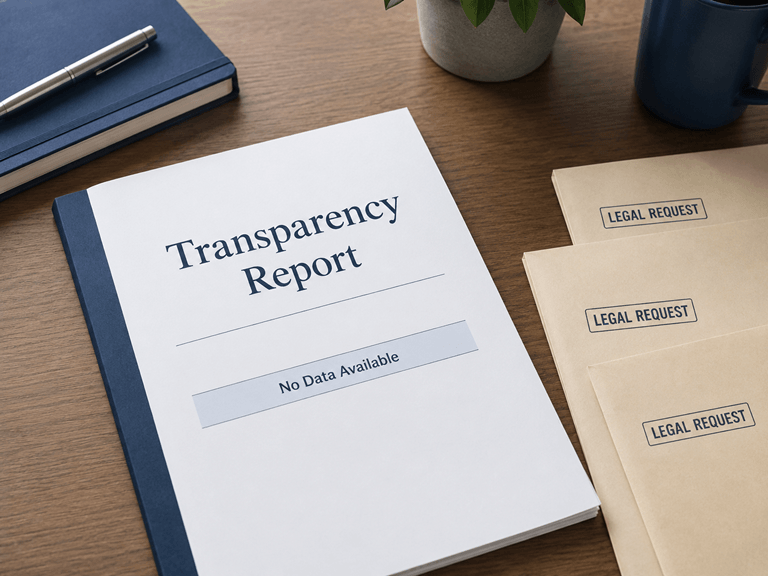
Many VPN providers publish a VPN transparency report — a public record of legal requests they’ve received from governments, law enforcement agencies, or courts, and how they responded to each one. Think of it as the paper trail that shows whether the policy held up under real pressure.
Reports that are genuine and contain true data should be sought. Good reports can show how many requests were made to the company, the type of request, and the result. They can include court orders, subpoenas, or government requests,s for example. Most important of all, make sure the provider states the phrase, “no data available.” If a company gets lots of requests and shares nothing, then that’s pretty good evidence that they have a true no-logs system.
But you need to be wary of those providers that don’t even maintain a transparency report. Avoid reports that include only general statements. A statement such as “we processed requests, in accordance with policy,” provides very little information. It’s more akin to promotion and not transparency.
Some companies release reports regularly, ranging from a few months to a few years. Others do so annually. It’s not so important to get the timing right as it is the detail and history. A provider with a lot of public records has something genuine that you can check out. In comparison, a business that began last month merely provides another assurance.
The Third Question: Has Anyone Checked Their Work?
If you’ve found a VPN that has a solid no-logs policy, along with transparency reports, you know more than most. But there is still one more important step.
The VPN company makes the privacy policies and transparency reports. So, you are still using some of the company’s own language. That’s where external security audits come in handy.
A security audit is performed by an independent cybersecurity company analyzing the VPN provider’s systems. The aim is to establish if the provider keeps to its privacy commitments. Auditors verify whether there are any hidden logs on the servers or whether the provider is gathering data that is against the company’s policies. Once the review has been completed, both the review company and the VPN provider may produce a report, which is published publicly by the VPN provider.
Audits are not comprehensive and complete, for they can only capture a snapshot of the present. A company can pass an audit here today, and change in the future. But audits provide an extra level of trust. Without an audit history, it is more difficult to judge a provider than one with public outside expert feedback.
To compare VPNs, check for audits conducted by reputable cybersecurity firms. Both Cure53 and Leviathan Security has reviewed VPN providers. Additionally, see if the audit was for privacy, rather than just security.
What You’re Actually Looking For
Your objective is not to discover the most flashy advertising for a VPN. You need a provider that gives you facts and information to review. Check for transparent, honest figures in a transparency report, a detailed privacy policy with concrete assurances, and public audits by third parties.
In fact, since 2017, X-VPN has released logs of requests and responses for data. This is no guarantee of perfection. It does provide you with a public history, however, and one that you can actually prove. Most importantly, credible history is more valuable than just words.
Many individuals neglect to make these checks and opt for the first VPN they see online. That is understandable. A VPN, however, does manage your internet traffic and private activity. So, it ought to be the bare minimum to select one based on actual evidence.
Popular on OTW Right Now!




About The Author

Gagan Bhangu
Founder of otechworld.com and managing editor. He is a tech geek, web-developer, and blogger. He holds a master's degree in computer applications and making money online since 2015.