
Why Real Estate Agents Must Adopt Mobile Task Planners in 2025 and Beyond
Real estate agents spend their days in constant motion. They run around between one property displaying to the other, accept client calls on the road, and do negotiations on the spot. This is a high-stakes industry where success largely depends on the ability to pick up minute yet decisive details. One of the clients may complain that she does not like the lights in the kitchen, but likes the large yard. Or they might ask to get a follow-up on the availability of parking today at 11 AM. These micro insights will make or break a deal. However, human memory is not trustworthy, and the main details lose their importance in a span of 15 minutes after watching.
Conventional productivity tools just fail to fit this fact. Bulky CRMs cause the agents to complete long forms at the end of the day when they get down to work. Simple calendars will require typing by hand, time that can be used for actual selling. Splashing through the mess of listing 20 or more lists that are in motion are sticky notes, which appear and disappear. Industry statistics show that up to 50 percent of the working time of the agents is lost to administrative tediousness instead of earning their firms any income. Lapsed follow-ups destroy client confidence. Such inefficiencies are lethal in the modern cut-throat world, where 72 percent of consumers expect to receive a reply in the first hour.
A Shift Toward Voice-Driven Solutions for Field Agents
Mobile-first task planners now address these pain points head-on. These assistive technologies have voice input as a priority area to record thoughts without using hands. Agents can talk and drive between properties, and the system can organize the raw input into organized tasks. Each of them is linked to a particular resonance listing/customer to provide immediate context. Notifications are dispatched at the best time. Meetings are automatically synchronized with Google Calendar or Microsoft 365 and do not require additional work.
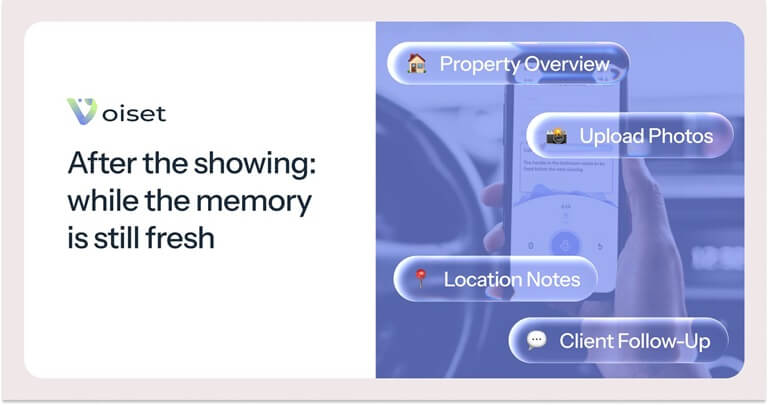
Voice input stands out as seven times faster than typing, locking in fresh details before they slip away. Consider Voiset for real estate agents. An agent finishes a viewing and dictates on the go, “Client seeks five percent off on 412 Maple Street unit. Call the owner tomorrow to confirm.” Instead, the platform creates the task instantly, connects it to the property record, and sets a reminder. No interference with the mad rhythm. No night search to rebuild broken memories.
Looking Ahead, Expectations Demand Even Greater Mobility
As we head into 2026, buyer and seller expectations will intensify further. There is also low housing inventory, forcing agents to deal with more listings with razor-thin margins to go wrong. It is a tendency to expect faster communication through applications and voice assistants, which clients demand more and more, as it reflects the tendencies of society in general. Increasingly, people are becoming mobile. Telecommuting erases office demarcations. Professionals would require tools that can be used anywhere, anytime, in a place with no screens and no keyboard. The real estate industry is at the forefront, and agents are playing the role of road warriors.
Forward-thinking agencies already see the benefits. Teams work together in real time, reducing the time and effort spent on miscommunication when sharing property contexts, when edits are made to the keys, repairs, or prices. Integrations feed clean information to current CRMs, which removes duplication of work. One of the leaders of the involved agencies reported that voice planners saved 40 percent of the coordination time in a team of 15 people. The individual agents state that they are closing two additional deals each month by not missing follow up promise. These profits compound in a market paying velocity and accuracy.
Real World Scenarios That Prove the Value
Picture a typical Thursday for a top producer. Five consecutive viewings have the mind of the agent buzzing. One customer notifies of a required bathroom door repair in advance of a visit by oneself. The other question is about local schools. One that requests a price concession is the third. Unless there is a mobile planner, these are amalgamated as evening falls. Using voice technology, all notes are played in their right place. Status updates are instantaneous. There are pings of preparation, such as confirming keys with the concierge.
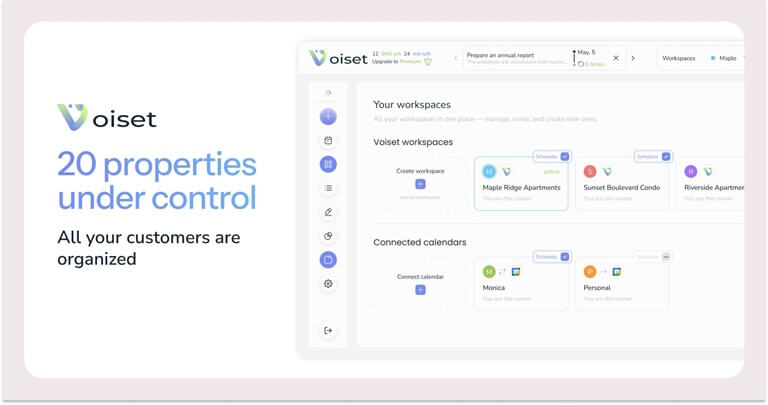
Even individual agents change their output. An end to the mental overload due to 50 tasks per day. Emphasis is laid on relationship building and negotiation. Agencies do not need to increase the headcount to scale operations because shared workspaces keep everyone in line on property pipelines.
The Competitive Edge Awaits Mobile First Adopters
Static desktop tools suited to past eras of office-bound work. The real estate needs of tomorrow require planners to be constructed in a way that they move continuously. Voice-driven systems save hours that are lost, increase response time, and protect all interactions with clients. Such adapting agents now place themselves before the curve. Any company that holds on to the old practices will simply become obsolete as mobile demands take center stage.
The industry stands at an inflection point. Embrace tools that match your lifestyle, and watch productivity soar. The future belongs to agents who plan as dynamically as they sell.
Popular on OTW Right Now!




About The Author

Gagan Bhangu
Founder of otechworld.com and managing editor. He is a tech geek, web-developer, and blogger. He holds a master's degree in computer applications and making money online since 2015.