
Unlock Higher Profits: Your Guide to a Successful Custom Engraved Bricks Fundraiser
Community organizers face a constant uphill battle when trying to secure funding for their schools, religious institutions, or local nonprofits. You pour countless hours into planning events and reaching out to supporters, only to be met with tight budgets and widespread donor fatigue. Retaining the supporters you already have is becoming harder every year.
This highlights a clear problem: traditional fundraising methods often fail to build long-term relationships. Furthermore, large-scale galas or silent auctions require significant upfront capital that many organizations simply do not have. You need a solution that bridges this gap.
A step-by-step brick fundraiser is a low-risk, highly profitable alternative. By allowing supporters to purchase a personalized marker for a new walkway, wall, or patio, you transform a standard financial transaction into a permanent physical legacy. This method effectively re-engages your community, requires very little initial investment, and provides a visible testament to the people who support your mission.
Step 1: Choose the Right Partner and Engraving Technology
One of the biggest anxieties organizers face when launching a new campaign is the fear of hidden upfront costs. Fortunately, a brick campaign requires minimal initial funding. You only purchase the bricks after your donors have already paid for them. However, the true success and permanent legacy of your project rely entirely on selecting the right manufacturing partner.
Not all engraving methods are created equal. Many traditional manufacturers still rely on sandblasting, a process that carves deeply into the brick and fills the void with paint or epoxy. Over time, exposure to rain, ice, and UV rays causes this paint to chip, peel, and fade. You do not want to spend your hard-earned funds replacing damaged bricks five years down the road.
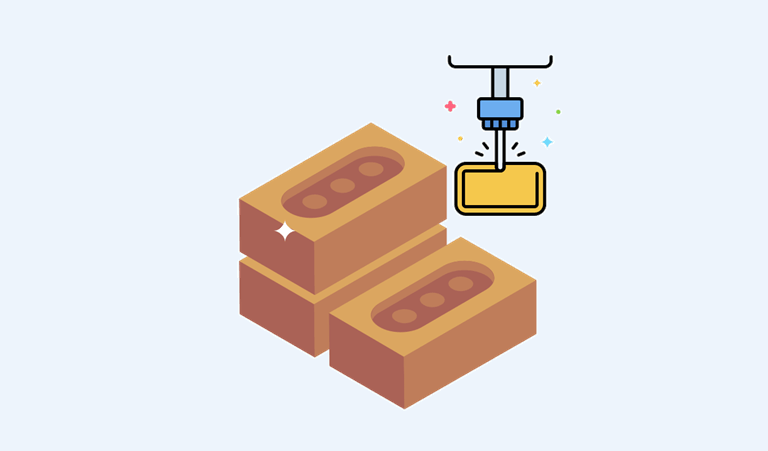
Instead, look for partners that use patented laser brick engraving technology. This method uses high-powered lasers to melt the brick’s clay into a dark, glass-like mark. Because the mark becomes part of the brick itself, it will never fade, peel, or wash away.
To maximize your campaign’s ROI and ensure your donor recognition stands the test of time, you need to use custom engraved bricks from a manufacturer that uses green technology and offers a lifetime warranty. This guarantees that your community’s legacy remains pristine for generations without requiring ongoing maintenance from your organization.
Step 2: Set Financial Goals and Pricing Tiers
You should set definite financial goals and plot your pricing policy before you declare your campaign. It is easy to compute your average profit margin. You just juxtapose the low wholesale price of the engraved bricks with the donation price that you are offering to your supporters.
By providing varying sizes, you can build up price levels. This will make sure that every member of your community will be able to join, both single families and big local companies. An individual donor will be well served with a standard 4×8 brick, whereas corporate sponsors or those making large gifts would be pleased with an 8×8 brick that offers a lot of space and visibility.
Here is an example of how you might structure your pricing tiers to maximize profit:
| Brick Size | Target Donor Segment | Wholesale Cost (Est.) | Suggested Donation Price | Estimated Profit Per Brick |
| 4×8 Brick | Individuals & Families | $20.00 | $100.00 | $80.00 |
| 8×8 Brick | Corporate Sponsors & Major Gifts | $35.00 | $250.00 | $215.00 |
You may even question whether these proposed prices will be paid by such donors. The evidence is overwhelming in favour of higher prices levels in the case of permanent visibility. It is a human tendency to leave a trace of their support. And when you make the brick as a permanent part of community history instead of a mere donation, the supporters are more than willing to pay what you ask.
Step 3: Organize Campaign Logistics and Order Tracking
Physical management of material and monitoring of individual donor requests can easily bog down one individual. To ensure the project continues, and the volunteers do not burn out, recommend that your board establish a specific committee of bricks. Assign distinct positions of marketing lead, financial tracker, and order manager. To create a sense of urgency among your donor base, you need to establish hard deadlines through which your sales window opens and closes.
The most detail-oriented step is that of capturing the donor information correctly. Misspelled names or improper formatting might result in unsatisfied fans and re-orders at a high price. Switch to the use of paper forms as soon as possible. Rather, employ web-based order forms that are directly connected to the site of your organization.
Digital forms make donors type their desired text verbatim, which can be easily exported into a master spreadsheet. Contemporary engraving associates also permit further customization, like corporate logos or even scanned artwork of children. Ensure that your online forms specify the character restrictions and upload specifications for these custom additions.
Lastly, order your orders in batches. Instead of making separate calls to the manufacturer each time a donation is made, call in big batches. When you batch your orders, it simplifies the manufacturing process, saves on the shipping cost, and all the materials are delivered in a predictable time schedule that is within your installation schedule.
Step 4: Market the Fundraiser with Tangible Incentives
The strategy for a successful brick campaign is a multi-channel marketing strategy. Do not simply publicize the fundraiser once and wait to see the orders come pouring in. You must connect with your community via social media, printed flyers, and announcements at local events.
However, your primary focus should be your existing email list. According to Double the Donation, 48% of donors indicate that regular email communications are their preferred way to stay engaged. Send out weekly updates showing your progress toward your financial goal, and include mock-up images of what the final installation will look like.
To boost the size of individual donations, provide physical options. There are also numerous successful campaigns that market so-called Mini Bricks or precise Replicas next to the primary piece of the installation. These imitations are sent directly to the residence of the donor and accompanied by protective felt dots and Certificates of Authenticity. The replicas offer a physical abacus to the project, and thus an ideal upsell to out-of-town relatives or alumni who may not be able to visit the installation location.
Your manufacturer should also provide you with a free sample of the bricks before the campaign is launched. Use this sample as a promotional tool physically. Distribute it at PTA meetings, place it in the lobby during religious services, or present it at local trade shows. Allowing the would-be donors to play with the heavy and high-quality brick immediately instills confidence and creates the excitement that even digital photos will never have.
Step 5: Host an Unveiling Ceremony for Long-Term Retention
Your fundraiser does not conclude when the bricks are planted in the ground. Actually, the installation is the start of your new stage of donor stewardship. The last and most crucial thing in ensuring long-term relationships with people and countering donor fatigue is publicly acknowledging those who financed your project.
When your fans see their names forever inscribed in your facility, they can feel that they really own it, and they are proud of your company. This emotional attachment is directly converted into financial support in the future. Cash in on this by organizing a special unveiling event. Call on all your donors, local press, and leaders of the community to celebrate the project completion. An event of physical commitment creates immediate gratification among the contributors. It is also a great live marketing tool that motivates future delivery of pledges by the people who were not able to purchase their tickets during the initial round of sales.
Conclusion
The most efficient method of raising capital and, at the same time, addressing the issue of donor fatigue is a custom-engraved brick fundraiser. With the help of wearable laser-engraved materials, smart tiered pricing, and marketing with a community approach, you can create a very lucrative campaign with virtually no financial risk.
The engraved bricks will make a regular financial exchange an everlasting legacy to the community. They provide your supporters with a tangible excuse to work with your cause, and it will be a beautiful focal point of your facility, and it will last generations.
Do not go through another year with the same hurdles in fundraising. Make the first step to a more profitable future. Get your volunteer team together, plot your financial targets, and ask for a free sample of the brick to experience the quality firsthand. It is only a campaign before your community has a permanent legacy.
Popular on OTW Right Now!
-
 The Tech-Forward Clinician: Navigating the Digital Shift in Primary Care
-
 The Ultimate Human Upgrade: Why Tech Office Workers Near Steeles Ave West Need CPR Certification
-
 How Email Signature Management Software Improves Corporate Image Control
-
 The Emotional Toll on Denver Parents After a School Bus Crash



About The Author

Gagan Bhangu
Founder of otechworld.com and managing editor. He is a tech geek, web-developer, and blogger. He holds a master's degree in computer applications and making money online since 2015.