
Top 5 Precision Metal Parts Manufacturers of 2025 How to Avoid Millions in Losses Due to Uncontrolled Tolerances
Introduction
Within the context of precision manufacturing, one of the major sources of expensive assembly defects, product rework, and massive financial losses stems from unregulated deviations in size. Many producers continue to suffer from tolerance variations beyond ±0.2mm, which, in turn, negatively impact the efficiency, robustness, and lifespan of the end product. In most cases, the root cause of such problems can be attributed to conventional techniques characterized by their compartmentalized nature, where each individual process is optimized separately without considering its overall implications.
The following article highlights the best practices employed by those manufacturers that set the gold standard in terms of precision in 2025. It provides a comprehensive overview of the ways in which the top performers manage to achieve stable repeatability through their processes and certifications. The following sections will discuss these practices in detail to provide the necessary basis for making informed decisions in terms of supplier selection.
Which Precision Metal Parts Manufacturers Excel in Tolerance Control?
The identification of a partner who is capable of true tight tolerance metal fabrication is best achieved by focusing on validated performance numbers. In 2025, among the leading companies are RapidDirect, Protolabs, Xometry, Fictiv, Haizol’s china cnc machining platform, and LS Manufacturing. These organizations made a name for themselves through capabilities that cater to very high requirements of specific applications. One important thing about these industry players is that they are capable of maintaining tolerances of ±0.1mm and ±0.05mm for some crucial features compared to the ±0.2mm base level available in standard workshops.
Such advanced capabilities are complemented by large-scale production as well as specialization in industries that require high levels of reliability, such as medical devices, aerospace engineering, and semiconductor manufacturing equipment. Leading manufacturers of precision metal parts maintain consistency across batches through the use of digital and closed-loop systems for the fabrication process. Such a system includes DFM analysis using automation, in-process inspection through CMMs, and real-time feedback for adjustments using machining centers. Through such an advanced system, high precision is maintained from the first prototype to the millionth production run, as it takes care of any variations that would cause issues during assembly. How do companies such as LS Manufacturing achieve this?
How Do ISO Certifications Ensure Manufacturing Process Consistency?
In order for companies searching for precision manufacturing prototyping services to transition from prototyping to actual production work with these manufacturers, their need for assurance must be built into the very workings of the facility. This starts with international standards such as ISO 9001 (Quality Management Systems), but more pertinent certifications within the industry can really provide the client with the necessary assurances. In addition to ISO 9001, IATF 16949 brings added requirements specifically designed to address the automotive manufacturing arena through continuous improvement and defect prevention. AS9100D takes this a step further, requiring additional considerations like configuration management, risk mitigation, and traceability for aerospace and defense manufacturing needs.
What these certifications accomplish is a fully documented process flow that can be audited by a third party to ensure its accuracy. The process of designing and creating a component goes from initial design reviews and material certifications all the way through in-process inspections until the product is released. This provides clients with the assurance that each and every component is going to be exactly the same, whether it’s made in January or June. This allows the customer to predictably manufacture components without ever stopping their assembly line due to part variations.
How Do Precision Sheet Metal Fabrication Services Solve Complex Assembly Challenges?
Contemporary products require sophisticated assemblies of several components from sheet metal fabrication services. At such times, even small variations within components can add up to cause significant problems in fit-up, alignment, and manual corrections. Precision sheet metal fabrication services address this problem with state-of-the-art equipment and sophisticated digital modeling.
The first stage entails incorporating the best practices of laser cutting and CNC bending with an angle monitor. These methods ensure that every part starts off with a high level of intrinsic accuracy. But more importantly, some of the best fabricators utilize adaptive compensation technology in their press brakes. The adaptive compensation technology helps correct the springback effect by adjusting bending parameters in real time depending on feedback from sensors. The springback effect is the tendency of metals such as stainless steel and aluminum to return to their original shape after bending. Besides, digital twin simulation enables engineers to simulate the whole assembly in a computerized space. Through digital modeling, one can determine if there will be interference between parts or tolerance stack-up errors before manufacturing the actual product.
What Are the Key Processes in High-Precision Sheet Metal Fabrication?
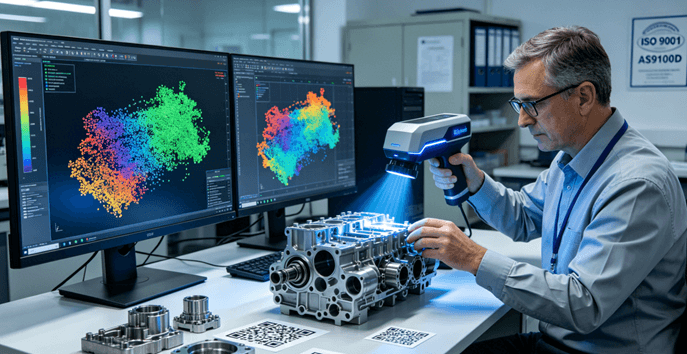
High precision sheet metal fabrication is an outcome of multiple processes working cohesively together, all of which have been optimized to handle different aspects of tolerance control.
Key Cutting Process
The contemporary method of fiber laser cutting is the first key process for sheet metal fabrication for tight tolerances. It cuts highly accurate profiles and holes within tolerances of ±0.05mm. These are the fundamental processes that allow all the following components to fit together and be assembled, providing a quality basis for fabrication.
Methods for Scale and Assurance
When it comes to volume processing of precision components, special processes and verification are necessary.
- Precision Stamping for Large Batch Production
If you want fast and consistent production of repetitive parts in large numbers, precision sheet metal stamping is indispensable. After developing a progressive die, you receive incomparable productivity and efficiency combined with total dimensional accuracy up to tens of thousands of pieces.
- Closed Loop Quality Control
Precision is guaranteed by a closed-loop quality control system that relies on process control probing and post-process CMM inspection. Most importantly, these measurements are used in real time to automatically compensate for any variations, such as tool wear or material deformation.
What Factors Should You Consider When Choosing a Precision Metal Parts Manufacturer?
The process of selecting the best manufacturing partner for tight-tolerance sheet metal fabrication requires a comprehensive assessment, which goes well beyond merely checking their inventory of equipment. The assessment must consider four major criteria.
Fundamental Technical Capabilities and Quality Management
In assessing the capabilities of a precision metal parts manufacturer, the primary consideration is whether the organization has the basic technical capabilities, including tolerances and materials. Another important criterion is the manufacturer’s quality system; certification to standards such as ISO 9001 or AS9100 is necessary, although the proof is in the pudding in the form of sophisticated in-house metrology equipment.
Process Excellence and Expertise
Operational philosophy and special expertise are two factors that must be considered for any lasting partnership with a manufacturer.
- Scaleability and Process Flexibility
Scaleability and process flexibility are important in demonstrating real capability when it comes to tight-tolerance sheet metal fabrication. The depth of the manufacturer’s DFM input and their ability to plan ahead are important considerations in this regard.
- Special Industry Experience
Experience in the specific industry in question can provide an invaluable advantage. A manufacturer who possesses a deep understanding of the complexities of your industry will ensure that your project succeeds.
Conclusion
The breakdown above has revealed what makes successful precision metal parts companies competent. From the design of the part to its delivery within ±0.1mm tolerance levels, the process is supported by a strong technical system and a quality mindset. It entails the integration of various state-of-the-art manufacturing technologies, a quality-based process for achieving uniformity, and the use of data analytics to create a feedback loop among the different phases of production. By combining the above elements, the best companies have managed to convert precision specifications in drawings into predictable outcomes.
When looking for a company that can turn your complicated designs into perfectly working devices, due diligence should be considered. It is advisable to visit websites where potential partners have documented their success stories in relevant sectors such as semiconductors, capital equipment, and life sciences instrumentation, and request a feasibility and risk analysis for your particular application.
Author Bio
This article was written by a guest technology analyst specializing in manufacturing technology for more than a decade. His expertise lies in the field of precision engineering.
FAQs
Q: What are some typical tolerance levels in precision sheet metal stamping?
A: With laser cutting, precision stamping projects can attain tolerances of ±0.05mm for features, ±0.5 degrees for bend angles, and ±0.1mm for flatness over 300mm lengths. Tolerances vary depending on material type, thickness, and shape complexity.
Q: Why is the ISO 9001 certification important in a precision manufacturing project?
A: The ISO 9001 certification offers an organizational system that outlines process documentation, management commitment to quality, and a constant improvement cycle. In this regard, the client will benefit from lower variability in batches, increased yields from the first attempt, and decreased cost of quality by avoiding defective products.
Q: How does one assess the sheet metal fabrication company’s readiness to move from prototype to production?
A: Critical metrics include the extent and anticipation level of their DFM analysis during the prototype stage, process parameter stability and scalability, consistency of their inspection techniques from prototypes to production stages, and finally, a well-outlined strategy for scaling up production capacity.
Q: What is the difference between precision stamping and laser cutting?
A: Precision sheet metal stamping is very cost-effective on a per-part basis when done in large quantities (usually several thousand parts or more), but there are substantial costs involved for tooling. Precision laser cutting is more flexible due to its ability to create complex shapes quickly without the need for tools; however, the cost-per-part is higher in that case. Sometimes, both methods are combined to optimize the result.
Q: What industries are most demanding about tolerances for precision metal parts?
A: The semiconductor industry (vacuum integrity and wafer flatness), biomedical engineering (biocompatibility and ease of assembly), aerospace industry (fatigue strength), and optical instruments (lens and sensor alignment) tend to be the most tolerant-sensitive industries.
Popular on OTW Right Now!



About The Author

Gagan Bhangu
Founder of otechworld.com and managing editor. He is a tech geek, web-developer, and blogger. He holds a master's degree in computer applications and making money online since 2015.