
The Truth About Workplace Injury Settlements
When you get hurt on the job, the aftermath can feel overwhelming. Medical bills arrive before you’ve even left the hospital. Your employer’s insurance adjuster calls, sounding helpful and sympathetic. They offer you a number. Because you’re stressed, in pain, and worried about your income, you’re tempted to take it. Here’s what you need to understand first: that initial offer is rarely the full amount you’re entitled to.
Workplace injury settlements are not charity. Your workers’ comp claim is a legal mechanism designed to compensate you for real, documented losses. The more you understand about how they work, the better equipped you are to protect yourself.
What a Settlement Actually Covers
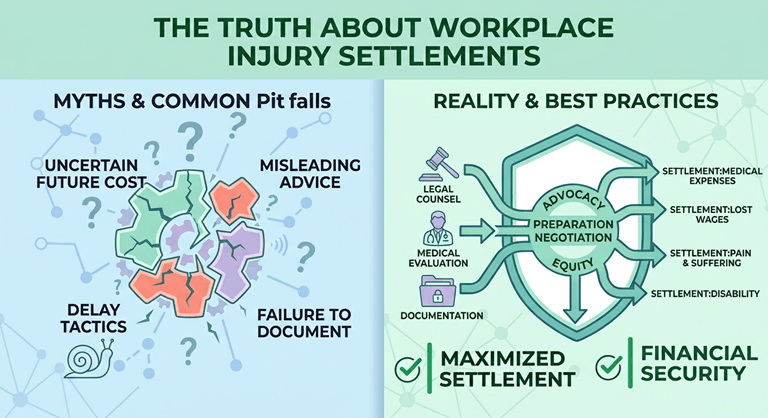
Most people assume a settlement just covers medical bills. In reality, a comprehensive settlement can include much more. You may be entitled to compensation for lost wages, not just the days you’ve already missed, but future income if your injury affects your ability to work long-term. If your injury causes permanent impairment, you may qualify for a disability rating that translates directly into additional compensation.
You may receive compensation for pain and suffering, the cost of rehabilitation, retraining for a new job, or even home improvements to accommodate your disability, depending on the laws of your state’s workers’ compensation program and the nature of your injury. Don’t let anyone tell you that your claim is about just getting back your medical bill when you know your world has been changed in multiple ways.
Why Insurers Move Quickly
As soon as you report your injury, the insurance company files a claim and starts to control the risk. Claims adjusters are highly skilled professionals who are tasked with efficiently settling claims, and that often means inexpensively. They may reach out to you a few days or even hours after an accident.
They do it for a reason. Without seeing all the medical bills, talking to your doctor about potential long-term complications, and conferring with a lawyer, you don’t have all the facts. If you sign a release before you know the full extent of your injuries, you could never receive compensation for those injuries in the future, even if they get worse.
The Role of Fault and Why It’s Complicated
Workers’ compensation is a no-fault system in most states, meaning you don’t have to prove your employer was negligent to receive benefits. But if another person or entity, such as a contractor, equipment manufacturer, or another driver,r contributed to your injury, you can also file a personal injury lawsuit in addition to your workers’ comp claim. This is an important point that many workers aren’t aware of until their time has passed.
Your employer’s insurance will only go so far. If a third party is at fault, you could have a much larger claim.
What You Should Do Before Accepting Anything
Don’t sign anything until you’ve done the following. First, seek a complete medical exam and ensure your doctor fully documents your injuries; unclear medical reports result in claims that are not worth as much. Second, document everything: lost wages, medical bills, ls, and how the injury limits your ability to work and perform other activities. Third, talk to a workers’ compensation lawyer before you sign on the dotted line.
Workers’ comp lawyers typically work on a no-win-no-fee basis. It only takes an hour of your time, and can be the difference between a settlement that barely pays the rent and one that compensates you for your loss.
An injury can change your life, throwing off your finances, your work, and your stability. You should be compensated for that. The insurance company has professionals working for its interests. You should, too.
Popular on OTW Right Now!




About The Author

Gagan Bhangu
Founder of otechworld.com and managing editor. He is a tech geek, web-developer, and blogger. He holds a master's degree in computer applications and making money online since 2015.