
The Rise of AI Mental Health Assistants: What Users Should Know
Mental health support is rapidly evolving. In 2026, AI mental health assistants are becoming one of the fastest-growing categories in digital wellness technology, helping millions of users manage stress, anxiety, emotional overwhelm, and burnout through real-time conversations and guided support.
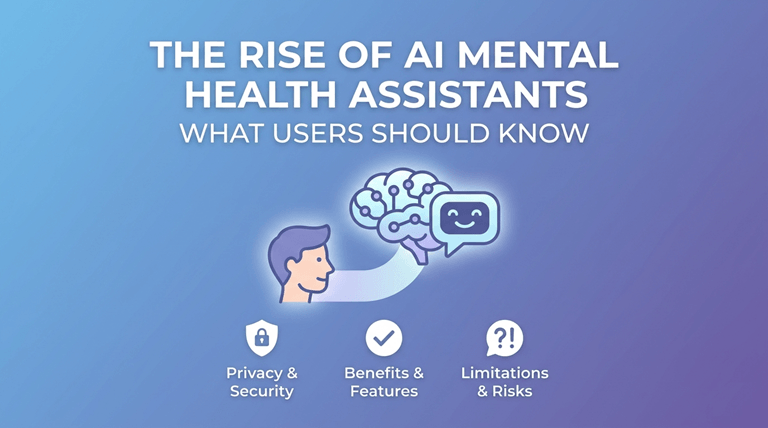
From AI therapy chatbots to emotional wellness companions, these tools are reshaping how people access mental health support online. But as adoption grows, many users still ask important questions:
- Are AI mental health assistants actually effective?
- Can they reduce anxiety and stress?
- Are they safe to use?
- And platforms for AI therapy fit into the future of wellness technology?
This article will explore how AI mental health assistants have come into being. You will gain knowledge of research, statistics, how they are used, the benefits and risks of using research statistics, and what you should know before using them.
What Are AI Mental Health Assistants?
AI mental health assistants are computer programs that utilize AI and conversational AI systems. They are aimed at promoting emotional health.
These systems can:
- Conduct supportive conversations
- Provide CBT-style guidance
- Help users reflect on thoughts and emotions
- Offer coping strategies for stress and anxiety
- Track mood and emotional patterns
Unlike traditional therapy, AI assistants are typically:
- Available 24/7
- Instant and accessible
- Lower cost or free
- Designed for daily use
Popular examples include:
- Abby
- Wysa
- Woebot
- Replika
The majority of these tools are not a substitute for licensed therapists. But many people find them to be companions for emotional support and mental wellness.
Why AI Mental Health Assistants Are Growing So Quickly
The rise of AI therapy tools is tied to a global mental health crisis.
According to the World Health Organization (WHO):
- The world has seen a more than 25% increase in anxiety and depression following the pandemic.
- Unfortunately, millions of people still don’t have access to proper mental health support.
At the same time:
- The price of therapy remains on the rise.
- Therapists are still not readily available.
- Many people still do not seek mental health services due to mental health stigma.
AI assistants solve some of these barriers by offering:
- Immediate emotional support
- Anonymous interaction
- Low-pressure conversations
- Consistent availability
A 2025 digital wellness report found that:
- More than 60% of younger adults are open to using AI-powered emotional support tools
- Nearly half of the respondents said they preferred AI for immediate emotional check-ins during stressful moments
AI Mental Health Assistants aid users in numerous ways.AI Mental Health Assistants can support users in many ways.
How AI Mental Health Assistants Help Users
1. Real-Time Emotional Support
First of all, AI Mental Wellness Assistants are always available.
Anxiety and stress don’t come on weekends or with the clock change to June. Thus, with the help of AI tools, you can:
- Talk through anxious thoughts immediately
- Calm emotional spirals
- Process emotions privately
- Receive guided reflection anytime
Having a safe space to think may help diminish emotional overload for many.
2. CBT-Based Thought Reframing
The majority of AI therapy tools incorporate Cognitive Behavioral Therapy (CBT). One of the most studied ways to relieve anxiety and stress.
AI systems often ask questions like:
- “What evidence supports this thought?”
- “Is there another way to interpret this situation?”
- “What would you say to a friend feeling this way?”
These prompts help users:
- Challenge negative thinking
- Reduce catastrophizing
- Improve emotional awareness
A study in JMIR Mental Health revealed that CBT tools based on chatbots led to a decrease in anxiety symptoms and emotional distress in regular users of the tools.
3. Daily Mental Wellness Habits
AI mental health assistants also encourage healthier emotional routines, including:
- Daily check-ins
- Journaling
- Mood tracking
- Mindfulness exercises
- Reflection prompts
In time, these tiny habits can help you to regulate your emotions and develop self-awareness.
Research on digital mental health interventions indicates that the most strongly associated factor of better outcomes is regular usage of the tool.
The Role of AI Therapy
Among newer AI wellness platforms, Abby for AI therapy has gained attention for its more natural conversational style and focus on emotional reflection.
Unlike rigid scripted bots, Abby encourages:
- Thought clarification
- Emotional processing
- CBT-style reframing
- Calm, guided conversation
Many users describe the experience as closer to:
- A reflective thinking companion
- Guided journaling
- Daily emotional support
This type of conversational AI appeals particularly to users experiencing:
- Overthinking
- Stress
- Anxiety
- Emotional burnout
Many users find it easier to maintain their engagement with the experience in a consistent way, as it is not as clinical as it might seem, and has more of a conversation-like feel to it.
What Research Says About AI Therapy Effectiveness
AI mental health tools research has been rapidly expanding in the past several years.
In a massive meta-analysis study of almost 30,000 participants, an AI mental health intervention was found to yield the following benefits:
- Moderate reductions in anxiety symptoms
- Improvements in stress management
- Better emotional awareness and coping behaviors
Additional findings from recent studies include:
- Increased user engagement compared to traditional self-help apps
- Improved emotional expression among socially anxious users
- Reduced loneliness and emotional isolation in some populations
Researchers believe AI therapy works best when it supports:
- Early intervention
- Daily coping
- Emotional reflection
- Habit-building
But professionals in the mental health sector remain adamant that AI tools are meant to aid in professional mental health care and not to replace it.
Important Risks and Limitations
Although AI mental health assistants can be beneficial, it’s also important to be aware of their limitations.
AI tools:
- Is unable to identify mental health problems.
- Does not have the ability to intervene in an emergency.
- Has a lack of empathy and professional judgment.
- May misread nuances of emotional situations.
People experiencing:
- Severe depression.
- PTSD.
- Suicidal thoughts.
- Self-harm urges.
should seek help from licensed mental health professionals immediately.
Privacy is also important. Users should always review:
- Data policies.
- Privacy settings.
- How emotional conversations are stored.
before using any AI mental health platform.
The Future of AI Mental Wellness
The future of AI mental health assistants will likely include:
- More personalized emotional support
- Better contextual memory
- Voice-based AI wellness companions
- Integration with wearable health devices
- Improved emotional intelligence systems
The AI mental wellness industry is expected to grow rapidly in the coming decade, with the rise of digital self-care becoming increasingly prevalent.
It’s not that the objective is to replace therapists. Rather, it’s an extension of emotional assistance access to millions of individuals who otherwise might not have access.
Final Thoughts
In 2026, AI mental health assistants will reshape the way people tackle emotional wellness.
Research increasingly shows these tools can help users:
- Manage stress
- Reduce anxiety
- Improve self-awareness
- Build healthier coping habits
AI therapy exemplifies the potential of conversational AI to offer emotional support in a natural and approachable way for “real-time” therapeutic interventions.
While AI can’t substitute for professional therapy, it can serve as a helpful companion to wellness on a day-to-day basis, particularly when you need quick assistance during stressful situations.
AI mental health assistants have the potential to be one of the most transformative technologies in the future of digital self-care as the technology advances.
Popular on OTW Right Now!



About The Author

Gagan Bhangu
Founder of otechworld.com and managing editor. He is a tech geek, web-developer, and blogger. He holds a master's degree in computer applications and making money online since 2015.