
The Precise Work of Being Visible When Everything Is Changing
There is a moment, typically occurring in the early morning, at which you spot a spider web that you had not noticed earlier. The light falls on it in just the right way, and at that instant you can follow each individual strand. The web had been there the whole time—the spider had taken hours to construct it, adhering to some ancient instruction stored in its nervous system. Yet you only became aware of it when the circumstances were exactly right. It turns out that visibility is similar in this regard: it is not merely a matter of something existing, but of being seen at the specific moment when someone is looking.
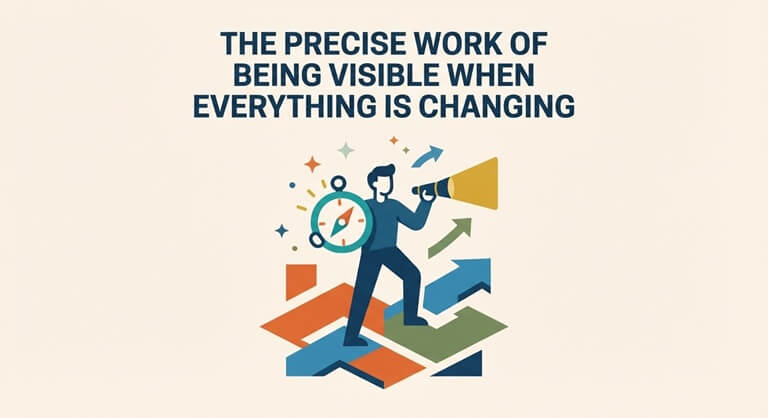
Most businesses in Singapore deal with visibility just as someone would deal with a spider web in the dark—building something complicated and accurate, yet having no idea whether anyone can see it. They carry out the necessary work, such as producing content, carrying out technical optimization, and setting up links, but they fail to provide the light. The situation has changed. The places people look have changed, and the way algorithms view websites has developed. The level of precision needed in order to achieve visibility is now different from what it was a year ago. If you’re trying to figure out whether what you’ve built is actually visible, or whether you need to rebuild from scratch, an ai seo agency singapore can help you see. They understand the precise conditions that make visibility work right now.
The Specific Detail That Changes Everything
In the field of architecture, there is a term known as “poché”, which describes the thickness of a wall—that is, the material that lies between the inside and the outside of a building. Generally, people do not notice it; instead of seeing the wall, they see the room or the street. Nevertheless, this thickness is important since it affects how sound travels, how temperature moves through, and in what way the building actually operates. You might be able to design an ideal room, but if the walls are incorrectly constructed, the room will not function as it should.
Your website’s visibility functions in the same way. The parts that are visible—your content, your headlines, and your pages—that’s what you can see. Yet there’s a layer underneath it. The technical structure. The way the code is written. The way your content is marked up so that machines can understand it. The extent to which your information is accessible to different kinds of search tools. Most business owners never come across this layer, but it’s what decides whether they are actually visible or merely appear to be visible.
What Precision Means Now
The level of precision needed in order to be visible has changed, and the way in which it has changed is very particular. For many years SEO consisted of matching keywords. If you used the correct words in the right places, then you would appear in the results. This approach was crude and mechanical. These days—especially since AI search tools have become part of the way people search for information—the precision required is considerably greater. You now have to be exact as to what your content actually states, regarding the structure of your information, as to whether your claims are supported, and as to how your content links to other reliable sources.
It’s not concerned with tricks or optimization in the traditional sense; rather, it’s about clarity. What it involves is ensuring that when a machine reads your content—be that a conventional search engine or an AI tool preparing a response—it fully understands exactly what you intend to communicate. The degree of precision comes from the care you take to be clear.
The Invisible Labor That Creates Visibility
The spider never stops to consider whether anyone will notice the web; it simply goes on building it. The accuracy is due to carrying out the correct process, not because it is hoping to be seen. Yet with a business—specifically one in Singapore operating in a highly competitive market—you can’t just build and hope. You have to determine whether the thing you’ve built is in fact visible, and you must understand the conditions that make visibility possible.
This invisible work is what gives rise to visibility. It has nothing to do with doing more; rather, it’s about carrying out the correct actions with the appropriate precision. It involves realizing that visibility doesn’t happen automatically and that attention to detail is needed at all levels—from the words you use to the way your website is organised and to the manner in which you present information to various search tools. Most businesses are only carrying out part of this work; they build the web but fail to check whether the light reaches it.
How to Know If You’re Actually Visible
Look for these specific signs:
- You know your traditional search rankings but have no visibility into generative search results.
- Your content answers questions well but doesn’t show up when those questions are asked to AI tools.
- You have good traffic but can’t explain where it comes from.
- Your website structure makes sense to you, but you’re not sure if it makes sense to search algorithms.
If these conditions hold, you are most likely constructing a web without first checking whether the light reaches it. There is a lack of precision, not because you aren’t making an effort, but because the conditions for visibility have changed and you are not using the correct conditions to measure against.
True visibility is the result of precision rather than effort; it depends on concentration, on fully understanding both what you are creating and the reason for it, on adhering to the correct process and then checking whether or not it is effective. In Singapore’s competitive business environment, in which every company is developing something, it is precision that distinguishes visibility from invisibility.
Popular on OTW Right Now!


About The Author

Gagan Bhangu
Founder of otechworld.com and managing editor. He is a tech geek, web-developer, and blogger. He holds a master's degree in computer applications and making money online since 2015.