
The Next Wave of Smart Manufacturing Innovation
Manufacturing is changing faster than ever, driven by new technologies that help businesses work smarter, faster, and more efficiently. From connected equipment and artificial intelligence to real-time data and automation, smart manufacturing is creating new ways to improve productivity and reduce costs. Companies that embrace these innovations are better prepared to respond to changing customer demands, improve product quality, and stay competitive in a rapidly evolving market. Understanding these advancements is no longer optional; it’s becoming essential for long-term success. In this guide, you’ll explore the next wave of smart manufacturing innovation and how it is transforming the future of industrial operations.
Smart Manufacturing Redefined for the Next Era
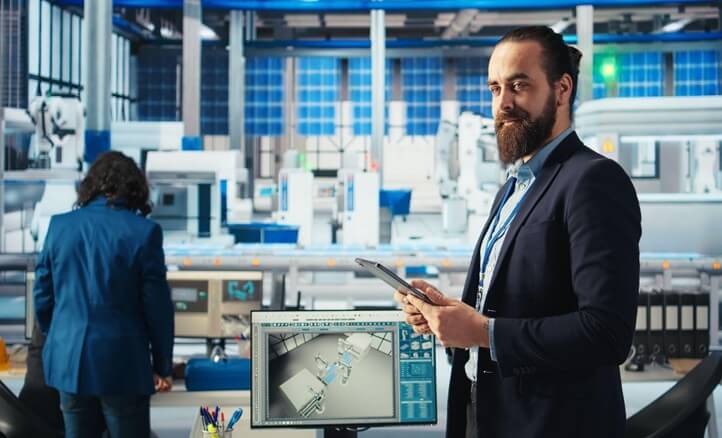
Smart factory projects are moving out of the “interesting experiment” phase and into everyday plant operations. A Deloitte survey reported “up to 20% improvement in production output, 20% in employee productivity and 15% in unlocked capacity”.
That is not a tiny bump. For a busy plant, those gains can change the whole conversation.
What the Modern Factory Now Needs
For plant leaders, smart manufacturing is not some shiny future concept anymore. It means machines that talk to each other, data that shows up when it is still useful, teams that know how to act on it, and decisions made before a small issue turns into an expensive shutdown.
The move toward manufacturing innovation is also about getting control back. You want fewer surprises. You want better visibility into asset health. You want engineering, production, quality, and maintenance working from the same facts instead of chasing updates across emails, spreadsheets, and hallway conversations.
Why Platform Decisions Matter Early
When your plant already depends on Hexagon asset data, hxgn software plays an important role in hosted EAM environments, smooth cloud migration, compliance support, and secure access to operational records. That becomes a big deal when uptime, audit readiness, and control over your data are non-negotiable.
From there, the practical question is simple: which technologies are actually improving factory performance, and which ones still need a stronger business case?
Technologies Powering the Next Factory Shift
New technology only earns its place when it solves a real production headache. Under Industry 4.0, high-performing factories connect machines, people, software, and suppliers in ways that make work easier to see, manage, and improve.
That sounds obvious. But anyone who has worked around manufacturing systems knows the trap. A tool can look great in a demo and still make daily work harder if it is disconnected from the way people actually operate.
Digital Manufacturing Turns Data Into Action
With digital manufacturing, teams can test designs, adjust workflows, and catch quality risks before they slow down a product launch. That means fewer last-minute changes, fewer awkward surprises, and more confidence when a product moves from engineering to the production floor.
It also helps teams compare the plan with what really happened. That gap matters. Once managers can see where performance drifted, they do not have to guess where the next improvement should happen.
Advanced Tools Are Becoming Everyday Tools
In many plants, advanced manufacturing technologies now include digital twins, smart sensors, cloud platforms, additive methods, machine learning, and automated material movement. The useful tools are not just impressive to look at. They remove friction from the work people already do.
Predictive maintenance is a great example. Instead of waiting for a press, pump, motor, or robot to fail at the worst possible time, teams can use condition data to schedule service when it makes sense.
The next challenge is scaling those tools without creating a patchwork of systems that operators quietly resent, and managers struggle to trust.
From Pilot Projects to Factory-Wide Results
A pilot can look fantastic in one cell and still fall apart when you try to roll it out across the plant. That is frustrating, but it is common. Usually, the problem is not the technology itself. It is the planning around it.
Moving Beyond Proof of Concept
To make manufacturing innovation stick, teams need a clear route from pilot to production. That route should include process owners, measurable goals, clean data, and a real training plan for the people who will use the system every day.
One common mistake is buying tools before defining the problem. It happens all the time. A better starting point is a painful bottleneck. Pick the issue first, then test whether the technology can reduce it under normal operating conditions.
In other words, do not go shopping for a solution before you know what you are trying to fix.
Measuring Return Without Guesswork
Industrial manufacturers are already seeing stronger value from AI, with KPMG reporting that 34 percent are achieving ROI in several AI use cases. That is encouraging, but ROI still depends on careful rollout.
Good measures include downtime avoided, scrap reduced, energy saved, inspection time shortened, and faster changeovers. Finance teams should be part of the conversation early, not pulled in after the project is already live and everyone is trying to prove value after the fact.
From there, success comes down to two things that do not always get enough attention: people and data.
Data, People, and Sustainability at the Core
At scale, Industry 4.0 works best when people trust the data and know what to do with it. Fancy dashboards are not worth much if the team on the floor does not believe the numbers.
And honestly, they are right to be skeptical when systems disagree.
Data-Driven Decisions Need Trust
MES, IIoT, analytics, and asset systems should line up around core facts. If one system says a machine is available while another says it is down, confidence disappears fast.
Cybersecurity also has to be designed in from the beginning. Connected factories need strong access controls, clear data ownership, and systems that meet compliance requirements without making daily work feel like a maze.
Security should support the operation, not slow it to a crawl.
The Human-Machine Gap Is Real
As factories change, jobs change too. A digital manufacturing engineer may spend more time connecting design data to production outcomes. An AI process manager may review recommendations before they affect actual production work.
That shift can be exciting. It can also make people nervous. Both reactions are normal.
Training cannot be a one-day meeting and a slide deck nobody opens again. Teams need coaching, practice, and room to ask hard questions. If people are treated like obstacles, they will act like obstacles. If they are brought in early, they often become the best source of practical feedback.
Sustainability Becomes Measurable
Done well, smart manufacturing makes waste, energy use, and emissions visible in near real time. That is where sustainability stops being a slogan and starts becoming part of daily factory decisions.
A line that measures scrap accurately can reduce it. A plant that tracks compressed air losses, idle energy, and rework can cut costs while supporting ESG commitments.
When data, people, and sustainability start working together, connected systems can improve more than one production line. They can improve the wider manufacturing network.
Connected Manufacturing Ecosystems in Action
No plant operates in a bubble. Engineering changes, supplier delays, maintenance schedules, and customer demand all shape what happens on the floor.
That is why connected manufacturing matters. The goal is not simply to collect more information. The goal is to move better information to the right people sooner.
Supply Chains Need Earlier Warnings
Digital twins and simulation can help teams test “what if” scenarios before disruption spreads. If a supplier is late, planners can see which orders, machines, and customers are at risk first.
Collaboration improves when everyone is working from current facts. That becomes especially important when demand shifts quickly or a quality issue needs fast containment.
So the factory of the future is not just about machines. It is about decisions moving faster across the business.
Future-Proofing Through Smart Investment
Future-ready factories do not buy every new tool that shows up in a trade show booth. They choose carefully, test honestly, and scale what proves its worth.
That takes discipline. It also saves a lot of headaches.
Tools Worth Watching Closely
Edge AI, stronger robotics, private wireless networks, augmented reality for maintenance, and automated inspection will keep moving into production work. Some plants will benefit from these tools quickly. Others should wait until the use case is clearer.
The best investment test is simple: will this tool improve safety, quality, speed, cost, or resilience in a way the business can measure?
If the answer is vague, slow down. If the answer is clear, build a focused plan and test it.
Building a Culture That Keeps Improving
Culture can sound soft, but it decides whether change lasts. Leaders need to reward useful experiments, share lessons from failed pilots, and involve operators before decisions are final.
Change works better when people can see how it helps their shift, their safety, and their performance. Nobody wants technology that simply adds another task to an already packed day.
Final Thoughts on Turning Factory Change Into Results
The next wave of factory progress is practical, not flashy. Connected data, skilled teams, secure platforms, and focused investments can reduce downtime, improve quality, cut waste, and support stronger growth.
The winners will not be the companies chasing every trend. They will be the ones solving real problems, measuring results, and improving step by step. Start with one painful process. Prove the value. Then build from there. That is how the future factory actually gets made.
FAQs
Which companies are leading in implementing smart manufacturing innovation?
Leaders often include automotive, electronics, aerospace, medical device, and industrial equipment firms with strong data practices. The most successful ones pair technology with training, process redesign, and clear performance goals rather than treating software as a quick fix.
Can existing legacy manufacturing systems be upgraded to Industry 4.0 standards?
Yes, many legacy systems can be connected through sensors, gateways, APIs, and cloud hosting. The key is careful assessment first. Some equipment can be modernized affordably, while other assets may need phased replacement.
How quickly can a plant see measurable benefits after starting digital manufacturing transformation?
Some plants see early gains within a few months, especially in downtime tracking, quality alerts, or maintenance planning. Larger benefits usually take longer because teams need clean data, process changes, and user adoption to mature.
Popular on OTW Right Now!



About The Author

Gagan Bhangu
Founder of otechworld.com and managing editor. He is a tech geek, web-developer, and blogger. He holds a master's degree in computer applications and making money online since 2015.