
The Case for Recycling Lithium-Ion Batteries
Lithium-ion batteries power many of the devices people use every day. They can be found in power tools, e-bikes, scooters, power banks, backup systems, medical devices, cameras, and cell phones, just to name a few.
These batteries can be very handy and effective, but should never be disposed of in the regular trash. At the end of their life, lithium-ion batteries have stored energy, metals, and chemical materials that must be handled responsibly. Proper lithium-ion battery recycling helps reduce safety risks, protect the environment, and recover valuable materials that can be reused.
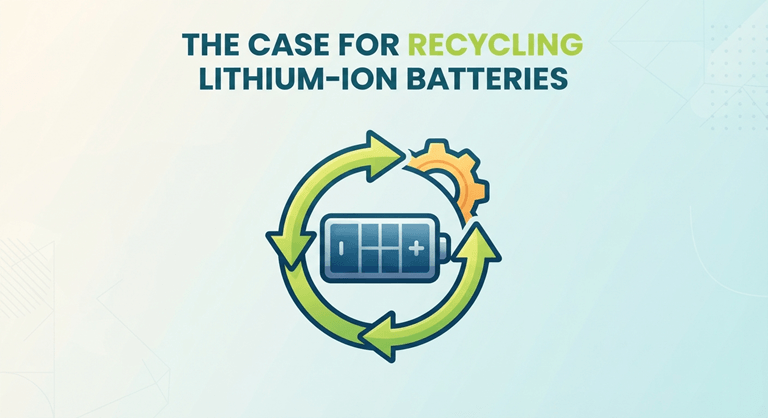
Lithium-Ion Batteries Can Create Fire Risks
One of the most important reasons to recycle lithium-ion batteries is safety. The purpose of these batteries is to store a considerable amount of energy in a compact volume. They can become unstable if they are crushed, punctured, overheated, or short-circuited. Lithium-ion batteries can be damaged during collection or processing when they are thrown into a trash can, dumpster, compactor, or mixed recycling bin. This may cause overheating, smoking, sparks, or fire.
Collected batteries by businesses, schools, warehouses, repair shops, municipalities,s and other organizations are particularly significant for this risk. It may not seem so serious if just one used battery is stored or disposed of incorrectly, but if many batteries are improperly stored and disposed of, the risk level increases significantly.
Recycling Keeps Batteries Out of Landfills
Lithium-ion batteries should not be disposed of in landfills or other waste streams. Damaged or exposed batteries, or batteries that have been mishandled, can pose an environmental problem.
Appropriate recycling can ensure that battery materials do not end up in soil, water, or non-battery waste facilities. Recycling provides a more responsible and safe end-of-life option for old batteries, avoiding landfills, garages, closets, drawers, and warehouses.
Valuable Materials Can Be Recovered
The materials found in lithium-ionbatteries are ones that can be recovered during recycling. The materials are dependent on the type of battery, but can consist of lithium, cobalt, nickel, manganese, copper, aluminium, steel, and graphite.
Recycling these materials can help to reduce waste and promote a more circular battery supply chain. Nowadays, an increasing number of products are using rechargeable batteries; recycling is an essential component in the management of these resources.
Used batteries are not garbage; they are resources that can be turned into new batteries.
Recycling Supports Safer Homes and Workplaces
There are lots of people who store old lithium-ion batteries without being aware of the risk. Loose or damaged power tool packs, power tool batteries, used phones, and loose rechargeable batteries can be stored for months or years in drawers, cabinets, or stockrooms, or even in maintenance areas.
Recycling of these batteries will help to remove them before they become a safety hazard. Swollen, leaking, hot, punctured, or damaged batteries need to be treated with additional care and should not be included with normal end-of-life batteries.
Exposed terminals should be taped, as necessary, to prevent short circuits from loose batteries.
Everyone Plays a Role in Battery Recycling
Lithium-ion battery recycling is not limited to the big companies. Everyone from the individual to the office, to the schools, retailers, repair facilities, and public facilities has a part to play in keeping batteries out of the wrong disposal stream.
If your business has continuous battery waste, collaborating with a battery recycling provider can really boost the process to be more organized, safer, and simpler.
Final Thoughts
All Users should recycle Li-ion batteries as they carry stored energy, valuable materials, and components which should not be disposed of as regular waste. The correct recycling of batteries contributes to fire protection, environmental protection, recovery of materials, and better handling of battery waste.
With the increasing popularity of rechargeable batteries, there is an increasing need for responsible lithium-ion battery recycling. If you’ve just one old phone battery, or even a ton of commercial battery waste, it makes more sense and is safer to recycle.
Popular on OTW Right Now!



About The Author

Gagan Bhangu
Founder of otechworld.com and managing editor. He is a tech geek, web-developer, and blogger. He holds a master's degree in computer applications and making money online since 2015.