
How Technology Is Personalizing Recovery Plans: Your 2026 Guide to Faster, Smarter Healing
Recovery rarely follows the timeline outlined in a discharge booklet or rehabilitation plan. Two people can have the same procedure, receive similar instructions, and still recover at very different speeds. That’s because healing depends on more than the injury or surgery itself. Pain levels, sleep quality, daily activity, stress, and consistency all influence recovery.
If you’re recovering from surgery, managing a chronic condition, or rehabilitating a sports injury, you’ve probably experienced those unpredictable days. You may feel strong enough to do more in the morning, only to become sore a few hours later. Or you may wonder whether you’re progressing as expected between appointments.
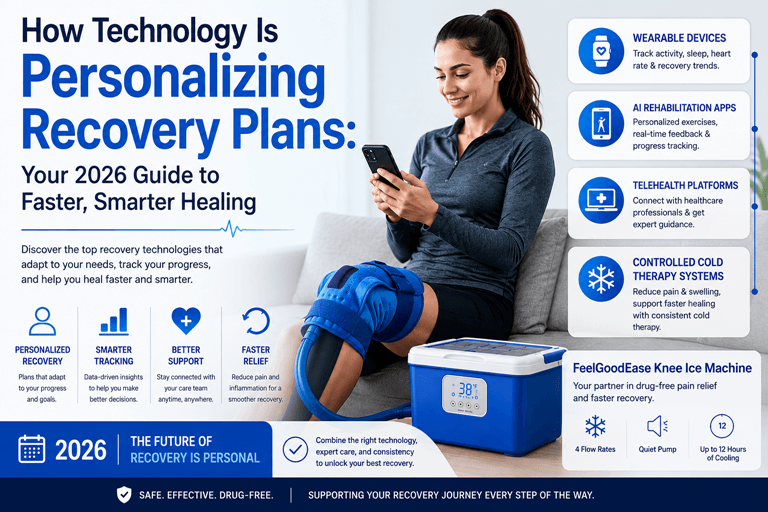
This is where personalized recovery technology is changing the recovery experience.
Today’s tools go far beyond fitness watches and mobile apps. Wearable devices, AI-guided rehabilitation platforms, remote monitoring systems and evidence-based at-home recovery solutions provide real-time insights into how your body responds to treatment. Instead of following the same routine every day, you can make informed adjustments based on meaningful feedback.
Throughout my healthcare career, I’ve learned that technology delivers the greatest value when it supports clinical expertise rather than replacing it. A wearable can track activity and sleep, an AI-powered rehabilitation app can improve exercise technique, and a structured at-home recovery tool, such as a controlled cold therapy system when recommended by your healthcare provider, can help make treatment more consistent between clinic visits. Together, these technologies create a recovery plan that adapts to your progress instead of following a fixed schedule.
In this guide, you’ll learn how personalized recovery technology works, the tools available today, and how to choose the ones that best support your recovery goals. You’ll also discover practical ways to avoid common mistakes, work more effectively with your healthcare team, and build a recovery plan that’s evidence-informed and realistic for everyday life.
The most effective recovery plan isn’t the one that’s followed perfectly; it’s the one that adapts as your body heals.
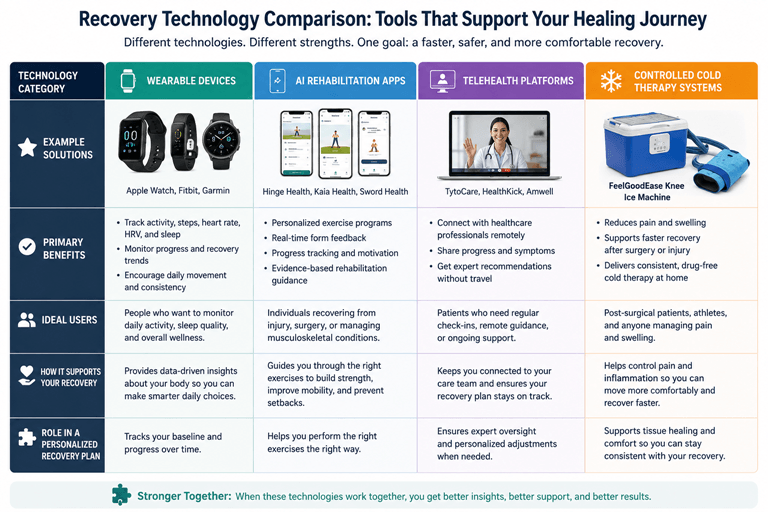
The Technology Toolkit: Key Innovations That Support Personalized Recovery
Personalized recovery technology includes wearable devices, AI-powered rehabilitation apps, remote monitoring platforms and evidence-based at-home recovery tools. Together, they track progress, provide real-time feedback, and help recovery plans adapt to your changing needs.
You don’t need every recovery tool. Choose the one that solves your biggest challenge, whether that’s staying active, managing pain, improving exercise technique or staying connected with your healthcare provider.
Wearable Fitness Trackers and Smartwatches
Most recovery happens outside the clinic, making wearable devices valuable for tracking everyday progress.
Smartwatches and fitness trackers monitor activity, heart rate, sleep quality, heart rate variability (HRV), and, on some models, blood oxygen levels. Instead of relying on memory, you can review objective data that shows how your body responds over time.
Many people become more active as soon as they feel better, then experience soreness later. Wearables help identify these patterns early, making it easier to pace your recovery.
They’re designed to provide useful insights, not judge your progress.
Product recommendations:
- Apple Watch
- Fitbit Charge
- Garmin Venu Series
Expert Tip: Use one wearable consistently instead of switching between multiple devices.
AI-Powered Physical Therapy Apps
Many people worry more about performing exercises correctly than about remembering to do them.
AI-guided rehabilitation apps analyze your movements using your smartphone’s camera or motion sensors. They provide real-time feedback on posture, speed, and range of motion, helping correct mistakes before they become habits.
Many apps also adjust your exercise program as your mobility improves or symptoms change.
Product recommendations:
- Kaia Health
- Hinge Health
- Sword Health
Expert Tip: Choose apps that provide real-time movement feedback, not just exercise demonstrations.
Telehealth Platforms with Remote Monitoring
Clinic visits provide only a snapshot of your recovery. Remote monitoring fills the gaps between appointments.
Connected devices such as blood pressure monitors, pulse oximeters, and digital thermometers allow you to share health data with your provider, making it easier to identify concerns early and adjust treatment when needed.
These tools are especially useful after surgery, for chronic conditions, or when specialist care isn’t easily accessible.
Product recommendations:
- TytoCare
- Medtronic Care Management Services
Expert Tip: Focus on long-term recovery trends rather than individual readings.
Connected At-Home Recovery Systems
Not all recovery technology is digital.
Controlled cold therapy systems help apply clinician-recommended cold therapy more consistently than traditional ice packs, making at-home treatment easier after orthopedic surgery, sports injuries, or rehabilitation sessions.
When combined with wearables or rehabilitation apps, they support a more complete recovery strategy. Brands such as FeelGoodEase are designed to make this process more convenient between clinic visits.
Expert Tip: The best results usually come from combining complementary tools, such as a wearable for tracking activity, a rehabilitation app for guided exercises, and a cold therapy system when recommended by your healthcare provider.
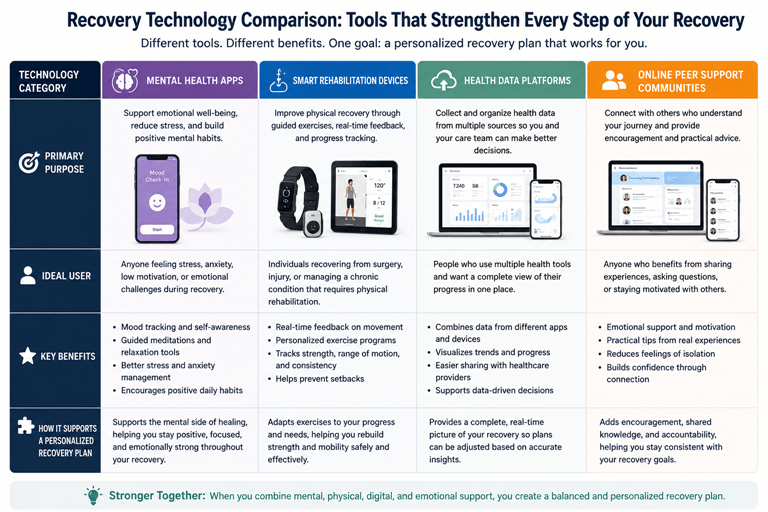
Mental Health and Behavioral Change Apps
Physical recovery is only part of healing. Your mindset, emotional resilience, and motivation play a major role in staying consistent and achieving long-term results.
Recovery rarely follows a straight path, and setbacks can feel discouraging. Mental health apps help manage stress, anxiety, and frustration through cognitive behavioral therapy (CBT), guided mindfulness, mood tracking, breathing exercises, and daily check-ins. Some AI-powered apps also personalize recommendations based on your mood and progress.
While they don’t replace professional mental healthcare, these tools can reinforce healthy habits and keep you engaged throughout recovery.
Product recommendations:
- Woebot (AI-guided CBT support)
- SilverCloud (structured mental health programs)
- Pear Therapeutics (prescription digital therapeutics where available)
Expert Tip: Focus on one realistic habit each week, such as mindfulness, daily check-ins, or a consistent sleep schedule. Small, consistent wins create lasting momentum.
Smart Rehabilitation Devices
Smart rehabilitation devices improve home exercises by measuring movement quality, balance, range of motion, strength, and exercise consistency while providing real-time feedback. They focus on proper technique rather than simply counting repetitions.
Correct movement is more important than speed, as better technique often leads to better long-term outcomes.
If cold therapy is part of your rehabilitation, connected systems such as FeelGoodEase can provide more consistent cooling after therapy sessions when recommended by your healthcare provider, complementing your exercise routine.
Product recommendations:
- Moov (motion-tracking wearable)
- Therabody SmartGoggles
- Hyperice Vyper vibrating foam roller
Data Aggregation and Personal Health Record Apps
Recovery data often comes from multiple sources, including wearables, rehabilitation apps, sleep trackers, and personal notes. Health data platforms combine this information into one place.
Viewing everything together makes it easier to identify patterns. For example, better sleep may improve mobility, while increased activity may explain higher pain levels. These insights provide useful context when reviewing your progress with your healthcare provider.
Product recommendations:
- Apple Health (iOS)
- Google Health Connect (Android)
Expert Tip: Add short notes about pain, energy, medication, or rehabilitation sessions to better understand changes in your recovery.
Online Peer Support Communities
Recovery can feel isolating, especially when those around you haven’t experienced similar challenges.
Online communities connect people recovering from similar injuries, surgeries, or long-term conditions. Members share practical advice, celebrate milestones, discuss setbacks, and encourage one another throughout recovery.
These communities can boost motivation, but they should complement, not replace, professional medical guidance.
Product recommendations:
- PatientsLikeMe (condition-specific communities)
- HealthUnlocked (general health communities)
Expert Tip: Join communities related to your specific condition or recovery goal for more relevant advice and shared experiences.
How Technology Personalizes Recovery: The Science Behind Smarter Healing
Personalized recovery technology collects real-time health data, identifies meaningful patterns, adapts your recovery plan, and provides timely feedback. Instead of following a fixed timeline, recovery becomes more responsive to how your body is healing.
Recovery technology isn’t valuable because it collects more data; it’s valuable because it helps you make better decisions. By tracking your progress, modern tools can indicate when you’re ready to move forward, when you need more recovery time, and when it’s worth discussing changes with your healthcare provider.
Continuous Data Collection: Seeing What Happens Between Appointments
Most recovery happens at home, making continuous monitoring especially valuable.
Wearables and connected devices track activity, heart rate, sleep quality, mobility, and other recovery metrics throughout the day. Instead of relying on memory, you can identify patterns such as poor sleep leading to stiffness or increased activity causing next-day soreness or swelling.
Research suggests many consumer wearables provide reliable activity and sleep data when interpreted alongside professional clinical assessment.
AI-Driven Analysis: Turning Information Into Practical Decisions
Collecting data is only the first step. AI helps turn that information into useful insights.
By analyzing large amounts of data, AI can identify trends that are difficult to notice on your own, such as changes in pain, sleep, or mobility. These insights support earlier adjustments instead of waiting until symptoms worsen.
AI works best as a clinical support tool, not a replacement for professional medical advice. It can highlight patterns and suggest adjustments, but treatment decisions should always involve your healthcare provider.
Adaptive Algorithms: Recovery Plans That Change With You
Unlike traditional rehabilitation programs that are reviewed only during appointments, adaptive recovery platforms adjust as your condition changes.
As you complete exercises or report symptoms, the system may increase difficulty when you’re progressing well or recommend lighter activity and additional recovery time when pain, swelling, or fatigue increase.
This flexible approach helps you avoid doing too much too soon while maintaining steady progress.
When combined with other tools, the benefits become even greater. For example, a rehabilitation app can adjust daily exercises, while a FeelGoodEase cold therapy system supports consistent post-exercise cold therapy when recommended by your healthcare provider.
Real-Time Feedback: Extra Confidence Between Therapy Sessions
Many people question their exercise technique once they’re home.
Using smartphone cameras, motion sensors, or wearable technology, rehabilitation platforms analyze your movements and provide immediate feedback on posture, speed, and range of motion. Correcting mistakes early improves technique and builds confidence.
Although this feedback doesn’t replace a physical therapist, it makes home rehabilitation more effective and less uncertain.
Expert Tip: Bring your wearable reports, rehabilitation summaries, and recovery notes to follow-up appointments. Reviewing objective data alongside your symptoms gives your healthcare provider a clearer picture of your progress and helps guide treatment decisions.
Problem-Solution Framework: Common Recovery Roadblocks Solved by Technology
Recovery technology works best when it solves a specific challenge. Whether you need help staying motivated, improving exercise technique, managing pain, or understanding your progress, the right tool can make recovery easier and more consistent.
Every recovery journey comes with obstacles. The key is choosing technology that solves the problem you’re facing instead of adding unnecessary complexity.
Roadblock 1: “I Keep Falling Behind on My Home Exercise Program”
The challenge
Motivation often fades after the first few weeks, making it easy to skip rehabilitation exercises.
How technology helps
AI-powered rehabilitation apps provide reminders, track completed sessions, celebrate milestones, and adjust difficulty as you improve. Progress tracking and coaching features can also help you stay accountable.
Roadblock 2: “I’m Worried I’m Performing My Exercises Incorrectly”
The challenge
Poor technique can reduce the benefits of rehabilitation and increase discomfort.
How technology helps
Motion-analysis apps use your smartphone’s camera or wearable sensors to provide real-time feedback on posture and movement, helping you correct mistakes early.
If cold therapy is part of your recovery, a FeelGoodEase ice therapy system can support more consistent post-exercise treatment when recommended by your healthcare provider.
Roadblock 3: “I Don’t Know What My Recovery Data Actually Means”
The challenge
Health data from wearables can feel overwhelming without context.
How technology helps
Health platforms combine data from multiple devices to reveal meaningful trends instead of isolated numbers. Reviewing these insights with your healthcare provider helps support more informed treatment decisions.
Expert Tip: Let technology start the conversation, not finish it. Always review important recovery data with your clinician.
Roadblock 4: “Recovery Feels Lonely”
The challenge
Recovering from an injury or surgery can feel isolating and affect motivation.
How technology helps
Online support communities connect you with people facing similar challenges, offering practical advice, encouragement, and shared experiences. They should complement, not replace, professional medical guidance.
Roadblock 5: “My Recovery Plan Doesn’t Reflect How I Feel Today”
The challenge
Recovery changes from day to day, and a fixed rehabilitation plan may not always match your needs.
How technology helps
Adaptive recovery platforms adjust recommendations based on your progress and symptoms, helping you balance activity with recovery while avoiding unnecessary setbacks.
Technology supports better decisions; it doesn’t replace listening to your body.
Which Recovery Technology Fits Your Needs?
- Need help staying consistent? → AI-guided rehabilitation app.
- Want to improve exercise technique? → Motion-tracking rehabilitation software.
- Need to understand your health data? → Health dashboard.
- Looking for emotional support? → Recovery community or mental wellness app.
- Need consistent at-home cold therapy? → Ask your healthcare provider whether a FeelGoodEase Post Surgery Recovery is appropriate.
Start with one tool that solves your biggest challenge. Add more technology only when it provides clear value.
Step-by-Step Guide: How to Build Your Own Tech-Enhanced Recovery Plan
Build your recovery plan by setting clear goals, choosing one technology that solves your biggest challenge, using it consistently, and reviewing your progress with your healthcare provider. Start simple and expand only when needed.
Avoid downloading multiple apps or buying several devices before building a routine. The best technology is the one you’ll actually use consistently.
Step 1: Know What Success Looks Like
Start with a clear recovery goal, whether that’s walking without discomfort, returning to work or sport, reducing swelling, or improving sleep.
Record your starting point by noting pain levels, mobility, activity, and sleep quality. A baseline makes progress easier to measure.
Expert Tip: Compare your progress to last week, not someone else’s.
Step 2: Start With One Technology That Solves One Problem
Choose the tool that addresses your biggest challenge.
- Need motivation? Use a wearable.
- Need exercise guidance? Choose an AI-guided rehabilitation app.
- Need consistent cold therapy? If recommended by your clinician, a FeelGoodEase Cold Therapy Device can make at-home treatment easier.
One effective tool is usually better than several underused ones.
Step 3: Learn Before You Track
Before analyzing your progress, learn how your device or app works. Understand its measurements, reports, and notifications so it supports your routine instead of becoming a distraction.
Step 4: Build a Daily Routine
Recovery improves through consistency.
Schedule rehabilitation exercises or recovery sessions at the same time each day, and set realistic weekly goals instead of dramatic targets.
Expert Tip: Missing one day doesn’t erase your progress. Simply continue the next day.
Step 5: Use Your Data Wisely
Review your recovery reports before appointments and note important changes in pain, activity, or sleep.
Sharing both your data and personal observations gives your healthcare provider a clearer picture of your progress.
Expert Tip: Numbers explain what happened; your experience explains why.
Step 6: Expand Only When Necessary
Once your first recovery tool becomes part of your routine, identify what’s still missing. You may benefit from better activity tracking, emotional support, or additional pain management.
Add technology only when it fills a genuine need.
Step 7: Review and Adjust
Review your progress every month. If you’re moving more comfortably, managing symptoms better, and getting closer to your goal, keep going. If not, discuss adjustments with your healthcare provider.
Small, consistent improvements usually produce the best long-term results.
Comparative Table of Recovery Technologies
No single recovery technology is right for everyone. The best choice depends on your goals, condition, and the type of support you need. Many people benefit from combining complementary technologies.
Choose technology based on the problem you’re trying to solve, not what’s most popular.
| Technology Category | Best For | Key Benefits | Example Solutions | Evidence Level |
| Wearable Fitness Trackers | Activity, sleep, heart rate, and recovery trends | Tracks movement, HRV, sleep, and activity | Apple Watch, Fitbit, Garmin | High |
| AI-Powered Rehabilitation Apps | Home rehabilitation | Real-time feedback, personalized progression, coaching | Hinge Health, Kaia Health, Sword Health | High |
| Telehealth & Remote Monitoring | Ongoing clinical support | Virtual appointments and remote monitoring | TytoCare, Medtronic Care Management | Moderate to High |
| Mental Health & Behavioral Support Apps | Motivation and emotional well-being | CBT, mindfulness, mood tracking, habit building | Woebot, SilverCloud | Moderate |
| Controlled Cold Therapy Systems | Post-surgical recovery, swelling management, rehabilitation | Consistent cold therapy and easier at-home treatment | FeelGoodEase Cold Therapy System | Moderate to High* |
| Health Data Platforms | Centralizing recovery information | Combines recovery data from multiple sources | Apple Health, Google Health Connect | Supportive Platform |
*When used as part of a clinician-guided recovery plan.
Note: Costs, insurance coverage, and availability vary. Always follow the manufacturer’s guidance and consult your healthcare provider before adding new recovery technology.
Potential Pitfalls of Recovery Technology and How to Avoid Them
Recovery technology supports better decisions, but it works best alongside professional medical care. Protect your personal data, understand the limits of consumer devices, and choose tools that solve real recovery challenges.
Even the best recovery technology has limitations. Understanding those limits helps you use it more effectively.
Protect Your Personal Health Information
Recovery apps and connected devices collect sensitive health data. Before using them, check how your information is stored, shared, and protected.
Review the privacy policy, enable two-factor authentication when available, and use a strong, unique password.
Expert Tip: Choose platforms that clearly explain how they collect, store, and protect your data.
Let Technology Support Not Replace Professional Care
Recovery apps provide guidance, but they can’t replace professional medical advice.
If pain worsens, swelling increases, or something doesn’t feel right, contact your healthcare provider instead of relying on an app.
Expert Tip: Review your recovery reports with your clinician to combine objective data with professional expertise.
Understand What Consumer Devices Can and Can’t Do
Wearables and AI-powered tools provide useful insights, but they aren’t medical-grade devices.
Heart rate, sleep, and other measurements are estimates, so focus on long-term trends rather than individual readings.
Choose Technology That Fits Your Needs
The best recovery technology isn’t always the most expensive; it’s the one that solves your biggest challenge.
For example, someone recovering from orthopedic surgery may combine a wearable with a FeelGoodEase Swelling Reduction system to support consistent at-home recovery when recommended by their healthcare provider.
Expert Tip: Before buying any recovery tool, ask yourself: What problem will this solve?
Conclusion: Building a Recovery Plan That Works for You
Every recovery journey is different, and your plan should adapt as you heal.
Technology can help you monitor progress, stay consistent, and make better-informed decisions, but your symptoms and your healthcare provider’s guidance should always remain the foundation of recovery.
Whether you use a wearable, an AI-powered rehabilitation app, or a FeelGoodEase therapy system, the goal is the same: to support a safer, more comfortable, and more confident recovery.
Key Takeaways
- Personalize your recovery instead of following a fixed timeline.
- Start with one tool that addresses your biggest challenge.
- Combine technology with professional medical advice.
- Focus on long-term trends instead of daily fluctuations.
- Choose technology that fits your goals and lifestyle.
Popular on OTW Right Now!



About The Author

Gagan Bhangu
Founder of otechworld.com and managing editor. He is a tech geek, web-developer, and blogger. He holds a master's degree in computer applications and making money online since 2015.