
10 Practical Proxy Use Cases Every Tech User Should Know
Most people have heard about proxies at some point, but if you actually ask where they use them or why they need one, things get unclear pretty quickly. The main reason is simple — proxies are usually explained in a technical way, and that makes them sound more complicated than they really are.
In reality, it’s not that complex. A proxy just changes how websites see your connection. That’s the core idea. But this starts to matter when you move beyond normal browsing and start doing anything repeatedly or at scale.
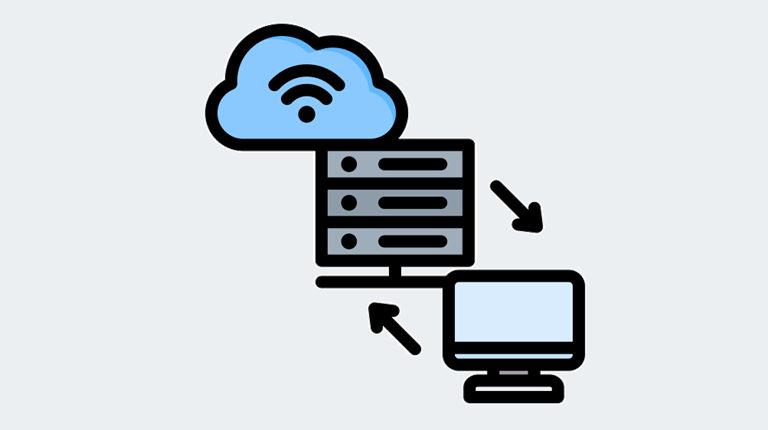
Web Scraping Without Constant Blocks
Once you have tried scraping just once, you are likely to have experienced the way it goes. Everything is fine initially. Orders pass, information enters, and it is smooth.
Then suddenly, it doesn’t. You become blocked, slackened, or the site simply ceases to respond in a normal fashion. It normally occurs quicker than anticipated, and it does not occur randomly.
Patterns that do not feel normal are sought by websites. One of the simplest signals to pick up is too many requests from the same IP. The proxies distribute those requests among various IPs, making it appear more like normal traffic rather than a single source repeatedly accessing the same page.
Managing Multiple Social Media Accounts Safely
It may seem easy to handle various accounts, but it can hardly remain the same. Such platforms as Instagram or LinkedIn not only monitor actions, but they also monitor trends.
When several accounts continue logging in under the same IP, then it begins to be suspicious. All that can be flagged is even in case all is legitimate.
Proxies isolate such accounts on an IP basis. All of them seem to be separate, and this minimizes the possibility that they can be correlated. This is difficult to overlook when you are dealing with more than a few accounts.
Seeing Ads the Way Real Users Do
The version that you can see online is just another version. The advertisements vary depending on the location, the history of browsing, the device, and more.
Therefore, when you are checking on your own campaigns or that on competitors, you are not seeing the whole picture. You’re seeing your version.
Proxies allow checking advertisements in various areas and configurations. That also provides you with a better view of how things are really being presented to users, rather than to users based on a single view.
Accessing Geo-Restricted Content
Geo-restrictions are common. You attempt to access something, and you just do not find it in your area. Nothing on your part, it is only blocked by location.
A proxy makes your connection go via a different area, thus making the site think it is connecting with you via a different area. It is just a quick fix, and it proves very handy to access to the content or tools or even test the functionality of things in various locations.
Monitoring Competitor Prices in E-commerce
Price tracking seems easy initially, but it does not remain that way. As soon as you start visiting it regularly, e-commerce websites will start paying attention to your frequent visits.
After that, things change. You could be blocked, or the information you view will not be the truth anymore.
The proxies assist by disguising every request as one that is made by another user. This maintains constant access and reliability of the data. This has a direct impact on the decisions that the store owners make.
Getting an Edge in Limited Product Drops
Limited drops are all-time. Shoes, merch, anything that is in high demand – it’s all just how quickly you can move to the next one.
Many of them opt to employ automation here, but that is not very effective in the long run. When all is run via a single IP, it is flagged easily.
Those attempts are distributed among several IPs by proxies, and this activity will appear less focused. It will not assure success, but will surely increase your chances.
Adding a Layer of Privacy to Everyday Browsing
Not all the use cases revolve around scaling or automation. At other times, it is merely a matter of having greater control over your online self.
IP addresses and location information are monitored in websites all the time. That is the way things are now.
A proxy creates a distance between you and such sites. It does not make you anonymous, but it exposes a person less directly and provides a somewhat better level of control.
Accurate SEO Rank Tracking
Not all people have the same search results. Both your whereabouts and history are used to determine what you watch.
The data used to look at rankings by hand is already biased, even if it may not seem.
Proxies help simulate searches from specific locations without personal bias. And for consistent tracking, stability matters. That’s where solutions like proxy-cheap come in, offering options such as a static residential proxy that maintains the same IP while still appearing like a real user. This balance is what makes rank tracking data far more trustworthy.
Running Multiple Marketplace Accounts
Social sites such as Amazon and eBay are also very strict with connections to their accounts. Accounts may be linked in case they trace common indicators, such as similar IP.
And when that occurs, it is possible to influence them all.
Proxies are useful when it is necessary to keep the accounts apart by assigning each account its own identity. This enables it to deal with various stores or regions without any needless risk.
Supporting Automation Without Getting Flagged
Everything is now automated, even outreach. It is time-saving, though platforms are actively trying to identify it.
When it is all run on a single IP, it becomes simple to detect it. And when flagged, it normally breaks down.
Proxies spread such activity over a variety of IPs, and it resembles normal usage more closely. Not invisibly so, but far more stable.
Choosing the Right Type of Proxy
Proxies do not operate in the same manner, and the incorrect type of proxy may cause issues. Residential proxies utilize real IPs; thus, they are more difficult to detect.
The datacenter proxies are less expensive and quicker to flag, but platforms find them simpler to flag.
It is also rotating and static proxies. Rotating proxies rotate successful IPs, and this is ideal for use in scraping. The IP is maintained in the static proxies, and this is suitable for accounts and extended sessions.
Final Thoughts
Proxies do not sound as complex as they do. As soon as you see the actual use cases, they will begin to make sense.
They are simply the means of having greater control over your online presence. And you might not need them in the beginning.
However, when you start scaling anything, you will reach constraints. It is often at this stage that proxies cease to be optional and simply become part of the infrastructure.
Popular on OTW Right Now!


About The Author

Gagan Bhangu
Founder of otechworld.com and managing editor. He is a tech geek, web-developer, and blogger. He holds a master's degree in computer applications and making money online since 2015.