
SOC 2 Type I vs Type II for Startups: Cost, Timeline, and Which Buyers Ask for Which
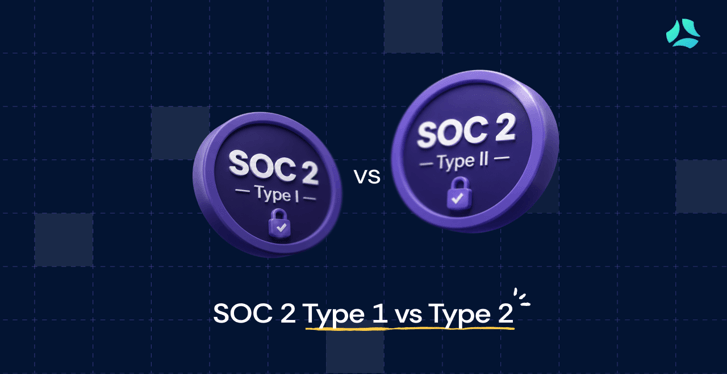
SOC 2 Type I evaluates whether controls are suitably designed and implemented at a specific point in time, while SOC 2 Type II also evaluates whether those controls operated effectively over a defined period. For startups, that difference affects cost, preparation time, customer acceptance, and the point at which the report becomes useful in enterprise sales.
SOC 2 is an AICPA attestation framework based on the Trust Services Criteria, which cover Security and, when included in scope, Availability, Processing Integrity, Confidentiality, and Privacy.
What is a soc 2 type 2 statement?
A SOC 2 Type 2 statement is an independent CPA report describing a service organization’s system and examining whether relevant controls were suitably designed and operated effectively over a period of time.
That makes Type II fundamentally different from a point-in-time assessment. An auditor does not simply ask whether a startup has a written access-control policy. The auditor also tests evidence showing that the control actually operated during the examination period.
For a SaaS startup selling to larger companies, this operating-effectiveness evidence is often what makes Type II more valuable during procurement.
What is the difference between soc 2 type 1 vs type 2?
The difference between SOC 2 Type I vs Type II is that Type I evaluates control design at a specified date, whereas Type II evaluates both control design and operating effectiveness over a period.
A simple comparison is:
- Type I: “Are the controls appropriately designed and implemented today?”
- Type II: “Were those controls appropriately designed and operating effectively throughout the examination period?”
Type I can therefore be useful when a startup needs independent assurance quickly. Type II provides stronger evidence for buyers that want to know whether security practices consistently operate rather than merely exist on paper.
The AICPA provides separate illustrative materials for SOC 2 Type I and Type II engagements, reinforcing that these are different examination/report paths rather than two names for the same assessment.
How much does soc 2 type 1 vs type 2 cost startups in usa?
SOC 2 Type I typically costs less than Type II, but there is no universal U.S. price because audit scope, company complexity, auditor tier, readiness, tooling, and remediation can substantially change the total.
Current 2026 market estimates put Type I audit fees broadly around 35,000 and Type II around 60,000 or more for many startup engagements. One current directory reports specialist-firm planning bands of 35,000 for Type I and 50,000 for Type II, excluding readiness, software, testing, remediation, and internal labor.
For budgeting, startups should separate four expenses:
- Readiness: Gap assessment, policies, control design, and remediation planning.
- Technology: GRC software, endpoint security, logging, identity management, and related tooling.
- Audit: The independent CPA examination and report.
- Internal effort: Engineering, security, HR, legal, and management time.
A startup that receives a $15,000 audit quote should not assume its total SOC 2 program will cost only $15,000.
How much does soc 2 type 1 vs type 2 cost startups in india?
For Indian startups, current market estimates commonly put Type I around ₹2 lakh–₹5 lakh and Type II around ₹5 lakh–₹12 lakh, although scope and provider selection can move those numbers considerably.
The important distinction is whether a quoted price covers only the examination or an all-in compliance program.
A startup comparing Indian and U.S. providers should request the same scope from every bidder and ask explicitly whether the proposal includes:
- Readiness assessment
- Compliance platform
- Policy development
- Remediation
- Penetration testing
- Auditor fees
- Type I or Type II report
- Ongoing compliance support
Otherwise, a low headline price can simply reflect fewer included services.
How much does soc 2 type 1 vs type 2 cost startups in san francisco?
A San Francisco startup should not assume that local geography creates a fixed SOC 2 price premium. The major cost variables are system scope, company size, control maturity, audit firm, and how much preparation work the startup needs.
A startup with a simple cloud architecture and mature security practices can spend substantially less than a larger company with multiple environments, complicated infrastructure, extensive integrations, and several Trust Services Criteria in scope.
For U.S. planning purposes, current 2026 estimates place many startup Type II audit fees in the tens of thousands of dollars, with significantly higher figures possible for larger or more complex engagements.
How much did SOC 2 cost your startup (audit + tooling)?
A realistic startup budget needs to include both the audit and the surrounding compliance program because the auditor’s invoice is only one component.
Current 2026 estimates for small SaaS companies commonly put total first-year SOC 2 spending somewhere around 80,000+, depending on starting maturity and whether the company uses consultants, compliance software, or a more DIY approach.
A simple example illustrates the difference:
- Audit: 30,000
- Compliance platform: 20,000+
- Penetration test: several thousand dollars
- Readiness/remediation: 30,000+
- Internal staff time: highly variable
These are planning ranges, not quotes. A startup that already has MFA, centralized logging, access reviews, incident response, vendor management, documented policies, and evidence collection in place can require substantially less remediation.
What is the difference between soc 2 type 1 vs soc 2 type 2?
The practical difference is the evidence a buyer receives.
Type I can demonstrate that a startup has established an appropriate control environment at a particular point in time. Type II gives the buyer additional evidence that those controls operated effectively over the examination period.
That distinction matters in procurement. A prospective customer may accept Type I when it needs assurance that a young vendor has established its security program, while a mature enterprise procurement team may specifically request Type II.
There is no universal rule that every enterprise buyer requires Type II. The buyer’s security questionnaire, contract requirements, industry, risk tolerance, and procurement policy determine what evidence it accepts.
What is a soc 2 type 2 statement?
A SOC 2 Type II statement is ultimately useful because it gives customers evidence about control operation rather than simply describing a control environment at one date.
For startups, the most efficient path is often to work backward from t
Popular on OTW Right Now!



About The Author

Gagan Bhangu
Founder of otechworld.com and managing editor. He is a tech geek, web-developer, and blogger. He holds a master's degree in computer applications and making money online since 2015.