
Key Future Trends to Consider When Building a Music App
Music streaming apps have completely reshaped how people discover, listen to, and share music in today’s digital-first world. From on-demand playback to AI-powered recommendations, the industry has moved far beyond simple audio libraries.
Users now expect seamless experiences, personalized playlists, and intelligent features that adapt to their listening habits in real time.
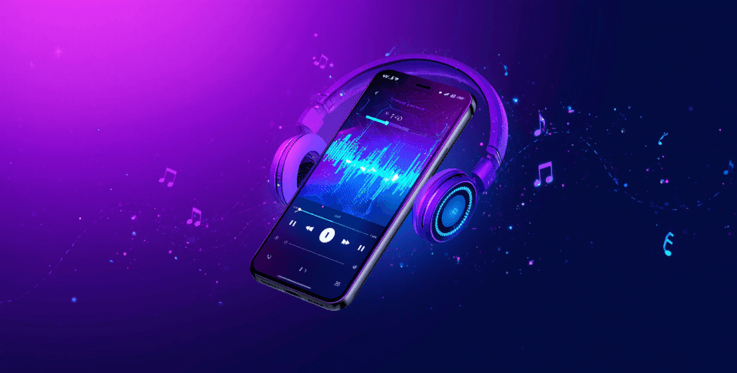
As competition continues to grow, building a successful music app is no longer just about offering songs; it’s about delivering an immersive, future-ready experience.
This is where understanding emerging technologies and design shifts becomes essential. Developers and businesses must anticipate how user behavior and technology will evolve in the coming years.
In this blog, we explore the key future trends shaping music app development and why staying ahead of them is critical for long-term success in a highly competitive market.
Why Do Future Trends Matter in Music App Development?
Future trends in music app development are essential for meeting rising user expectations, staying competitive in a crowded market, and leveraging technologies like AI and data analytics.
They also ensure better user retention, scalable performance, and smarter development strategies for long-term success.
- Rising global competition: The music streaming market is crowded, with platforms constantly competing for user attention through better features and experiences.
- Shift in user expectations: Users now demand personalization, instant access, and seamless playback across devices rather than just music storage or streaming.
- Retention over acquisition: Success depends less on downloads and more on long-term engagement, which is driven by smart features and adaptive UX.
- Role of advanced technologies: AI, machine learning, and data analytics now define how users discover music, making innovation a core requirement rather than an option.
- Performance and scalability needs: Modern music apps must handle millions of users, high-quality streaming, and real-time syncing without lag or downtime.
- Strategic development decisions: Choosing the right development approach and technical expertise becomes critical for building future-ready platforms.
This is where working with a music streaming app development company becomes valuable for ensuring scalable architecture and innovation-driven execution.
Key Future Trends in Music App Development
AI-driven personalization, voice control, blockchain security, and immersive listening experiences are leading the way in the evolution of future music apps.
These changes are changing how music is found, streamed, and enjoyed on various platforms, as well as making it more scalable, high-performing, and user-friendly.
1. AI-Powered Music Recommendations:
AI is changing the way users find music based on their current listening habits, moods, and behaviors by analyzing them in real-time.
It allows applications to build very precise playlists and song recommendations according to the preferences of each user. This will help increase engagement and decrease search time dramatically.
The system gets smarter with each skip, repeat, and like by updating machine learning models to make better recommendations.
Consequently, their users are offered a more personalized and intuitive music experience, which enhances engagement and satisfaction across the platforms in digital music ecosystems.
2. Hyper-Personalized User Experience:
Hyper-personalization takes it a step further than simple recommendations, though, and customizes all facets of the user experience: playlists, home screens, notifications, etc.
It responds dynamically to real-time data like location, activity, listening history, etc. This makes it more interesting and meaningful for users.
Appropriate and personalized content can be provided at the right time if music apps have a deep understanding of individual preferences.
Among others, the mobile app development company Denver contributes to implementing such data-driven personalization systems in modern music apps.
This helps enhance user satisfaction, fosters loyalty, and boosts user engagement across modern digital streaming ecosystems around the world.
3. Voice-Enabled Music Control:
With voice-enabled features, today’s music applications enable hands-free searching, playing, and control of music.
This technology provides improved accessibility and convenience, particularly when performing multiple tasks or driving.
Integrated voice assistants can listen to natural language inputs and provide a timely, relevant answer. It minimizes reliance on manual navigation and enhances overall user experience.
With the progress of voice recognition, music applications should provide more contextual and conversational interactions. This enhances their smartness and usability in daily lives, and hands-free user engagement.
4. Blockchain-Based Rights Management:
Music rights management is also gaining more transparency with Blockchain technology, providing secure and traceable royalty distribution.
It cuts out the middleman and makes sure that artists get fair compensation. Smart contracts execute payments automatically when specific criteria are met, minimizing delays and conflicts.
This system helps establish trust amongst artists, platforms, and listeners by ensuring an immutable artist ownership record.
With the adoption of blockchain, the financial system of the music industry is likely to change. This adds efficiency, security, and transparency to all involved in transactions, which in turn contributes to the future digital music economies embraced worldwide.
5. High-Fidelity Audio Streaming:
Users have come to expect high fidelity and lossless audio streaming as standard when looking for a high-end listening experience.
It provides better audio quality than compressed versions, maintaining original studio recordings. Audiophiles and the demand for immersive audio experiences on all devices are fueling this trend.
Streaming platforms are putting money into the development of advanced codecs and infrastructure to support high-resolution audio.
With the wider availability of high-speed Internet connections worldwide, high fidelity (Hi-Fi) streaming will be more common and more easily available in mainstream music applications. This improves the quality of listening experiences for users everywhere, which ultimately contributes to a superior next-generation listening experience.
6. Wearables and IoT Integration:
The future of music apps is heading toward a more connected world, with seamless integration into wearable devices and IoT systems. The integration with wearables and IoT devices is shaping the future of music apps by creating a more connected experience for users.
Smartwatches, fitness trackers, and connected devices offer easy control and context-aware music playback.
The user can switch tracks, control volume, or get recommendations right from his/her wearable devices. It makes it easier to use and provides a more immersive experience in interconnected spaces.
Cross-device sync keeps playback flowing seamlessly across all platforms, always in sync.
7. Social Listening & Community Features:
Social listening capabilities are revolutionizing music apps into social communities where users can share playlists, songs, and live feedback and reactions.
This trend benefits engagement, as users can connect on a musical level and listen together to music.
Live chats, group listening rooms, and social sharing are all features that boost user retention. This also allows platforms to better understand how to leverage users’ behavior and preferences.
Music apps are moving from streaming services to community-centric ecosystems, as social interaction takes the spotlight in digital experiences. It increases users’ engagement at a deeper level all over the world.
8. Cloud-Based Scalable Architecture:
Cloud-based architecture powers today’s music applications, allowing them to be scalable, reliable, and performant for millions of users.
It enables platforms to store and stream large music libraries with no latency problems. This infrastructure enables instant messaging, data synchronization, and access from anywhere around the world.
With cloud computing, apps can dynamically scale resources based on user demand, ensuring consistent performance during peak usage.
It also helps lower operating expenses, increases system protection and resilience for future expansion and stability. This helps fulfill the global music streaming infrastructure evolution at scale.
Conclusion
Looking ahead, the future of music apps is promising to be more intelligent, personalized, and connected, offering users around the world a more enriching streaming experience.
The innovations are reshaping music discovery and streaming from AI recommendations to blockchain and cloud scalability. In addition, they are changing the way people experience music on various devices.
The key to success in this rapidly changing market is innovation, a robust technical structure, and design for the user.
Focusing on these developments is essential for achieving higher engagement, retention rates, and sustainable growth in such a competitive market.
In conclusion, creating a future-proof music app is essential for ensuring the long-term growth and success of the global digital entertainment market.
Popular on OTW Right Now!


About The Author

Gagan Bhangu
Founder of otechworld.com and managing editor. He is a tech geek, web-developer, and blogger. He holds a master's degree in computer applications and making money online since 2015.