
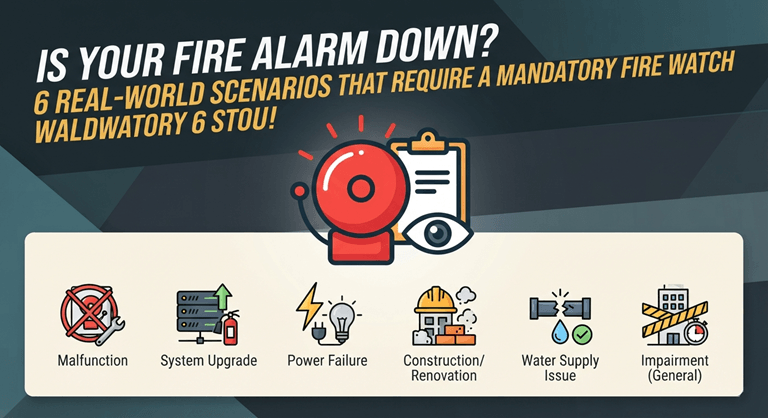
Is Your Fire Alarm Down? 6 Real-World Scenarios That Require a Mandatory Fire Watch
A functioning fire alarm system is your commercial property’s primary line of defense against sudden disasters. However, whenever life safety systems go through panel maintenance, experience electrical shorts, or have issues with their central processing, your building will automatically be exposed to hazards that lack monitoring.
During such situations, engaging fire watch guards professionally will provide you with the opportunity to have continuous monitoring while ensuring that your building is fully in compliance with the local fire codes. So, when should a fire watch be engaged during fire alarm system outages? As per the guidelines of the National Fire Protection Association (NFPA 101 and NFPA 72), any building owner whose required fire alarm system is out of operation for more than 4 cumulative hours in 24 hours must inform the AHJ (Authority Having Jurisdiction).
What Constitutes a Fire Alarm System Impairment?
A system impairment occurs whenever a fire protection system—or a critical portion of it—is inactive, impaired, or offline. There will be no automated 24/7 monitoring, making everyone vulnerable.
To understand the point at which commercial downtime becomes not only a nuisance but a legally required situation is crucial in preventing structural damage, fines from the Fire Marshal, and building evacuations.
6 Real-World Scenarios Requiring an Emergency Fire Watch
1. Unplanned Outages Triggering the 4-Hour Rule
Power surges, lightning strikes, or motherboards failing in the main control panel can unexpectedly knock your life safety systems offline. The 4-hour rule fire watch commercial building mandate applies whenever total downtime reaches 240 minutes within a single day.
Important: This 4-hour threshold is cumulative, not consecutive. If your system goes down for two hours in the morning and another two hours in the afternoon, you have met the legal threshold for mandatory fire watch implementation.
2. Scheduled Upgrades and Maintenance
Routine system maintenance, sensor replacements, or control panel retrofits often require technicians to take local zones offline. When executing planned fire alarm system impairment procedures, facility directors must establish a pre-planned mitigation strategy. If the work is scheduled to span beyond 4 hours, contracting certified guards from The Fast Fire Watch Company ensures dedicated personnel are stationed on-site before the system is powered down.
3. Hot Work Operations in Active Zones
Operations involving open flames, welding, soldering, or torch-cutting produce smoke and heat that trip sensitive detection sensors. Facility managers frequently isolate specific alarm zones to avoid costly false dispatch fees. Under NFPA 51B, isolating these zones requires dedicated fire guards to continuously patrol the work location during operations and for at least 30 to 60 minutes after hot work ceases.
4. Sprinkler System Impairments and Pressure Drop
Fire alarms and water-based suppression systems work hand-in-hand. If a backflow preventer fails, a water main bursts, or sprinkler pipes freeze, the system’s water flow switches cannot transmit signal alerts to the main alarm panel. While NFPA 25 provides a 10-hour cumulative window for water-based impairments, partial alarm failures resulting from sprinkler repair immediately mandate manual patrols.
5. Construction Dust and Major Renovations
During heavy demolition, drywall sanding, or interior painting, construction crews often cover smoke detectors with plastic caps to prevent dust contamination. However, a covered detector is non-operational. Unmonitored construction zones with capped detectors require active physical patrols to maintain compliance with local fire safety codes.
6. Communication Line and Cellular Communicator Loss
Even if local horns and strobes operate, an alarm system cannot protect a building if it cannot alert emergency services. If municipal landlines are severed or cellular communicators fail, your facility loses connection to central monitoring. When signals cannot reach dispatchers, the AHJ considers the system fully impaired, requiring you to maintain strict fire watch log sheet requirements for AHJ inspection.
Frequently Asked Questions
Does the 4-hour rule pertain to consecutive hours or cumulative hours?
NFPA codes stipulate 4 cumulative hours per 24-hour day. A series of intermittent interruptions in a single day that amounts to 4 hours is sufficient for mandatory fire watch activation.
What is the difference between fire watch and continuous monitoring?
The fire watch vs continuous monitoring difference lies in the physical presence of humans compared to automated electronics. Continuous monitoring involves sensors connected to an alarm station to activate remote dispatching of firefighters. Fire watch from The Fast Fire Watch Company involves trained personnel walking the building hallways, recording observations in logbooks, inspecting fire extinguishers, and calling 911 in case of any threat.
What will happen if I do not start the fire watch?
Not activating the fire watch may result in the immediate imposition of Stop Work orders by the Fire Marshal, stiff city penalties, and insurance denial in case of fire damage caused by the lack of system supervision.
Conclusion: Staying Compliant and Protected
Fire alarm system outages – whether they occur through planned downtime or because of unexpected system malfunction – expose you and your property to substantial risks. Understanding the NFPA requirements and AHJ guidelines can be simple, but reacting quickly when your system has reached its 4-hour mark is imperative. Partnering with The Fast Fire Watch Company ensures you can implement compliant fire watch services without delay, helping you stay protected while your fire alarm system is restored.
By identifying the cause of the malfunction, maintaining proper logs, and implementing a patrol service, you will prevent your building from being destroyed by a fire, avoid costly penalties, and keep your facility operational.
Popular on OTW Right Now!




About The Author

Gagan Bhangu
Founder of otechworld.com and managing editor. He is a tech geek, web-developer, and blogger. He holds a master's degree in computer applications and making money online since 2015.