
How to Write Product Descriptions for Search Visibility Across Marketplaces?
Does a Well-Written Product Description Actually Guarantee Search Visibility Across Marketplaces?
No. Writing quality alone does not determine whether a product description performs in search. Visibility depends on how well the content aligns with buyer intent, how clearly it is structured, whether it addresses key pre-purchase questions, and how effectively it fits the platform’s content and indexing requirements.
This blog breaks down the product description writing for the SEO process step by step. It covers intent-led keyword strategy, scan-friendly content structure, FAQ-driven support for long-tail queries, platform-specific optimization across Amazon, Shopify, and WooCommerce, and how product description writing services help.
How to Write SEO-Friendly Product Descriptions That Rank Across Marketplaces?
1. Build Keyword Strategy from Purchase Intent, Not Search Volume Alone
A keyword strategy built solely on volume will attract traffic from early-stage researchers, comparison browsers, and informational queries, none of which reliably lead to purchase. The relevant metric is purchase intent: how closely a search query maps to a decision already in progress.
In the case of e-commerce, this normally implies ranking keywords with a commercial and transactional intent rather than informational intent.
| Search Intent | What it Indicates | Example Queries | Relevance for Product Descriptions |
| Informational | The shopper is learning or exploring a topic | “How does noise cancelling work?”, “benefits of merino wool” |
Limited relevance; usually not a primary target |
| Navigational | The shopper is looking for a specific brand, store, or page | “Nike running shoes”, “Spotify Premium” | Relevant mainly for branded product searches |
| Commercial | The shopper is comparing options before purchase | “best wireless earbuds for calls”, “top-rated carry-on luggage” | Strong relevance, especially for feature-led descriptions |
| Transactional | The shopper is ready, or very close, to buying | “Buy AirPods Max”, “wireless earbuds free shipping.” | Highest priorit |
Identifying high-intent keywords requires layering three sources:
- Search behavior patterns indicate which category terms are trending, variations of keywords, and the changing query language as buyers approach a purchase. The demand level, direction of the trend, and related queries, as well as competitive keyword opportunities, are verified using keyword research tools like Google Keyword Planner, Google Trends, and Semrush.
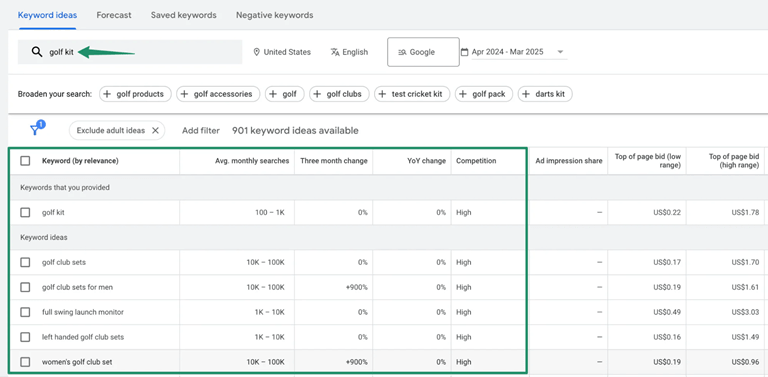
Source: Shopify
- Competitor analysis shows which keyword patterns, modifiers, and content structures are already performing well across marketplaces and search engines.
- Voice of Customer (VoC) data drawn from reviews, Q&A sections, and support interactions surfaces the exact phrasing buyers use to describe needs, issues, and interests.
Keyword placement works best when it supports both relevance and readability.
- Product title — place the primary keyword early to establish immediate product-category relevance.
- First 100 words — integrate the primary keyword early and closely related secondary terms in a natural context.
- Bullet points — weave in secondary keywords through features, benefits, and differentiators.
- Body copy — integrate long-tail keywords into attributes, use cases, and product specifications.
- Image alt text — use descriptive keyword phrasing where the platform supports image metadata.
2. Structure Descriptions for Scanability Across Devices
Customers usually scan the product pages, compare the products, and seek the information that can assist them in evaluating fit, features, and purchase relevance. Appropriate product description enhances a user to read through the content and compare it across devices.
A layout that performs consistently across Amazon, Shopify, and WooCommerce:
- A short opening paragraph (two to three sentences) that identifies the product, its primary use case, and one defining attribute — written to appear in Google’s meta description snippet or Amazon’s preview line without truncation.
- A bulleted specification block covering dimensions, materials, compatibility, certifications, and configuration options.
- A closing sentence or short paragraph addressing purchase context — who the product is built for, what it replaces, or what purchase scenario it fits.
3. Add FAQs to Target Long-Tail Queries and Reduce Pre-Purchase Friction
FAQs assist product pages to resolve the queries that buyers usually possess prior to buying that product, like fit, compatibility, usage, care, returns, or product limitations. This facilitates scanning the page and prevents hesitation in the process of evaluation. In the case of a shopper, rather than having to go and look up the description, asking a question like; Is this wireless keyboard compatible with Mac and Windows? provides a direct response at the point of decision.
They are also helpful in supporting long-tail search visibility since the FAQ items can be the direct wording of questions that buyers search.
Relevant FAQ content should come from actual buyer and search data, such as:
- Emails, chat logs, and support tickets of the customers.
- Product reviews, questions, and answers.
- FAQs competitor product page.
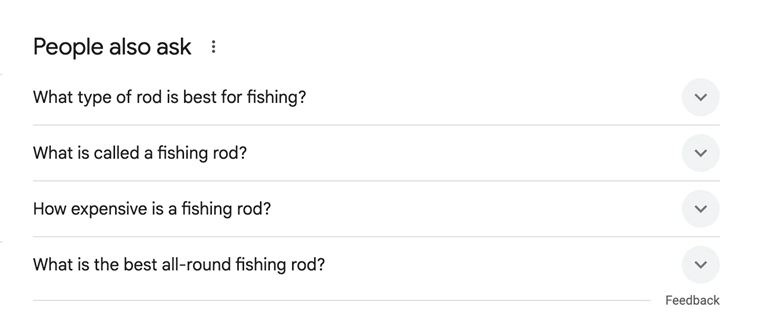
- Related search questions, autocomplete, and results of People Also Ask.

4. Optimize Product Descriptions for Platform-Specific Compliance
Product descriptions should also be in line with the content regulations, field format, and search algorithms of the platform. A description of a product that suits one channel might not entirely conform to the structure, limitations, or content specifications of a different channel.
An effective product description is aligned with platform-specific requirements such as;
- Title organization and personality boundaries
- Feature field formatting bullet or feature field formatting
- Fields of visible content and backend search.
- Category restrictions and outlawed claims.
- Technical content elements metadata, schema, or other elements.
- Description distinctiveness among marketplaces and storefronts.
How Requirements Vary by Platform?
In Amazon, this typically entails matching titles, bullet points, the search terms in the background, and listing criteria on the category level. Shopify and WooCommerce are more concerned with the readability of their on-page metadata, structured product information, and preventing repetition of descriptions of manufacturers in self-hosted pages.
The Case Study: An American fashion retailer was experiencing conflicting product descriptions, balancing between creative writing and SEO, and increasing seasonal SKU demand. The SunTec India streamlined the product descriptions, enhanced the alignment of keywords, and enhanced the consistency of the content, and in the process, the leads increased within one year.
The Strategic Imperative: As e-commerce discovery becomes more intent-led, structured, and channel-specific, businesses need product descriptions that support visibility, consistency, and purchase-readiness simultaneously.help businesses manage large catalogs more efficiently by combining scalable workflows with field-level expertise across titles, bullets, descriptions, backend search terms, specifications, and platform-specific content requirements.
Author Bio- Hazel James is an eCommerce consultant at SAMM Data —a leading eCommerce growth agency offering product data management, eCommerce marketing, marketplace management, and branding & creative solutions. She works closely with 45+ brands to optimize their e-commerce operations and uncover new growth opportunities. Hazel excels at analyzing market trends, spotting emerging technologies, and implementing best practices, enabling businesses to maintain a competitive edge. With her expertise, she helps brands make data-driven decisions and streamline their operations, ensuring long-term growth and operational efficiency.

Popular on OTW Right Now!
-
 Can Your Learning Management System Withstand Peak Usage Without Compromising Performance or Security?
-
 What Houston Founders Don’t Realize About App Costs
-
 How to Monitor Wellness App’s Success using Free Analytics Tools in Harlem
-
 Buy IPv4 Addresses Without Delays: What Businesses Should Know Before Making a Purchase


About The Author

Gagan Bhangu
Founder of otechworld.com and managing editor. He is a tech geek, web-developer, and blogger. He holds a master's degree in computer applications and making money online since 2015.