
How to Set Up a Smart Outdoor Lighting System at Home
A dark yard is easy to ignore until you trip over a garden hose at 10 pm. Outdoor lighting fixes that, and the smart version lets you control everything from your phone on top of it. Most residential systems run on low voltage transformers, which step your mains power down to a safe 12V or 24V. Once that’s sorted, the rest comes together in an afternoon.
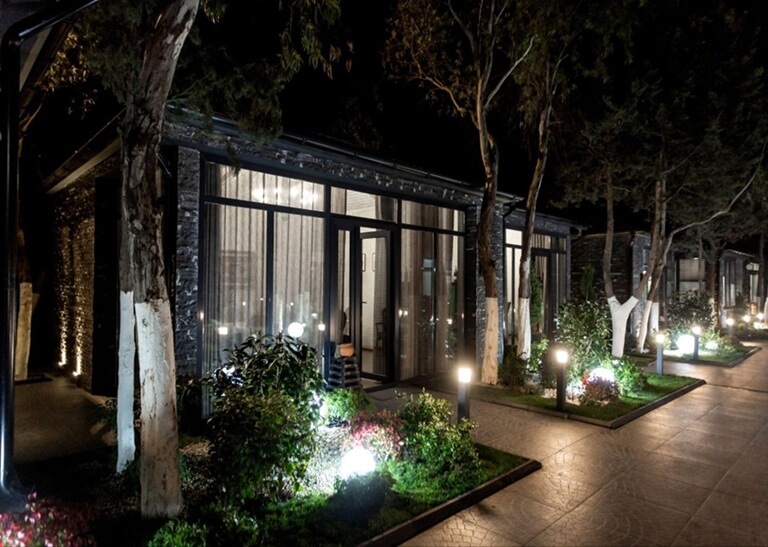
Why Smart Outdoor Lighting Is Worth It
In the old days, when you used outdoor lights, you had to use a switch or a timer, and it never seemed to coincide with the setting of the sun. Intelligent lighting is self-correcting. The lights are activated when it becomes dark and switched off at any time you choose.
You can program them to go dark later in the evening in case you do not need all the brightness throughout the night. And when you are out on vacation, the clock does not stand still, so the house does not spend days in the dark.
Pricing has come down quite a bit, too. A transformer, path lights, and a Wi-Fi controller will run you somewhere between $200 and $350.
Planning Your Layout
This is one of the steps that are easy to overlook, but they have a significant difference. At night, go out and take a walk around your property with a flashlight. Aim at the areas you think a light should have, and you will see where you never thought. The black shadow in between the garage and the side gate, say.
Draw a sketch map and indicate every position. Predominantly, you are attempting to determine the length of cable required and the location of the transformer in relation to your outdoor outlet.
Cable longer than 100 feet loses voltage, so the lights at the end of the cable appear dimmer. Two shorter runs are better than one long run in case your yard is bigger.
Choosing the Right Fixtures
There are some primary types. Path lights follow walkways and spotlights direct a beam of light towards a tree or the front of the house. Flush-mount lights are good in steps or on deck. Larger open spaces, such as driveways,s are the ones that are served by flood lights.
In whatever style you choose, make sure you check the IP rating. IP65 and above indicates that the fixture will be able to withstand rain and dust. The default is now pretty much LED since they consume less energy and have longer lifespans.
You are tempted to take the lowest-priced kit on the Internet, but the connectors on such kits will likely corrode quickly. It is a little extra money that will save you the hassle of changing fixtures after every season with a well-established brand.
Setting Up Smart Controls
This is what will make your lights smart. Everything is connected to your home network by the controller in order to control it via an app or voice assistant. It communicates using Wi-Fi, Zigbee, or Z-Wave, depending on the model.
To make it easy, find a transformer with intelligent capability already integrated. You can download the app, pair the device, and be ready in approximately ten minutes. Have an already working transformer? An outdoor smart plug between the outlet and the transformer provides you with remote control and scheduling without hardware modifications.
To be able to dim various areas independently, you will require a hub and zone-capable dimmers. Greater time to set up, but worth it in larger systems.
Running the Cable
Stick with 12-gauge direct burial cable. It can cope with normal residential loads and can survive for years underground. In most locations, burial should be at a depth of approximately six inches, but you should refer to your local code, which may require conduit.
Today,y the fixture kits are mostly equipped with pierce-point connectors. They just clamp on the cable and do not need stripping. Attempt to create a little slack around each of the fixtures in order that you have room to move or remove a light further down the line.
Connecting to Your Smart Home
The lights are wired and working, so now you need to get the controller onto your home network. The majority of applications guide you by scanning with a QR code or pressing a button.
Your time schedule would be sunset on and midnight off. The majority of apps will fetch your local sunset information and automatically adjust the time of day across the seasons. Already using Alexa, Google Home, or Apple HomeKit? You can integrate the lights into your existing smart routines and control them with voice.
Maintenance Tips
These systems do not require a lot. Wipe the lenses down once a season, examine the connectors, whether there is any green on them, and check to see whether the mower has loosened anything.
A loose connection, rather than a dead connection, is nearly always the reason why a light is beginning to look dark. Take the connector away, rub the contact, and put it in again,n and add a bit of dielectric grease. Lasts approximately two minutes. The transformer itself is fairly low-maintenance and can last 10 or more years without problems.
Final Thoughts
You’ll notice the difference the first night. The yard is now nicer, it is now safer to walk around at night, and no more fussing with switches.
The technology has developed such that one does not need to be technical to install it. The prices are affordable, and the entire installation can be completed within a weekend. When it has been on your to-do list, then you have no more need to continue with procrastination.
Popular on OTW Right Now!



About The Author

Gagan Bhangu
Founder of otechworld.com and managing editor. He is a tech geek, web-developer, and blogger. He holds a master's degree in computer applications and making money online since 2015.