
How to Keep a Small Kitchen Clean When Counter Space Is Limited
A small kitchen can feel crowded long before it is actually dirty. One cutting board, a few dishes, a grocery bag, and a coffee maker may be enough to leave no clear place to work.
That lack of space creates a chain reaction. Food preparation spills into the sink area, dishes move onto the counter, crumbs get trapped beneath appliances, and wiping becomes difficult because everything has to be moved first.
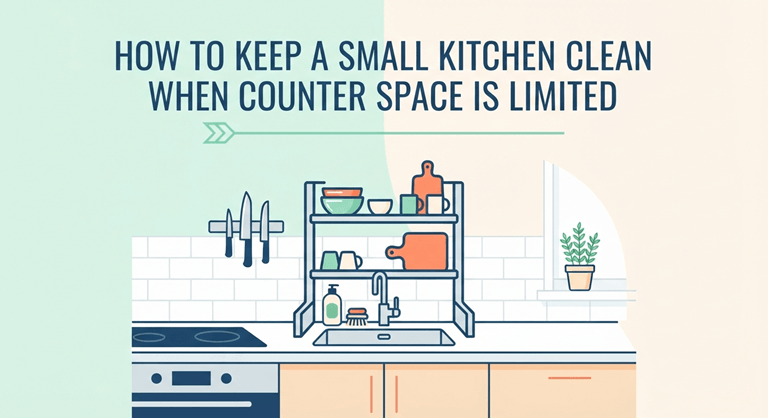
The most useful habit is not constant cleaning. It is protecting one clear landing space that can be used for chopping, setting down a hot pan, unpacking groceries, or wiping quickly after a meal. Once that space disappears, every other kitchen task becomes harder.
Choose One Counter Section That Stays Available
A compact kitchen does not need completely bare counters.
It does need one dependable section that is not permanent storage.
Choose the stretch of counter that works best for food preparation and keep only the items there that are used every day. Appliances that come out once or twice a week can usually live in a cabinet, pantry, or nearby storage spot.
Even a small clear rectangle makes a difference.
It gives groceries somewhere to land, makes meal preparation easier, and prevents people from balancing cutting boards or plates on top of unrelated items.
Let Frequency Decide What Earns Counter Space
Countertops become crowded when every appliance is treated as equally important.
A coffee maker used every morning probably deserves a permanent spot. A blender used twice a month may not.
The same applies to utensil crocks, decorative jars, knife blocks, fruit bowls, and paper products.
At times, the problem in a kitchen as far as SQKY Cleaning is concerned is not the amount of grime but the lack of space due to an excess of objects on every accessible surface.
This permanent layer is reduced, making it easier for you to wipe and reducing the spots for crumbs to hide in.
Keep the Sink Ready for Washing
A little sink can turn into a drainage hole in no time at all.
After that, cups and plates begin to fall down and the nice, clean working area is gone in no time.
Use large pots and pans first, if available. When cleaning up after meals, load the dishwasher or wash and put away larger items that take up most of the dishwasher.
It’s okay for the sink to be full for part of the day.
It just has to be maintainable enough so that the next person can wash produce or a sink, rinse a pan, or clean up a spill without having to move a stack of dishes.
Clean Where Cooking Actually Reaches
When you’re cooking in a small space, a dirty stovetop is not a common occurrence.
Oil is able to get to a nearby backsplash. Flour lines up next to canisters. The sauces are placed on cabinet fronts, and fingers gather around handles when cooking, when hands are full.
Once cooked, discuss the new marks that will be more challenging the next day.
It could be a wipe down of one spot on the backsplash, the stove controls, or the prep area cabinet pull.
You don’t have to scrub the whole kitchen at night. Target the places involved in that particular meal.
Stop Small Appliances From Creating Hidden Pockets
Clean-looking counters can quickly fill up with unnoticed crumbs and sticky spots from toasters, coffee machines, mixers, and air fryers.
The mess collects around the base and cords, particularly if multiple appliances are placed near each other.
When handling light items of furniture, do not try to wrap a cloth around it but relocate it from time to time.
Disconnect electrical devices as necessary, remove dry crumbs, and clean the surface of the counter under the device before reinstalling.
It is especially useful in a small kitchen as each hidden space is a substantial percentage of the counter.
Treat Vertical Storage as Relief, Not Decoration
Hooks and shelves freely placed throughout can remove horizontal space, but can also set up a different challenge.
With open storage, dust and cooking film accumulate.
Store items that are used regularly vertically. Maybe not a wall that’s covered in utensils, but a magnetic strip, inside-door organizer, or a single shelf riser.
Items placed close to the stove should be carefully selected, as grease may become airborne and get to exposed tools and containers.
The idea of vertical storage isn’t to add another pile of things to clean – it’s to reduce the pressure on the work surface.
Protect the Empty Landing Spot During the Day
The clear area of the counter is most useful if it is not gradually transformed into a holding pen.
Items such as mail, reusable bags, grocery receipts, lunch containers, and unopened packages frequently end up in the kitchen because it’s easy.
Once they stay there, the room starts losing function.
For households using a cleaning service in NYC, keeping one counter section free before a visit can also make a noticeable difference because cleaners can reach the actual work surface immediately instead of spending time working around personal items.
That clear landing spot acts as the kitchen’s pressure-release point.
Keep the Floor From Becoming Extra Storage
Small counter areas tend to force clutter toward the bottom.
Shoes and bags may find their way onto the floor instead, as may recycling, drink cases, pet supplies and boxes.
This makes sweeping or vacuuming more difficult, and helps to collect crumbs around objects that don’t move much.
The main walking path should be maintained.
Unless it is to stay on the floor, assign it a specific area instead of having a few temporary piles.
A clear path is an advantage, even in a small kitchen, for both moving around and clean up.
Pair Dish Cleanup With One Surface Reset
Don’t make a long list after eating.
Wash dishes and return 1 main preparation surface.
This could involve moving the ingredients to the back of the refrigerator, scrubbing the cutting board, and sweeping up crumbs.
Include the stove if it was messy. Otherwise, do not disturb.
The idea is to finish the meal with a space for the next activity.
This is less demanding than having to wait or clean all at once when the sink, counters, and floor are all dirty.
Use the Kitchen’s Size to Your Advantage
Small kitchens can start to get cluttered easily, but they can also tidy up in a snap as soon as the primary work areas are open.
When a counter is accessible, dishes are not getting in the way of the sink, and the floor has been cleared of clutter, SQKY Cleaning can be more efficient in a smaller kitchen.
That doesn’t mean that the room is pre-cleaned.
It means ensuring that the constrained space is made available for cleaning operations.
Keep One Part of the Kitchen Ready for What Comes Next
There’s no need for a compact kitchen to appear out-of-control.
It must have a suitable amount of available space for the next step required.
Having a good counter area, a good sink, a decent floor, and responding rapidly to fresh cooking messes will keep the room from being in that state where everything has to be moved around before anything can be done.
That little amount of working space is what makes a small kitchen really functional, simple to reset, and a lot less aggravating to maintain.
Popular on OTW Right Now!
-
 How Physicians Can Transition into Nontraditional Medical Roles
-
 Task Management Software – How It Simplifies Workflows and Improves Results
-
 Institutional Trading: Visualising Wholesale Order Flow and Execution Dynamics
-
 Manufacturing Safety Compliance Standards: The OSHA 1910 Rules Plants Get Cited For Most




About The Author

Gagan Bhangu
Founder of otechworld.com and managing editor. He is a tech geek, web-developer, and blogger. He holds a master's degree in computer applications and making money online since 2015.