
How to Choose an EDR Solution: A Practical Buyer’s Guide
The EDR market is crowded, and the vendor landscape is filled with overlapping claims about detection rates, response speed, and ease of use. For security and IT leaders evaluating options, cutting through that noise requires a clear framework — one grounded in your organisation’s specific environment, capabilities, and risk profile rather than vendor benchmarks produced under ideal conditions. This guide covers the criteria that actually matter when making the decision.
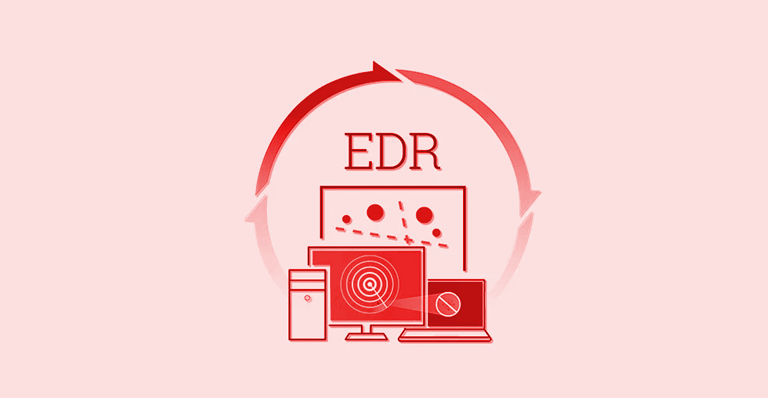
Start With Your Environment, Not the Vendor Catalogue
First, make sure you know what you’re protecting when you start any conversations with vendors. A cloud-native organisation that’s running Linux workloads is going to have a different type of right EDR solution compared to a mixed Windows environment that has legacy systems and limited security staff. Some questions to be answered prior to evaluation are: What is the number of endpoints to be covered, and what are the operating systems to be covered? Can your team handle and react to detections, or do you need lots of automation? Do you have any compliance requirements that limit your tooling options — GDPR, NIS2, HIPAA, or PCI DSS? Are EDR tools being implemented as standalone products or part of a comprehensive security solution?
All other decisions in the evaluation process depend on the answers. Organisations that miss this step are more likely to overvalue features, in order to impress a potential customer who has demonstrated their functions, instead of meeting the specific requirement or gap that the organisation has identified.
Detection Capability: Behavioural Over Signature
EDR’s most critical capability is called behavioural detection, which is the power to detect malicious behaviour from what is happening, not how it appears. But when considering the quality of detection, the concern is not if a vendor says they’re able to detect unknown threats, but how.
MITRE ATT&CK Evaluations are the most reliable independent benchmark available. They simulate known attack techniques of threat actors on participating vendors and present clear results, making it possible to make meaningful comparisons. Find vendors that engage regularly and whose results demonstrate a good level of detection (not simply a high percentage of detections due to changes in configuration or that needed human intervention to complete).
There are equal costs of false positive rates as there are of detection rates. Too many alerts for a legitimate event will cause an analyst to become overwhelmed with alerts, alert fatigue, and, in the end, the tool will become ineffective. Request directly from vendors their false positive methodology and see if this is mentioned in independent evaluations.
Response Capability and Automation
If the response is not detected, it is not complete. If an anomaly is detected, the platform’s power to contain it—isolate a compromised endpoint, end a malicious process, block a suspicious connection—will determine the amount of damage that an attacker can do in the time between the detection of the anomaly and its containment.
For organisations with only a few security team members or inadequate out-of-hours security, an automated response is especially valuable. Containing a threat as quickly as possible will give an attacker the least time to move later, escalate privileges, and/or exfiltrate data. But automation must be calibrated — too much automation in a complex environment can be an intrusion on the legitimate operations. Assess the level of control that the platform provides for automated action thresholds and the ability to fine-tune thresholds without significant vendor involvement.
Integration With Your Existing Stack
EDR is part of a greater security architecture and not standalone. When it’s able to use other controls, its worth is dramatically enhanced as it feeds endpoint telemetry into a SIEM, correlates it with network detection solutions, triggers responses via a SOAR playbook, or integrates with identity platforms to identify credential-related anomalies.
During evaluation, map your current security stack and test integrations against the tools you actually use. Bidirectional integrations — where EDR both receives context from and triggers actions in adjacent tools — are considerably more valuable than one-way log forwarding. A well-designed EDR solution should fit cleanly into your existing architecture without creating new silos. Heimdal’s platform is particularly noted for its native integrations across multiple security layers, which reduces the friction of getting disparate tools to work together effectively.
Operational Overhead and Team Fit
The best EDR platform for your organisation isn’t the most feature-rich option on paper; it’s the one that you actually use effectively. The various interfaces are different between vendors. Some are specially formulated for the more savvy threat hunter, others offer a step-by-step process for analysts who aren’t as specialised.
Make sure to take into account the skill level of the people who will be working the platform on a day-to-day basis, and assess usability accordingly. The operational impact can vary by deployment complexity, continual tuning needs, and vendor support. An operation that needs to be dedicated to specialists to keep it effective is an asset that is too much for teams lacking in capacity for dedicated security operations.
Managed Options: When Self-Managed Is Not the Right Answer
If your organisation lacks a robust internal security operations team, then self-managed EDR might not provide the benefits it has to offer. Organisations can get the benefits of EDR without building the operational capabilities themselves, sometimes by outsourcing the monitoring, investigation, and response aspects of EDR to a dedicated team of people, managed EDR.
Even with a very capable platform, a managed solution might deliver significantly improved security results when compared to a self-managed EDR solution.
The Bottom Line
When it comes to the right EDR solution, the only thing that matters is a simple and clear evaluation: of your environment, your team’s capabilities, your integration needs, and the proof vendors can offer that their solution works as promised in a realistic environment. Organisations that make decisions with that clarity, and not just based on marketing claims or features, always make the right decision and reap better ROI from their investment.
Popular on OTW Right Now!


About The Author

Gagan Bhangu
Founder of otechworld.com and managing editor. He is a tech geek, web-developer, and blogger. He holds a master's degree in computer applications and making money online since 2015.