
How to Bypass AI Detectors and Fix Robotic Writing (A Practical Guide)
We have all experienced this incredibly frustrating scenario recently. You sit down with a cup of coffee, spend three solid hours meticulously typing out an original blog post, a cover letter, or a research paper. Maybe you used a generative tool just to brainstorm a quick outline, or maybe you simply have a very structured, clean writing style. You hit save, run your final draft through a popular checking tool just to be completely safe, and suddenly your screen lights up with a massive red warning sign, claiming your hard work is 90% machine-generated.
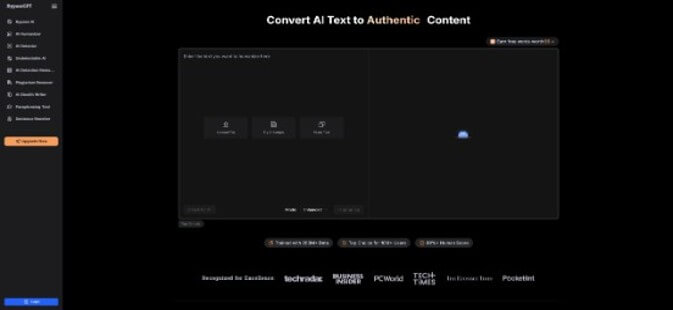
False positives from these automated scanners are completely out of control right now. They are causing massive, unnecessary headaches for innocent freelance writers on platforms like Upwork, students submitting assignments, and everyday bloggers just trying to publish good content. To survive in this new, highly scrutinized and paranoid digital landscape, you have to learn how to actively humanize ai drafts—and sometimes even manually tweak your own completely original work—just to appease these overly sensitive digital filters.
So, why do these scanners constantly flag perfectly good, human-written text? It all comes down to how they analyze underlying patterns. These algorithms are not actually reading your brilliant ideas; they are essentially looking for mathematical predictability. They measure two things: “perplexity” (how complex your vocabulary is) and “burstiness” (how much your sentence lengths vary). If your writing is too neat, perfectly symmetrical, and relies heavily on standard transition words like “furthermore,” “moreover,” “delve,” or “crucial,” the scanner instantly assumes a bot wrote it. Humans write messily. We use slang, we go off on tangents, we write one massive run-on sentence followed by a three-word sentence. AI does not do that.
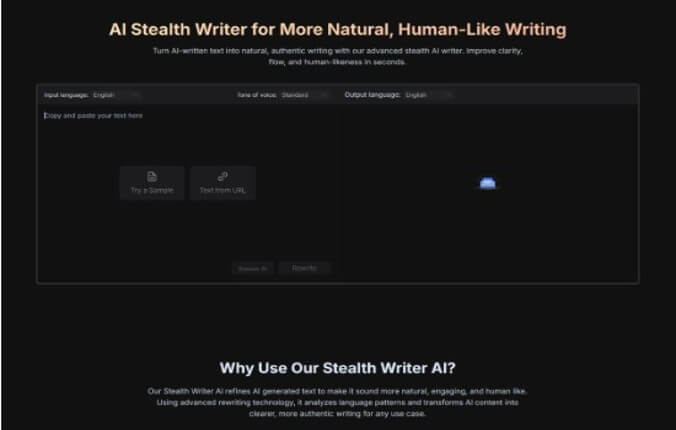
Fixing this “robotic” footprint manually means you have to go back through your entire finished document, intentionally chop up your long sentences, throw in some conversational filler phrases, and essentially make your writing a little bit worse just to prove you are human. When you are staring down a tight deadline, spending an extra hour purposefully restructuring your paragraphs is an infuriating waste of time. This specific bottleneck is exactly why many smart digital creators are quietly adding a dedicated AI Stealth Writer to their daily workflow. Instead of just acting like a basic digital thesaurus that clumsily swaps out synonyms, this kind of utility actively scrambles the underlying mathematical patterns of the text, instantly injecting the natural, irregular flow that real people use when they speak.
Technology is supposed to speed up our daily workflow and make our lives easier, not trap us in a never-ending, stressful cycle of trying to prove our humanity to a machine. If you are exhausted from constantly battling false positives or spending hours editing robotic drafts, integrating a specialized text refiner like bypassgpt.ai can be a massive stress reliever for your content pipeline. It automatically smooths out the synthetic footprint of your text, ensuring your work reads naturally and passes those annoying scanner tests on the very first try. At the end of the day, achieving an undetectable ai standard isn’t about tricking anyone; it simply lets you stop worrying about flawed digital filters so you can finally get back to focusing on sharing your actual ideas.
Popular on OTW Right Now!
-
 What Is an AI Mattress? Benefits, Evidence, and How to Choose One
-
 YouTube Transcript Generator and AI Video Summarizer Changing How People Research Videos
-
 Photo In, Form Out: How Multimodal AI Quietly Solved the Worst Part of Selling Things Online
-
 AI Humanizer: A Proven Strategy to Humanize AI Content for Better Rankings and Better Readability


About The Author

Gagan Bhangu
Founder of otechworld.com and managing editor. He is a tech geek, web-developer, and blogger. He holds a master's degree in computer applications and making money online since 2015.