
How Roll-Off Service Keeps Roofing Cleanup Under Control
A roof replacement can turn a clean property into a busy worksite surprisingly fast. Once the old shingles start coming off, there may be layers of underlayment, flashing, nails, damaged wood, packaging, and other material on the ground before the crew has finished the first section.
Leaving that waste scattered around the property is not practical. It takes up space, gets in the way of workers, and can make it harder to move ladders, tools, new roofing materials, and equipment where they need to go.
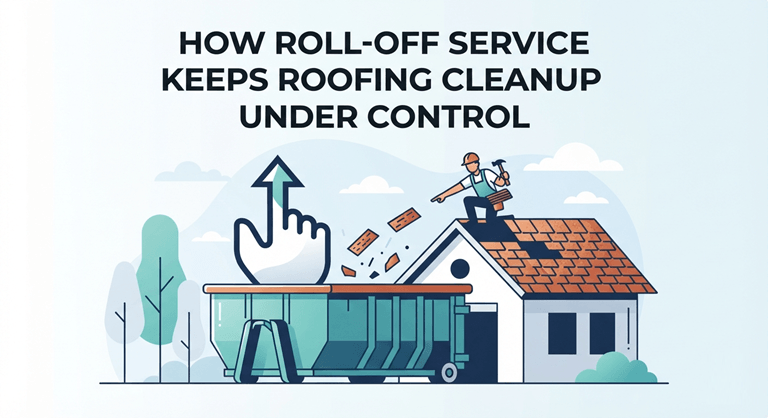
That is why debris removal deserves attention before the first tear-off begins. A roll-off container gives the crew a defined place for suitable roofing waste instead of relying on temporary piles around the property. Hiep Sanitation can be part of that arrangement, helping contractors account for disposal while they plan the rest of the roofing work.
Get an Idea of the Waste Before Work Starts
Nobody can know the exact amount of debris a roof will produce until the old materials are removed. Still, there is plenty that can be estimated beforehand.
The roof’s size is an obvious starting point, but it is not the only factor. The number of existing shingle layers, type of roofing material, condition of the decking, and extent of the replacement can all change the final amount.
Older roofs can sometimes reveal surprises once the surface has been opened up. Rotten decking or other damaged components may need to be removed along with the roofing.
A reasonable estimate does not have to be exact. It simply gives the contractor a starting point for deciding how much disposal capacity the project is likely to need.
Put the Container Somewhere That Actually Works
Where the roll-off container sits can make a noticeable difference to the workday.
A location close enough to the active area can reduce unnecessary movement when debris comes off the roof. At the same time, it cannot simply be placed wherever there happens to be an empty patch of ground.
The driveway may still be needed by the homeowner. Workers may need space for ladders and equipment. Delivery vehicles may have to enter and leave. Walkways and entrances may need to remain usable.
Before the container arrives, take a few minutes to look at the whole property. Consider access, overhead obstructions, landscaping, vehicle movement, and the areas the crew will use most heavily.
The best location is usually the one that supports the roofing work without creating another problem somewhere else.
Give Removed Material a Clear Destination
There is little benefit in moving the same pile of shingles three or four times.
Without a disposal plan, workers may drop material beside the house, create temporary piles, and eventually have to gather everything again before it can be loaded into a container. That adds handling to an already demanding job.
A defined waste route makes things simpler. As appropriate material comes off the roof, workers can move it toward the designated disposal point rather than allowing it to spread across the worksite.
This does not mean every piece needs to travel the same way on every property. The layout of the house and the roofing operation will determine what is practical. The important part is having an agreed method before the tear-off gets busy.
Keep Roofing Supplies Away From the Waste
A roof replacement brings a lot of new material onto the property at the same time that old material is being removed.
Shingles, underlayment, flashing, fasteners, sealants, and other supplies need to remain clean and accessible. If they are stored in the same areas being used for debris, the worksite can become difficult to navigate.
Give New Materials Their Own Space
Choose a location where new roofing products can be kept reasonably organized and protected from unnecessary foot traffic and discarded material.
This also makes it easier for workers to find what they need without having to move waste out of the way first.
Keep the Waste Route Simple
The route used to move old material away from the roof should be as clear as possible. Keeping disposal activity separate from material staging reduces the chance of supplies and debris becoming mixed together.
During a busy tear-off, that separation can make a surprisingly big difference.
Expect Waste Levels to Change During the Job
The first day of a roof replacement may look very different from the final day.
Tear-off can produce a large amount of waste in a short period. Once the old roof is gone, the amount may drop considerably. Later, the crew may mainly be dealing with packaging, cut pieces, damaged materials, and smaller scraps.
The disposal plan should account for those changes.
A rolloff service in Rockland County can be particularly useful when the contractor considers the complete schedule rather than treating waste removal as a one-time task. Knowing when the heaviest debris generation is likely to occur helps the crew prepare for the busiest part of the project.
Do Not Block the Parts of the Property People Still Need
A roofing project can take over much of a property, but it rarely stops everything else from happening.
Someone may still need to use the front entrance. Vehicles may need to come and go. Workers need access for tools and ladders. Deliveries may arrive while tear-off is underway.
A container that blocks the only practical route can create unnecessary frustration.
Walk through the property before deciding where it should go. Think about the paths people normally use and the areas that must remain available throughout the job.
The disposal setup should fit into the worksite rather than forcing everyone to work around it.
Protect the Landscaping During Tear-Off
Roofing debris does not always land neatly beside the container.
Homes may have flower beds, shrubs, lawns, patios, retaining walls, and other outdoor features close to the roof edge. The crew needs to consider these areas when deciding how debris will be brought down and moved away.
Keeping waste concentrated in controlled work areas can reduce the amount of material that ends up scattered through the yard.
This is especially helpful when the property has finished landscaping that the homeowner wants to preserve.
The right approach will depend on the house and the roofing setup, but the basic principle is simple: know which parts of the property need protection before tear-off starts.
Leave Enough Ground Space for Equipment
A roofing crew needs more than a place to throw away old shingles.
Ladders, tools, trucks, safety equipment, material bundles, and other items all require room. If discarded roofing begins occupying every open section of the property, workers may spend more time clearing space than working.
A central disposal location can help keep waste from spreading into these areas.
Hiep Sanitation can provide the disposal point while the contractor manages the rest of the site. Keeping those functions organized gives the crew a better chance of maintaining usable ground space throughout the project.
Be Ready for Surprises Under the Old Roof
A roof can hide problems until the old covering is removed.
The contractor may discover damaged decking, unexpected layers, or other material that was not obvious during the initial inspection. Some of those findings can change both the work and the amount of debris produced.
It is sensible to leave some room in the disposal plan for this possibility.
If additional material has to be removed, the contractor should already have an idea of how that waste will be handled. A little flexibility at the planning stage is preferable to discovering halfway through the project that there is nowhere suitable to put the extra debris.
Schedule the Container Around Deliveries
Roofing materials often arrive in stages, and delivery vehicles need room to operate.
A container placed without considering delivery access can interfere with unloading or make it difficult for trucks to maneuver. The same driveway may be needed for both purposes at different points during the job.
That makes timing important.
The contractor should know when major deliveries are expected and how those vehicles will enter and leave the property. If the disposal setup needs to change during the project, that possibility can be considered in advance.
Good scheduling prevents waste removal and material deliveries from competing for the same limited space.
Keep an Eye on Container Capacity
It is better to notice a disposal problem before the container becomes unusable.
Heavy tear-off work can fill a container quickly, particularly when several sections of an old roof are removed one after another. Someone on the project should keep track of how quickly the available space is being used.
This becomes even more important when the actual roof conditions turn out to be different from the original estimate.
If the project is producing considerably more waste than expected, early communication gives the disposal provider and contractor more opportunity to adjust the plan.
Waiting until the crew has nowhere left to put debris can turn a simple issue into a work delay.
Keep the Ground-Level Worksite Tidy
The roof naturally receives most of the attention during a replacement, but what happens on the ground matters too.
Small pieces of packaging, nails, shingle fragments, old flashing, and other materials can accumulate throughout the day. If they are allowed to remain wherever they land, the worksite gradually becomes harder to move through.
Regular cleanup does not necessarily mean stopping the project for a major cleanup every hour. It means keeping waste moving toward its intended destination instead of allowing temporary piles to become permanent.
That makes it easier for the crew to transition from tear-off to repairs and then to installation without spending unnecessary time clearing yesterday’s debris.
Do Not Leave Final Cleanup Until the Last Minute
The final cleanup should be the finishing step, not the first serious attempt at waste management.
If the crew has been moving appropriate debris into the roll-off container throughout the project, there should be considerably less material left to deal with when the roof is finished.
The final inspection can then focus on details that are easy to miss during active construction. Walkways, driveway edges, landscaping, staging areas, and other parts of the property should be checked for leftover roofing material.
Small pieces can travel farther than expected as workers, tools, and vehicles move around the site.
Give the Property a Proper Final Check
Once the installation is complete, walk around the entire work area.
Look along the driveway and paths. Check around shrubs and planting beds. Inspect areas where materials were stored and where ladders or equipment were positioned.
The goal is not simply to make the property look tidy. It is to make sure project-related waste has not been left behind in places that were outside the main disposal area.
A careful final walkthrough gives the homeowner a cleaner handoff and gives the contractor an opportunity to address anything that was overlooked.
Make Waste Removal Part of the Roofing Plan
Debris is an unavoidable part of replacing a roof. The difference is in how well it is managed.
Estimating the likely waste volume, choosing a sensible container location, keeping new materials separate, protecting access, watching capacity, and cleaning as the project progresses can make the entire job easier to control.
A roll-off service is most useful when it is treated as part of the roofing schedule rather than something arranged after the tear-off has already begun. Hiep Sanitation can support that approach by providing a defined destination for appropriate project debris.
When old roofing has a clear path from the roof to disposal, the crew has more usable space, the property stays easier to navigate, and the final cleanup becomes much less of a scramble. Good waste planning may not be the most noticeable part of a roof replacement, but it can make the difference between a chaotic worksite and one that stays manageable from the first tear-off to the final inspection.
Popular on OTW Right Now!
-
 Global Finance Names Uzbek Digital Bank Among Asia-Pacific’s Top Financial Innovators for AI-Powered Customer Experience
-
 Mastering Short-Form Video Marketing for Sustainable Online Growth
-
 What Should You Consider When Choosing a Low-Cost Interlock Provider?
-
 Custom Jewelry Trays for Drawers: A Smarter Retail Solution




About The Author

Gagan Bhangu
Founder of otechworld.com and managing editor. He is a tech geek, web-developer, and blogger. He holds a master's degree in computer applications and making money online since 2015.