
How Credit Card Terminals Strengthen Payment Security for Development Firms
Payment security has become a defining concern for businesses handling digital transactions at scale. For software development firms—which often process recurring client payments, project deposits, and subscription fees—the stakes are particularly high. A single breach can compromise client relationships, trigger regulatory penalties, and damage hard-earned reputations.
Credit card terminals have evolved from clunky imprint machines into sophisticated security tools that encrypt data, authenticate transactions, and help businesses meet compliance standards. Understanding how these systems work, what features matter most, and where the technology is headed can help development firms make smarter decisions about their payment infrastructure.
From Carbon Paper to Chip Readers: The Evolution of Payment Terminals
The first credit card transactions were processed manually. Merchants used imprinters—metal devices that pressed card details onto carbon paper receipts. The process was slow, error-prone, and left sensitive information exposed on physical documents that could be easily stolen or mishandled.
Electronic terminals emerged in the 1970s, replacing manual imprints with magnetic stripe readers. These devices transmitted encrypted data over phone lines, reducing fraud risk and speeding up authorization times. By the 1990s, point-of-sale systems integrated with inventory and accounting software, transforming terminals into business management tools.
The introduction of EMV chip technology in the early 2000s marked another leap forward. Unlike magnetic stripes, which store static data that can be copied, EMV chips generate unique transaction codes that can’t be reused. According to Visa’s security research, this shift reduced counterfeit fraud by 87% in markets that adopted chip cards.
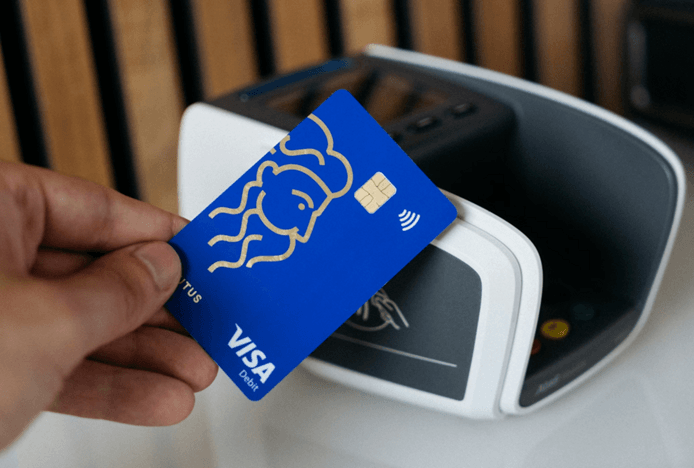
Today’s terminals support contactless payments through near-field communication (NFC), allowing customers to tap cards or mobile wallets instead of inserting chips. These systems process transactions in seconds while maintaining the same encryption standards that protect chip-based payments.
Why Payment Security Can’t Be an Afterthought
Sensitive client information is a part of the business of development firms. The impact of compromised payment systems goes beyond the financial impact. Clients become disenchanted, contracts are canceled, and regulatory authorities levy fines of up to millions of dollars.
Secure credit card terminals address these risks through multiple layers of protection:
- End-to-end encryption: Payment data is scrambled from the time it is swiped to when it reaches the processor, and so is unusable to attackers.
- Tokenization: Card numbers are replaced with tokens (random numbers) that are meaningless to others, except for that particular transaction.
- PCI DSS compliance: Terminals that are PCI compliant will abate fines and security audits for companies.
- Real-time fraud detection: Modern systems flag suspicious transactions based on spending patterns, geographic anomalies, and velocity checks.
According to data from the Federal Trade Commission, total costs to U.S. businesses due to data breaches average $4.35 million per breach, including lost business, notification expenses, and legal costs. Smaller development companies may have only one incident that could be their end.
Selecting the Right Terminal for Your Firm
There are several different types of credit card terminals for different applications. The systems should be compatible with existing billing software, offer recurring payment options, and expand with the growth of client lists. The systems should be compatible with the existing billing software, should allow for recurring payments, and should be scalable to accommodate the increasing number of clients. The wrong terminal can cause bottlenecks in workflow and leave security loopholes.
Key factors to evaluate include:
- Payment method support: Ensure the terminal accepts chip cards, contactless payments, and mobile wallets like Apple Pay and Google Pay.
- Software integration: Check if the terminals integrate with your accounting software, CRM, or invoicing system to streamline data entry and save time.
- Security certifications: Make sure the device is PCI PTS certified and supports point-to-point encryption (P2PE).
- Transaction fees: Understand processing fees, monthly fees, and per-transaction costs to determine overall ownership costs.
- Customer support: When terminals go haywire during payment time, they must have solid customer support.
For firms ready to upgrade their payment infrastructure, suppliers like business credit card terminals — available through DCC Supply, Helcim, and Payment Depot — offer options that balance security certifications with the operational demands of development-focused billing workflows.
Emerging Trends Reshaping Payment Processing
The payment landscape is evolving further because consumers’ preferences are changing and new security issues are arising. Companies that remain on top of these trends can provide their clients with improved service and have improved protection against fraud.
There has been a mass uptake of contactless payments. A recent McKinsey study found that over 40% of all payments made in-person with a U.S. card are now contactless, as they’re faster and more hygienic than traditional methods, and were driven by the pandemic.
Fraud detection is now made possible through the use of artificial intelligence in payment systems in real-time. The machine learning algorithms scan through millions of data points to detect patterns that are unusual and would not be seen by human reviewers. They’re able to evolve as fraud techniques change and give dynamic protection that can’t be matched with static rule-based systems.
Payment terminals are taking to the smartphone domain. The fingerprint and facial recognition features also provide an extra layer of security, making it more difficult for thieves to make copies of your card for fraudulent use. Biometric payments are a new technology in the U.S., but are well-established in some parts of Europe and Asia.
The use of blockchain technology for its ability to provide immutable transaction records and to shorten settlement times is being explored. Although it is not expected to be widely adopted until years down the road, examples from major payment networks indicate that blockchain could revolutionize the cross-border payment process in the future and cut down on costs.
Practical Benefits for Development Firms
In addition to security, today’s credit card terminals provide operational benefits that can directly affect the way that development companies deal with their clients’ business and cash flow.
- Faster payment processing: Transactions that used to take minutes are now in seconds, cutting down checkout friction and enhancing client satisfaction.
- Automated reconciliation: Automated reconciliation of transactions with accounting software, reducing manual entry errors and saving hours at month-end close.
- Recurring billing support: Many terminals support recurring billing, which means that payments for subscription-based services can be made automatically, ensuring a steady stream of revenue.
- Detailed reporting: Transaction analytics provide an insight into payment trends, uncover high-value clients, and enable more accurate revenue forecasting.
- Reduced chargebacks: Easier to dispute fraudulent chargebacks due to improved fraud detection and transaction records.
These benefits are cumulative and continue to accrue over time. Companies with quality payment infrastructure experience a reduction in payment troubleshooting time and have more time to provide value to clients.
Implementation Steps That Set You Up for Success
There’s more to installing new payment terminals than simply plugging in hardware. A structured implementation process helps to smoothly incorporate the new system and reduces disruption to current processes.
- Audit current payment processes: Identify where payment processes are ongoing, where they are delayed, and where there are security issues.
- Define requirements: List essential features depending on the number of transactions, payment type accepted, and integration requirements.
- Test before full deployment: Conduct a pilot deployment to ensure terminals operate properly with your software stack and data flow is as you expected.
- Train staff thoroughly: Make sure that all those who are involved in payments are well-trained to use the terminals, know how to deal with common problems, and understand the signs of fraud.
- Establish monitoring protocols: Implement systems to monitor unusual transactions and conduct frequent security audits to identify vulnerabilities at an early stage.
- Maintenance plan: Perform firmware upgrades, replace old hardware before it fails, and keep good relationships with support vendors.
Building a Secure Payment Foundation
Security in payments is not a one-off initiative, but an ever-evolving responsibility, which must be taken care of as new threats emerge and technology advances. By not regarding payment infrastructure as a routine cost, but rather as an asset integral to the development firm’s strategy, the company can not only foster sustainable growth but also safeguard client confidence.
The terminals that you pick today will affect whether you are able to maximize your income and/or minimize fraud losses for years to come. Focusing on security measures, integration, and staying ahead of the curve with trends enables you to build a payment system that not only fosters operational efficiency but also enhances user trust.
With digital transactions now playing a larger role in business as a whole, the companies that invest in payment security will be the ones that will flourish in a world where consumer trust is won through reliable and constant safeguarding of their data.
Popular on OTW Right Now!



About The Author

Gagan Bhangu
Founder of otechworld.com and managing editor. He is a tech geek, web-developer, and blogger. He holds a master's degree in computer applications and making money online since 2015.