
How Competitive Events Build Stronger Communities
Competition is often viewed through the lens of winning and losing, but its impact extends far beyond the final results. Across towns, schools, workplaces, sports leagues, and community organizations, competitive events bring people together in ways that create lasting connections. Whether it is a local softball tournament, a charity golf outing, a fantasy football league, or a neighborhood basketball competition, these events have the power to strengthen relationships and build a sense of belonging.
Communities thrive when people have opportunities to interact, collaborate, and share experiences. Competitive events provide a natural environment for these interactions to take place. They encourage participation, create traditions, and foster a collective identity that keeps people engaged long after the competition ends.
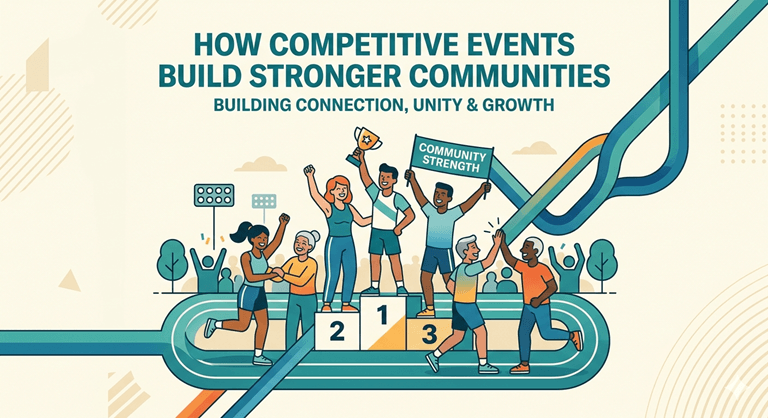
As communities continue searching for ways to increase involvement and strengthen social bonds, competitive events remain one of the most effective tools available.
Bringing People Together Around a Shared Purpose
One of the greatest strengths of competitive events is their ability to unite people around a common goal. Participants may come from different backgrounds, professions, age groups, and life experiences, but competition creates a shared focus that encourages interaction.
When people gather for an event, they become part of something larger than themselves. Players, organizers, volunteers, family members, and spectators all contribute to the experience. These interactions often lead to new friendships, stronger relationships, and a greater sense of community involvement. As community events continue to attract larger audiences, effective Event Traffic Management Nottingham planning can help ensure smooth vehicle access, safer pedestrian movement, and a more enjoyable experience for participants and spectators alike.
Unlike many social activities that can feel passive, competitive events encourage active participation. People become invested in the outcome, which naturally creates stronger emotional connections among those involved.
Creating Traditions That Last
Strong communities are often built on traditions. Annual tournaments, seasonal leagues, and recurring competitions give people something to anticipate and celebrate together.
Over time, these events become part of a community’s identity. Participants return year after year because they enjoy the relationships, memories, and experiences associated with the event.
Many local sports leagues have developed traditions that extend far beyond the games themselves. Team rivalries, championship celebrations, and award ceremonies become important milestones that community members look forward to.
Recognition plays an important role in maintaining these traditions. Many organizations now use custom championship belts as part of their annual competitions because they create a memorable symbol of achievement. Unlike standard awards, custom championship belts often become part of the event’s history, helping strengthen the traditions that keep participants engaged.
Encouraging Healthy Social Interaction
With the rise of the digital age, it has become more important than ever to have interactive moments with people.
Competitions provide a natural social setting for people to communicate, cooperate, and develop relationships. Cooperation and trust go hand-in-hand with team sports. Respect amongst competitors is fostered in individual competitions. Spectators can even establish connections by supporting the athletes and their teams.
These interactions help to minimize social barriers and do provide opportunities for people who may not meet otherwise. A local tournament can help to bring students, parents, business owners, educators,s and community leaders together more than many other activities.
This creates a broader community network of relationships that is beneficial to the community as a whole.
Building Teamwork and Leadership Skills
Competition is a great learning experience, and is a good life skill to have.
Participants gain skills in effective communication, pressure/stress problem-solving, and working toward shared goals. The team gains a level of trust among members and understands how important accountability and cooperation are.
Similarly, competition creates opportunities for leadership development in competitive environments. Both captains and coaches learn how to take on responsibilities and lead others to success, as do organizers and volunteers.
Often these skills transfer to schools, workplaces, and civic organizations. The whole community becomes stronger as individuals develop confidence as leaders and collaborators.
Strengthening Community Pride
Local pride can be a motivating factor in competitive events that are successful.
Local residents take pride in the athletes, teams,s and organizations. Local people gather to celebrate success and demonstrate local talent. They make them feel more united and connected.
When a community has pride in what it offers at the events, it’s more likely to dedicate the time and money to future events. This is a positive cycle that, when it happens, results in increased engagement, which in turn enables further growth, which leads to even more engagement.
This is, of course, a very important aspect of the championship,s and it contributes greatly to the community’s sense of pride. Custom Championship belts are an award given to the winner of a contest or event, and it serves as a symbol of their achievement and the dedication of the community to excellence.
Supporting Local Organizations and Businesses
Competitive events can have consequences other than for the participants.
Many local businesses sponsor, donate, te and promote events. During large events, some restaurants, hotels, sporting goods stores, res and service providers are likely to experience an increase in activity.
Community organizations are also given visibility and engagement through competitions. Fundraising tournaments, charity events, and recreational leagues are opportunities to raise awareness and support the causes.
As participation increases, these events can be very useful as economic and social resources to the people who host them.
Creating Opportunities for All Ages
One of the special features of competitive events is that it is possible to have different generations interacting.
Youth leagues are an introduction to teamwork, discipline,pline, and sportsmanship for children. Opportunities to get active and connected exist in adult recreational leagues. Community tournaments can also be used to encourage family participation, providing shared events and experiences that can enhance family and community relationships.
These multi-generational interactions help to foster stronger community bonds. There is mentoring and encouragement for younger participants, and staying active and involved for older participants.
These connections may persist long after the competition is over.
Recognition Keeps People Engaged
When individuals’ actions are recognised and appreciated, they are more likely to stay involved.
Recognising the participant helps them to feel valued and encourages them to keep contributing to the community. Participation is emphasized through awards, ceremonies, and public recognition.
One of the reasons for the increased popularity of personalised recognition is this. These days, a lot of organizers have come up with something more memorable than the standard trophies, and they’re helping to award the championships by using custom championship belts.
A personalized award will make people feel excited,d and they will appreciate it as something they want to acquire. It also contributes to reinforcing the event brand, increasing the attractiveness of future events.
It’s not just about the winners who are rewarded. It fosters ongoing participation and strengthens bonds that help to make communities stronger.
Learning and Personal Growth Through Competition
Competitive events are a great opportunity for the development of a person.
Participants find out how to respond in humility to success and with resilience to failure. They learn about the value of being well prepared, persistent, and continually improving.
The lessons are useful at all ages. It is important to remember that these skills can be used to achieve future success, no matter if it is in school, in the workplace, or as a personal trait.
Educational resources such as Sparx Reader help individuals strengthen learning habits and improve performance in academic settings. Likewise, people learn about confidence, discipline,e and social skills that are necessary for long-term success through competitive events.
Both experiences show how challenges that are structured can help to promote growth and achievement.
Building a Sense of Belonging
One of the greatest values of competitive events to communities is the sense of belonging they provide.
All of us want to be part of something that has purpose. They desire to give, to take part, and to share.
Competitive events give just that. They unite people based on shared interests, foster interaction, and create memorable experiences that participants will remember for years to come.
People who feel like part of their community are more likely to be part of the community, to support community efforts, and to help future community success.
Conclusion
Competitive events have more to offer than just the successful outcome of a win. They provide opportunities for connection, collaboration, and shared achievement. Sports, tournaments, leagues,s and community competitions develop and foster relationships that improve the social fabric of a community.
Competitive events build a sense of team and community through awards like custom championship belts, traditions, ns and encouraging teamwork with local organizations.
Competitive events are one of the most successful and long-lasting methods for fostering engagement and connection among communities, as they persist in their quest for ways to gather and connect people. They remind us that competition starts on the field, court, or playing surface, but really has its most impact on the whole community.
Popular on OTW Right Now!


About The Author

Gagan Bhangu
Founder of otechworld.com and managing editor. He is a tech geek, web-developer, and blogger. He holds a master's degree in computer applications and making money online since 2015.