
Design Freedom and Its Growing Impact on Manufacturing
Manufacturing has never been more exciting or more chaotic, depending on where you’re standing. The rules that once defined what was physically buildable are being quietly dismantled, and companies that see this shift early are pulling ahead at a pace that’s hard to ignore.
Whether it’s producing parts with geometries that would’ve sounded like science fiction a decade ago or shaving months off a development cycle, design freedom in manufacturing is reshaping outcomes in ways that show up on balance sheets and product roadmaps alike. Add smarter tooling, broader material options, and on-demand production into that mix, and what you have is a manufacturing revolution that isn’t coming; it’s already here.
What Design Freedom Actually Means in Practice
Let’s get specific. Design freedom is the ability to create what you want, not a philosophy; you don’t have to settle for a compromise at every step in designing it because of traditional manufacturing limitations.
The numbers back this up. Global AM revenues reached $24.2 billion in 2025, representing 10.9% year-over-year growth. That’s not a niche market signal. That’s momentum. Companies investing in design freedom in manufacturing aren’t chasing novelty; they’re responding to genuine market pressure.
When you need a partner to turn an ambitious design into something physical and production-ready, working with quality 3d printing services that combine real material science expertise with a practical understanding of engineering tolerances is what separates a clean outcome from an expensive headache. For example, RapidMade combines additive manufacturing, CNC machining, and engineering consultancy services all in one place, ensuring that the client never loses momentum during the production process while transitioning from concept to action.
From Traditional Methods to Something Far More Capable
Subtractive machining and standard injection molding have their place. For simple geometries and massive production runs? They’re still solid. But they’re rigid by nature. The rise of advanced manufacturing techniques, multi-axis CNC, additive manufacturing, and digital casting has fundamentally changed the ceiling on what’s achievable.
These aren’t upgrades. It’s a paradigm shift in thinking about the whole process from the beginning.
The Three Pillars That Make Flexibility Real
The flexibility of design in modern manufacturing is based on material variety and customization on demand, as well as short design-to-market times. You are now able to work on materials such as plastics, metals, composites, and specialty materials, and in some cases, on the same project.
That very width equals competitive leverage – particularly with speed thrown in.
How Design Freedom Fuels Product Innovation
That’s where things start to get REALLY exciting. These underpinning principles not only drive improved processes, but they are also a means to enable product innovation in previously unimagined ways. And the results are so significant across all industries.
The impact of design freedom is sharpest when engineers stop designing around manufacturing limitations and start designing purely for performance. That’s a big paradigm change, and that yields better results.
Complex Geometries That Used to Be Off-Limits
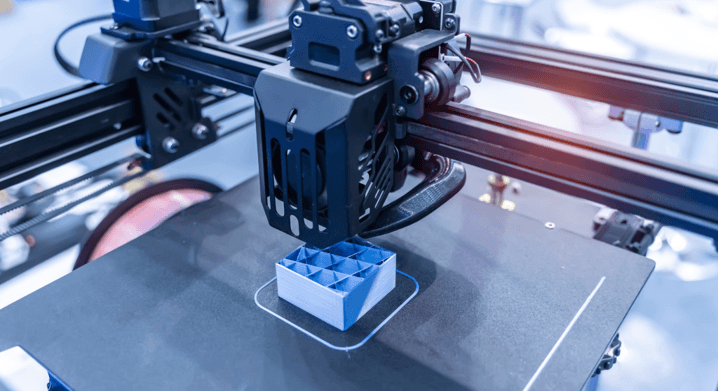
Lattice structures, internal channels, and consolidated assemblies are now achievable in a single production run. NIST puts it plainly: additive manufacturing enables creating more complex parts such as lattice structures and integrating formerly separate parts, reducing part count and thus manufacturing costs”
Generative design tools take it one step further. They recommend geometries that no man could draw by himself, shapes that work very well when put under pressure, but would not pass a conventional design review because of their unconventional appearance.
Prototyping That Moves at the Speed of Ideas
Each time a rapid prototyping phase begins, it is crucial to become a partner of quality 3d printing services as that results in a significant reduction in the time frame required to move from concept to a working prototype, previously months, now days. That speed is not only convenient, but it’s also a great way to save time. It helps minimize risk and helps to prevent development costs from getting out of hand without any validation.
Teams can prototype, optimize, and test multiple iterations without the costly tooling. A step change in risk management.
Sustainability as a Built-In Benefit
The ability to do more iterations more quickly also gives the producers the opportunity to make smarter environmental decisions for the production. Flexible manufacturing processes inherently reduce waste; you produce what’s needed, when it’s needed. Topology optimization means lighter parts with less material, without sacrificing structural performance.
It’s both effective and responsible. That’s a numbers game that’s difficult to say no to these days.
Driving Efficiency Through Advanced Techniques
Sustainability and efficiency are closely linked, and that connection becomes obvious the moment you look at how advanced manufacturing techniques are streamlining full production workflows.
Smarter Workflows Start with Simulation
Digital twins enable engineers to simulate them and stress test them before they even make a single real-world part. Pair that with flexible manufacturing processes, and you catch problems early before they become expensive. Real-time simulation tools are no longer the preserve of enterprise-level players, but are fast becoming the norm.
Faster Time-to-Market, Full Stop
Optimized workflows are a direct competitive advantage by bridging the gap between a breakthrough idea and a marketable product. Traditional tooling processes are being avoided by start-ups. Parallel prototyping tracks are being run at enterprises. Either way, speed backed by manufacturing innovation is now a genuine differentiator, not a nice-to-have.
Customization at Scale Is No Longer a Contradiction
Companies leading in this space layer flexible manufacturing processes onto their speed advantages to deliver personalized value at a volume that once seemed impossible.
Modular design and parametric modelling enable manufacturers to create thousands of different designs from a basic framework. It’s already being done in the automotive, medical devices, and consumer electronics industries. Niche is no longer a term used for custom implants, bespoke components, or personalized products.
For agility when scale calls for it, reconfigurable manufacturing cells, robotics, and IoT-powered monitoring provide it. Modern factories today can switch to other production in hours rather than days. This is a very different level of operational resilience.
The Bottom Line
Design freedom in manufacturing isn’t a future-facing concept anymore; it’s an active competitive strategy being executed across industries right now. The tools exist. Results are documented. The difference between leaders and followers is just the willingness to move. Today’s manufacturers who act on this change will not only create better products, but they will create better products by design. They will create more robust, more responsive, and more profitable businesses.
What Manufacturers Are Actually Asking
1. Can design freedom reduce environmental impact?
Absolutely. The lightweighting and on-demand production reduced material waste significantly. The materials cost can be reduced by up to 90% only through additive manufacturing.
2. Which industries benefit most?
Complex geometries, tight tolerances, and fast iteration are required in the following sectors: Aerospace, medical devices, automotive, and consumer electronics.
3. Is mass customization realistic for smaller companies?
More than one would think. It’s accessible because of the on-demand manufacturing partners and parametric design tools, and doesn’t need production infrastructure.
Popular on OTW Right Now!


About The Author

Gagan Bhangu
Founder of otechworld.com and managing editor. He is a tech geek, web-developer, and blogger. He holds a master's degree in computer applications and making money online since 2015.