
How CGI Brings Property Developments to Life
The real estate business has experienced an extreme change in the past few years because of the development of computer-generated images and visualization technology. To the developers, who used to use architectural drawings, physical models, and site visits to depict their vision, they now have the privilege of using photorealistic computer-generated environments, which can be used anywhere in the world. Computer-generated imagery, also referred to as CGI, has been able to transform the way property developments are thought of, advertised, and perceived by all stakeholders. Companies, individuals, and institutional investors, city planners, and financial institutions, all people engaged in real estate development, anticipate high-quality digital depictions prior to devoting substantial funds to a project. The language of the property industry now is CGI, where it conveys vision, manages expectations, and instills confidence in development outcomes.
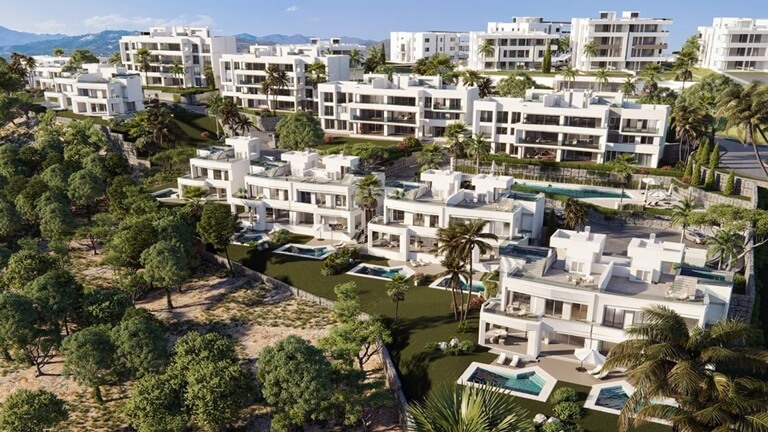
Actually, the change in the traditional means of communication in architecture to the CGI-based visualization is a radical change in the way properties are introduced to the market and offered to the decision-makers. Modern property development CGI has evolved far beyond simple three-dimensional drawings. Contemporary CGI integrates architectural precision with artistic rendering, environmental context, lighting simulation, and lifestyle visualization to create compelling digital narratives about properties. These prototypes are virtual and are used as visualizations that enable the entire development team to feel the final product in a three-dimensional manner before the actual construction process starts. Being able to demonstrate precisely what will be constructed, the way it will blend with the environment, and what life or work will be like in the space gives unprecedented transparency in real estate deals. This transparency also decreases the uncertainty level, speeds up the decision process, and eventually leads to increased valuation and accelerated market uptake of developments that make use of advanced CGI technology.
The Evolution from Blueprint to Digital Reality
In the past decades, architects used to present their designs using two-dimensional sketches and blueprints. Though such technical documents are necessary in construction works, they have never been easily deciphered by the layman. A consumer viewing a floor plan may not be able to determine the real space associations and proportions. A reviewer of blueprints by an investor can not comprehend the way in which a development will blend in with an urban environment. Planners of a city may not give adequate attention to the aesthetic and environmental effects of a project on the basis of technical drawings. Such constraints of the conventional communication practices tended to result in misaligned expectations, disappointment after the completion, and controversies over developments that did not correspond to the expectations of the community.
Introduction of physical scale models enhanced communication to some degree, but it was costly to create, hard to edit, and could only be seen from a few angles. They also proved to be unworkable in distributed groups of stakeholders in other geographical locations. These issues were elegantly addressed by the appearance of digital visualization technology. Computer models can be 3D, where one can look at the model at any angle, any chosen scale, any lighting condition, and even at any geographical location. They are fast modified to accept feedback or investigate other design possibilities. They can be faked to a near photorealism effect that is similar to the way the final project will look. This has happened due to the technological breakthrough that has radically altered the way the industry functions.
Creating Emotional Connection and Visualization
The possibility to establish an emotional bond among the potential buyers and the properties that are physically non-existent is one of the strongest things about CGI. An exquisitely depicted picture of a penthouse apartment under the sunlight with stylish furniture and well-planned lifestyle details does not merely convey the information about space and layout. It creates aspiration. It appeals to the future experience. It makes the viewers see themselves in the space, having guests, viewing the space, living the lifestyle the property boasts.
This is a powerful emotional aspect in real estate marketing. Rationality does not play a pure role in purchase decision-making. People select houses depending on the way they make them feel, the suitability for their dreams, and the way they integrate into their dream scenarios. The visualization of CGI enables this sense of emotion as it shows the properties in their best light, with some surrounding environmental information that gives them atmosphere. This cannot be done in a bare floor plan. A blueprint cannot make people feel anything. However, a photoreal CGI image of a house in its completed form, filled with suitable furniture, the thoughts of how the house is to be decorated carefully, and how the house is to be illuminated can bring about the emotional reactions that lead to buying choices.

Demonstrating Environmental Integration and Context
There are no property developments in a vacuum. They are in an urban environment with the existing buildings, infrastructure, natural landscape, and people. Among the essential benefits of CGI visualization, the fact that it is able to illustrate the integration of new developments into the environmental context should be mentioned. Depending upon the rendering, it can be seen precisely how a new building will look from the street, how it will be in comparison to other buildings, and how it will influence the visual aspect of the neighborhood.
This contextual visualization has several significant functions. It is essential for city planners and municipal authorities considering the development proposals, as it offers them some essential information regarding the city’s impact and compatibility. To potential consumers and investors, it explains the environment and the atmosphere that will signify their ownership experience. It makes the surrounding property owners transparent on what will actually be constructed, in case they have concerns about a development. Due to the CGI, people can now have informed deliberations regarding the extent of environmental impact prior to the commencement of construction instead of finding out later.
Accelerating Sales and Market Absorption
The developments put across using highly advanced CGI usually sell quicker than the developments put across using traditional marketing materials. There are a number of reasons why this acceleration takes place. To begin with, persuasive images create more interaction in online marketing platforms. A beautiful CGI picture of a development will have more clicks, shares, and inquiries as compared to a technical drawing or generic photography. Second, the fact that they draw the attention of the viewers with the high quality of visualizations helps them to come up with more correct expectations about the final product, which produces fewer disappointments and helps to make purchases faster. Third, professional presentation of the work through high-quality CGI implies the quality and competence that establishes investor confidence and readiness to invest money.
The economic impact of accelerating sales is high. The developments with speedy absorption in the market lower the carrying cost, financing cost, and marketing cost. They produce revenue velocity, which enables the developers to recycle capital into new projects faster. In competitive markets where several similar developments may be competing with the same buyer base, CGI-powered marketing is normally what makes the difference between the development that is successful and the one that is unable to achieve the sales goals.
Enabling Effective Investor Communication
Professional real estate investors, institutional investors, and financial institutions are in a data world, projection, and risk evaluation world. In the assessment of the development opportunities by these sophisticated investors, they expect that what they are being requested to invest in should be visualized clearly; this is what CGI does. An elaborate representation of the building design, the layout of the unit, finishes, and surrounding environments enables investors to evaluate the market positioning and competitive advantage. Several simulations of various situations or economic environments enable investors to have a clue of the way a development would perform should other economic conditions be varied.
Investor communication will determine the quality of investment decisions and the terms that investors will be willing to accept. The capital developers bringing opportunities with professional CGI usually bring them at more favorable conditions than those offering opportunities with poor visualizations. Advanced investors can see high quality presentation in the form of a CGI as a sign of professional growth, administration, and capability to carry out in a serious manner. On the other hand, visualizations of bad quality or a lack thereof are warning signs concerning the professionalism of the project.
Streamlining Approvals and Regulatory Processes
The processes of acquiring approvals and permits for major developments on property premises are usually surrounded by difficult procedures and involve the interests of various stakeholder groups. The city authorities need to consider the effect on the traffic, infrastructure, and services to the population. The review boards of architecture should be consistent with the neighborhood character. Agencies need to determine environmental impact. The community groups might have concerns regarding how the project will impact their neighborhoods.
Visualization through the CGI technique greatly helps to make these approval processes more tangible, since what is abstract becomes tangible. Regulatory officials are able to make decisions in an efficient way when they can observe the exact kind of thing being constructed and how it will look in context. The fear of the unknown is the source of controversies. In a situation where members of the community may be in a position to view an elaborate rendering of what is actually being proposed, apprehensions tend to fade away since the proposal becomes familiar. CGI facilitates openness and factual analysis instead of controversy that thrives on speculation.
Supporting Design Iteration and Optimization
When it comes to the design development stage of major projects, the teams have to seek various design scenarios and options. Is it better to make the building taller or shorter? Is the facade to be of a single material or a mixture? Is it possible to set up the public spaces in a certain or the other way? Such decisions are often the ones that involve various stakeholders who have varying perceptions and priorities. CGI can quickly visualize design options, and teams can easily compare options and make trade-offs with full visual clarity.
The result of such design flexibility, which is driven by CGI, is a successful final design. On visual feedback, teams are able to test ideas, get feedback, and refine approaches without having to discuss them abstractly. The results of the design process are also more likely to be solved thoughtfully due to the opportunity to explore and analyze the options in detail within the team. CGI basically works to change the development of designing into becoming a visual procedure in which anyone can observe what is being proposed, as well as providing information feedback.
Bridging the Gap Between Vision and Reality
The capacity of CGI to fill the gap between the vision and construction reality of the architectural design is perhaps the most basic value of the technology in property development. All the parties can view what will be constructed even before a single shovel touches the ground. The architects get to confirm that their creative vision will be implemented accordingly. Constructors are able to know the construction needs and staging. Due to the correct knowledge of the completed product, marketers are able to pre-sell. Investors will be able to check whether the project aligns with their investment thesis. This clarity eliminates any misunderstanding, and all the parties involved in the agreement are on the same page regarding the end result.
This conformity of expectations is simply invaluable. Where the completed property is similar to the one imagined, the buyers become happy, the investors become happy, and the reputation of the developer improves. When the visualization is not in line with reality, disappointment comes about. The developers make sure that the project will deliver or exceed expectations by developing visual representations of the final product using advanced CGI techniques that can produce exact and detailed pictures of the desired final product.
The Future of Property Visualization
The CGI still continues to get sophisticated. Virtual reality environments enable the stakeholders to feel properties as a full immersion in three-dimensional space. The real-time rendering technology provides the ability to explore in real time with the audience being able to manipulate the perspective and movement. AI helps to create alternatives and optimization. The power of visualization in property development will be further increased due to these technological advancements.
Nevertheless, the basic value proposition is the same. CGI is used in making the invisible visible through property developments. It will turn abstract architectural ideas into tangible, visual representations that everyone concerned can interpret and react to. It facilitates effective decision-making, instills confidence, speeds up processes, and eventually leads to superior developments that closely meet the expectations and demands of the stakeholders in the market.
Conclusion
Computer-generated imagery has been regarded as a needed infrastructure in the property development industry. Quite on the contrary, CGI has deeper functional applications in the way the development is developed, reported, financed, approved, marketed, and finally released to the market. CI has essentially changed operations in the industry by enabling them to do what was initially impossible through the use of CGI. Prior to the commencement of construction, the developments can be visualized, the stakeholders can be made to agree on what to expect before committing capital, and the markets are able to take up properties in a more efficient manner, as everybody knows what is being offered.
The availability of advanced CGI rendering has ceased to be an option for developers, investors, architects, and marketers in the real estate industry. It has turned out to be a precondition for being competitive in the modern markets. The users of CGI who use it wisely to convey their vision, create confidence among the stakeholders, and achieve success in the market always do better than the users of the traditional visualization technique. The industry has taken a step ahead, and CGI is the device that makes the property developments come alive in persuasive, effective, and commercially strong ways. Platforms like VisEngine continue to advance the accessibility and quality of CGI visualization, enabling more market participants to harness the transformative power of digital visualization in bringing their property development visions to reality.
Popular on OTW Right Now!




About The Author

Gagan Bhangu
Founder of otechworld.com and managing editor. He is a tech geek, web-developer, and blogger. He holds a master's degree in computer applications and making money online since 2015.