
From Consumer to Creator: How Bambu Lab Changes the Way We Make Things
Most of us are used to solving problems by buying something.
Need a phone stand? Order one online. Break a small plastic clip? Search for a replacement. Want a desk organizer? Choose the closest size and color you can find.
It works, but there is usually a compromise. The stand is slightly too tall, the organizer does not quite fit the drawer, or the replacement part is no longer available.
A 3D printer introduces a different possibility: instead of searching for the product you need, you can make it yourself.
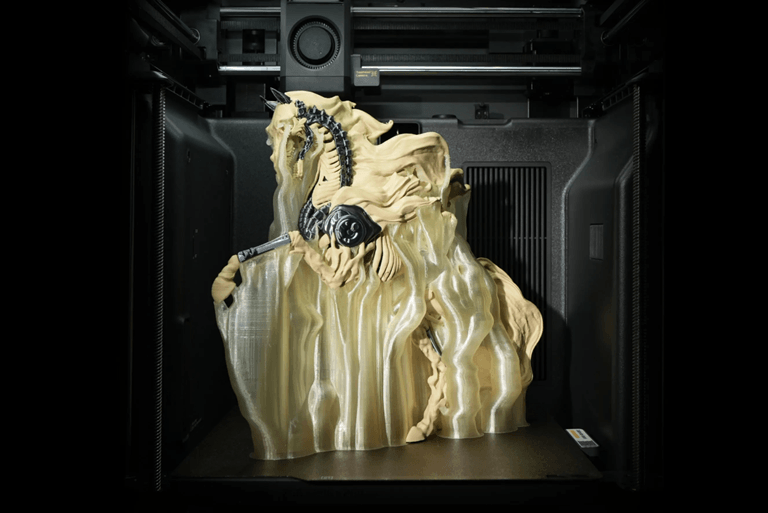
What If the Perfect Product Does Not Exist?
The real value of 3D printing becomes clear when you need something unusually specific.
Maybe you need a cable holder that fits the edge of your desk exactly. Perhaps a small component has broken on an appliance, but replacing the entire product feels wasteful. You might want a planter for a narrow windowsill or a personalized gift that cannot be found in any store.
These are not necessarily big problems. But they are the kinds of small frustrations we encounter every day.
With a 3D printer, the question changes from “Where can I buy this?” to “Could I make this?”
That shift is more powerful than it sounds.
Creation Does Not Have to Start from Zero
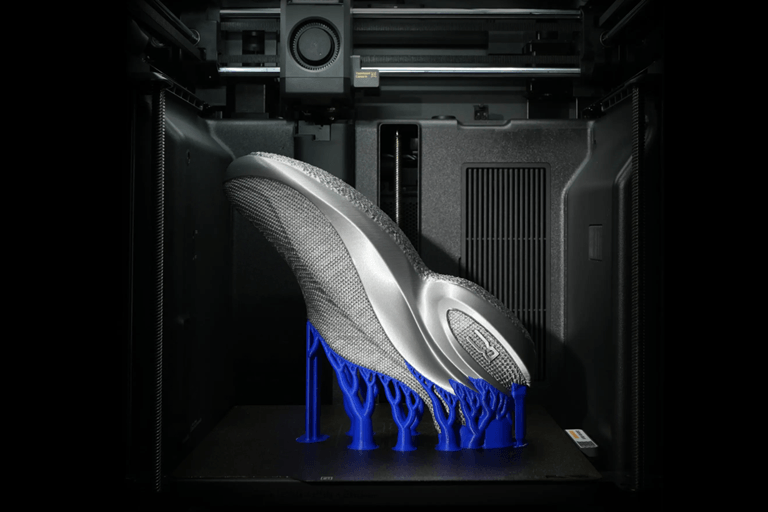
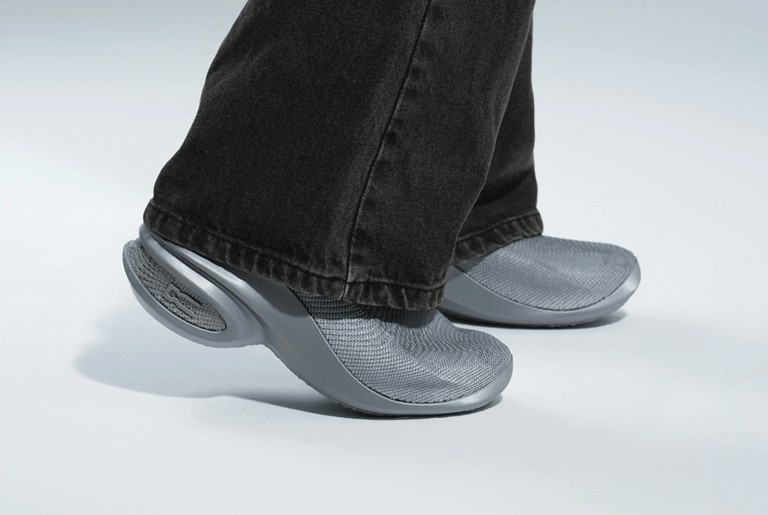
One of the biggest misconceptions about 3D printing is that you need to be an engineer or professional designer to use it.
You can certainly learn 3D modeling and create everything from scratch, but that is not the only way to begin. Platforms such as MakerWorld offer a large collection of ready-to-print models, including organizers, tools, toys, decorations, replacement parts, and accessories.
Find a model you like, select a suitable print profile, and send it to a compatible Bambu Lab printer. Many designs can also be resized, personalized, or adjusted to meet a specific need.
Over time, you naturally start thinking about modifications. Could this hook be longer? Would the box work better with another compartment? Could I add a name or change the color?
That is often how a consumer gradually becomes a creator.
Why Bambu Lab Makes That Transition Easier
Older desktop 3D printers could require a surprising amount of maintenance and manual adjustment. For some people, tuning the machine became a hobby of its own.
Bambu Lab takes a more integrated approach. Its printers combine automated calibration, material profiles, slicing software, remote monitoring, and access to printable models in one ecosystem.
The printer handles many of the technical steps that might otherwise discourage a new user. Instead of spending the evening troubleshooting bed leveling, you can spend it deciding what to make next.
For beginners, the compact Bambu Lab A1 mini provides an affordable way to start with small creative and practical projects. The larger Bambu Lab A1 offers more space for household items, organizers, and bigger models.
Users who want an enclosed machine and greater material flexibility can move to models such as the Bambu Lab P2S. Add an AMS system, and projects can include multiple colors or materials without manually changing filament throughout the print.
The technology is important, but what matters most is what it allows people to do.
Make, Test, and Improve
Traditional manufacturing is designed to produce large numbers of identical objects. Creating a mold or setting up a production line only makes sense when thousands of units will be made.
3D printing works differently. Producing one unique object is completely reasonable.
You can print a first version, try it, identify what needs to change, and produce an improved version. A phone stand can gain a charging-cable opening. A drawer divider can be made a few millimeters shorter. A prototype can be tested before committing to expensive manufacturing.
Failure also feels different in this process. A first version that does not work perfectly is not necessarily wasted effort. It provides information for the next design.
This rapid cycle of making, testing, and improving is one of the most satisfying parts of owning a 3D printer.
Products Become Personal
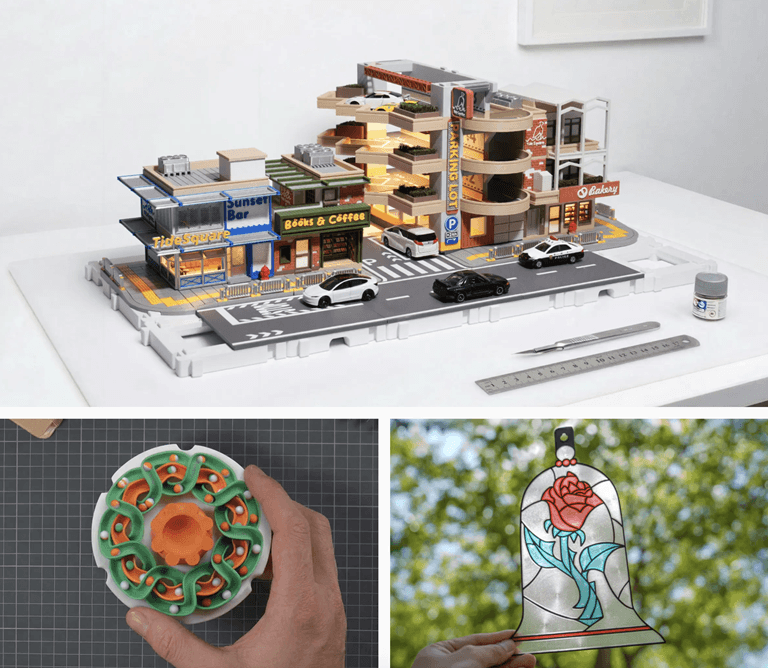
Mass-produced objects are designed to work well enough for as many people as possible. A printed object can be designed for one person, one room, or one particular problem.
That could mean matching the exact dimensions of a kitchen drawer, printing a controller stand in your favorite colors, or adding someone’s name to a birthday gift.
The AMS and AMS lite systems make this personalization even more visible. Different colors can be incorporated directly into a model, allowing text, patterns, and decorative details to become part of the finished print.
The result is not only useful. It feels like yours.
A Different Relationship with Everyday Objects
Owning a 3D printer does not mean you will stop buying things. It means purchasing is no longer your only option.
You begin noticing how products are designed. You look at a broken part and consider how it could be recreated. You measure awkward spaces instead of accepting that nothing will fit. You start saving ideas for projects you might make over the weekend.
Eventually, the printer becomes less like a gadget and more like a household tool. It is there when you need a replacement part, a quick prototype, a personalized gift, or simply something fun to create.
Bambu Lab helps make that experience more approachable by reducing the distance between an idea and a finished object.
The next product you need may not be something you buy. It may be something you create.
Explore Bambu Lab 3D printers and start making your own ideas real here:https://link.joincroo.com/s/V4JBT7Y
Popular on OTW Right Now!


About The Author

Gagan Bhangu
Founder of otechworld.com and managing editor. He is a tech geek, web-developer, and blogger. He holds a master's degree in computer applications and making money online since 2015.