
Fast Turn PCB Services for Complex and High-Density Circuit Boards
Modern electronic devices are becoming smaller, faster, and more powerful. As a result, their circuit boards must accommodate more components and connections within increasingly limited spaces. Complex and high-density PCB designs require careful engineering, advanced manufacturing processes, and strict quality control to achieve reliable electrical performance.
Fast Turn PCB services help businesses shorten production timelines while supporting the technical requirements of advanced circuit boards. From prototypes to production-ready boards, fast-turn manufacturing can help engineering teams test complex designs sooner and move products toward the market more efficiently. One important consideration for these designs is impedance control PCB manufacturing, which plays a significant role in maintaining signal integrity in high-speed electronic applications.
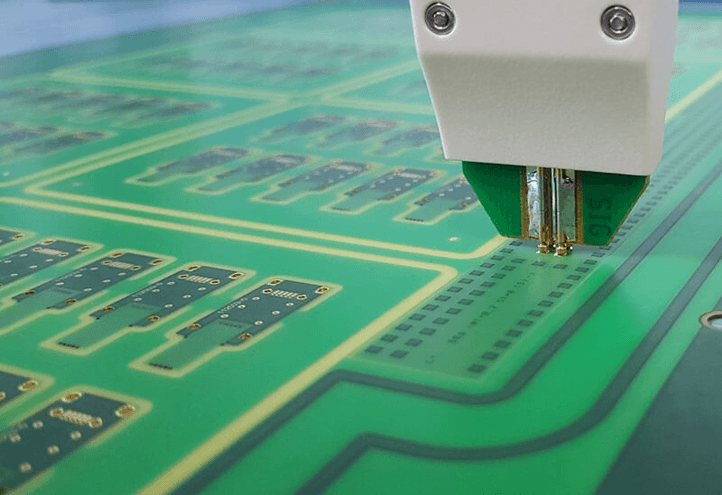
Understanding Fast Turn PCB Services
Fast Turn PCB services are designed to reduce the time required to manufacture and deliver printed circuit boards. They can support different stages of electronics development, including prototyping, design verification, small-batch production, and product manufacturing.
A typical fast-turn PCB service may include:
- PCB fabrication
- Multilayer board manufacturing
- Component sourcing
- PCB assembly
- Prototype production
- Electrical testing
- Quality inspection
The goal is not simply to manufacture boards quickly. A reliable fast-turn process must balance production speed with precision, material quality, and electrical performance.
Why High-Density Circuit Boards Are More Challenging
High-density circuit boards contain a large number of electrical connections and components within a relatively small area. This creates several manufacturing challenges.
Engineers must carefully manage trace widths, spacing, vias, component placement, layer configuration, and signal routing. Even a small manufacturing variation can affect the performance of a complex board.
High-density PCB designs may require:
- Multiple copper layers
- Fine-pitch components
- Smaller vias
- Controlled trace dimensions
- Advanced routing techniques
- Precise layer alignment
- High-quality materials
Because of these requirements, selecting a manufacturer with appropriate technical capabilities is essential.
The Importance of Impedance Control PCB Manufacturing
Signal integrity becomes increasingly important as electronic devices operate at higher frequencies and faster data rates. Changes in trace geometry, dielectric material, copper thickness, and layer structure can influence the electrical characteristics of a circuit.
Impedance control PCB manufacturing helps ensure that specific signal traces maintain their intended impedance throughout the board. This is particularly important for high-speed interfaces and other circuits where signal reflections or losses can affect performance.
Proper impedance control may involve careful consideration of:
- Trace width
- Trace thickness
- Distance from reference planes
- Dielectric thickness
- PCB material
- Copper characteristics
- Layer stack-up
A manufacturer must be able to consistently reproduce the specified design parameters during fabrication.
How Fast Turn PCB Supports High-Speed Designs
When a complex PCB is required for a new electronic product, engineers often need physical boards for testing and validation. Waiting too long for each manufacturing iteration can slow the entire development process.
Fast Turn PCB services can help shorten the gap between design completion and physical testing. Once engineers receive their boards, they can evaluate signal performance, component behavior, thermal characteristics, and overall functionality.
If an issue is identified, the design can be modified and another version produced.
This creates a more efficient development cycle:
Design » Fabrication » Testing » Revision » New Prototype » Validation
Reducing the time between these stages can help businesses reach a finalized design faster.
Materials and Layer Stack-Up Matter
High-density and high-speed PCB designs require appropriate material selection. The dielectric properties of the PCB material can influence signal behavior, especially in applications operating at higher frequencies.
Layer stack-up is also important. Engineers need to determine how signal, power, and ground layers are arranged within the board.
A properly designed stack-up can help with:
- Signal integrity
- Power distribution
- Electromagnetic performance
- Controlled impedance
- Thermal management
- Efficient routing
For this reason, the PCB manufacturer should understand the customer’s stack-up requirements and be capable of producing boards consistently according to those specifications.
Fast Prototyping for Complex PCB Designs
Prototyping is particularly important when developing high-density circuit boards. A design may appear correct during electronic design analysis but still require adjustments after physical testing.
A fast prototype can provide valuable information about:
- Component placement
- Signal behavior
- Thermal performance
- Mechanical fit
- Manufacturing limitations
- Electrical connectivity
Fast-turn manufacturing allows engineering teams to obtain prototype boards sooner and begin this evaluation process without unnecessary delays.
Quality Control in High-Density PCB Manufacturing
High-density PCBs require precise manufacturing because there is often less room for error. Quality control should therefore be integrated into different stages of the production process.
Depending on the board and application, manufacturers may perform inspections such as:
Automated Optical Inspection: Used to identify visible manufacturing and assembly issues.
Electrical Testing: Helps verify that electrical connections perform according to the required specifications.
X-Ray Inspection: Useful for examining hidden solder joints and certain complex component connections.
Visual Inspection: Provides an additional check for manufacturing defects and assembly problems.
Combining appropriate inspection methods can help reduce the risk of defective boards reaching the next stage of production.
Applications of Complex and High-Density PCBs
High-density circuit boards are used across many industries because modern products increasingly require more functionality in smaller packages.
Common applications include:
- Telecommunications equipment
- Networking devices
- Industrial electronics
- Automotive systems
- Medical equipment
- Consumer electronics
- Computing hardware
- Aerospace electronics
- High-speed communication systems
Many of these applications require reliable signal transmission and consistent electrical performance, making proper PCB design and manufacturing especially important.
Benefits of Choosing Fast Turn PCB Services
Businesses can gain several advantages by using fast-turn PCB manufacturing for complex designs.
Shorter Development Cycles
Faster board production allows engineers to begin physical testing sooner.
Faster Design Revisions
When problems are discovered, another PCB version can be produced without unnecessarily long waiting periods.
Better Product Launch Planning
Predictable manufacturing timelines make it easier to coordinate testing, assembly, and product launch schedules.
Reduced Development Delays
Efficient production can reduce waiting time between engineering and manufacturing stages.
Support for Advanced Designs
A capable fast-turn supplier can support complex multilayer, high-density, and controlled-impedance requirements.
Choosing the Right PCB Manufacturing Partner
Not every PCB supplier is equipped to handle complex high-density designs. Businesses should evaluate the manufacturer’s technical capabilities before placing an order.
Important factors include:
- Experience with multilayer PCBs
- Controlled impedance capabilities
- Advanced fabrication equipment
- Quality inspection procedures
- Material availability
- Prototype support
- Production capacity
- Ability to meet required lead times
Communication is also important. Technical specifications should be clearly understood before manufacturing begins. This can help prevent misunderstandings related to materials, stack-up, tolerances, and electrical requirements.
Balancing Speed and Reliability
The main advantage of Fast Turn PCB manufacturing is faster production, but speed should never come at the expense of board reliability. A rushed manufacturing process that creates defects can result in rework, additional expenses, and development delays.
The best approach is to combine efficient production workflows with strong quality control. This allows businesses to achieve shorter turnaround times while still producing circuit boards that meet their technical requirements.
For high-density boards, this balance becomes even more important because complex designs often have tighter tolerances and more demanding electrical requirements.
The Future of High-Density PCB Manufacturing
As electronic products continue to become smaller and more capable, PCB technology will continue to evolve. Higher component densities, faster data rates, advanced packaging technologies, and increasingly sophisticated circuit designs will place greater demands on PCB manufacturers.
Manufacturers that combine automation, advanced inspection, engineering expertise, and efficient production processes will be better positioned to support these developments.
Fast Turn PCB services can play an important role in this future by helping companies reduce development timelines while adapting to increasingly complex PCB requirements.
Conclusion
Fast Turn PCB services provide an effective solution for businesses developing complex and high-density electronic products. By shortening fabrication and assembly timelines, fast-turn manufacturing allows engineers to test designs sooner, identify potential issues, and complete revisions more efficiently.
For high-speed and demanding applications, impedance control PCB manufacturing is an important part of maintaining signal integrity and consistent electrical performance. Proper materials, layer stack-up, trace dimensions, and manufacturing precision all contribute to the final quality of the circuit board.
By choosing a PCB manufacturing partner with strong technical capabilities, reliable quality control, and fast production processes, businesses can accelerate product development without sacrificing reliability. This combination of speed, precision, and manufacturing expertise can help bring advanced electronic products from concept to market more efficiently.
Popular on OTW Right Now!
-
 Compliance debt: the cost curve of retrofitting HIPAA into a working product
-
 Austin Wood Fence Quotes Explained: Materials, Post Systems and 2026 Cost Checks
-
 Photochemical Etching for AI Hardware
-
 Best Agencies for AI Visibility in Australian EducationAustralian prospective students, parents, and adult learners are increasingly beginning their education research in AI tools. A student researching undergraduate degrees in data science, a professional seeking a postgraduate business qualification, or an international student comparing Australian university reputations may start with a ChatGPT or Gemini query that generates an initial institution shortlist.



About The Author

Gagan Bhangu
Founder of otechworld.com and managing editor. He is a tech geek, web-developer, and blogger. He holds a master's degree in computer applications and making money online since 2015.