
Energy-Hogging Data Centers: How To Make Our AI-Led World Sustainable
One look around is ample to establish that artificial intelligence has invaded every sphere of existence. From healthcare to education, and media to retail, AI-driven solutions are optimizing operations worldwide. Amid all the excitement, it’s easy to overlook the cogs in the wheel that consume massive amounts of energy: data centers.
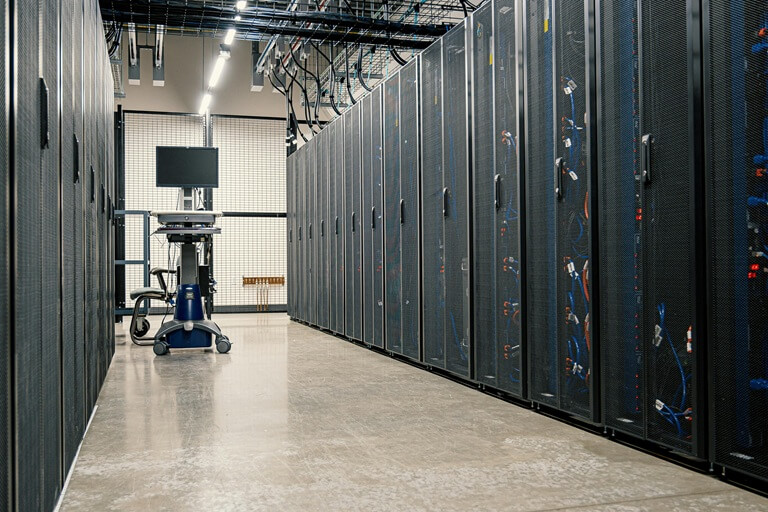
Most AI applications require massive amounts of data to train and deliver the desired results. Data centers house the associated storage units and networking. AI data centers are typically larger and more efficient than traditional ones since they must handle far greater workloads.
The European Commission notes that they are quickly becoming an energy-hungry challenge. The International Energy Agency reports that they consume 415 terawatt-hours at present, and the figure has already grown by 12% in the last five years. Managing this rapidly increasing energy usage has become essential to make the AI revolution sustainable.
Shifting to Green Data Centers
What if a large share of current energy use could be powered by green sources? According to KPMG, green data centers meet several of the UN’s sustainable development goals. For example, they use green energy procurement sources, relying on solar power and other renewables. They also commit to waste recycling by transporting excess heat to nearby buildings.
Another priority for sustainability is optimal resource usage, which data centers can achieve through approaches such as virtualization. This strategy combines multiple virtual servers into one physical server. Therefore, it optimizes existing hardware, making the overall infrastructure more long-lasting.
Of course, in practice, green data centers face various challenges. Power purchase agreements involving solar or wind energy continue to attract a green premium. It makes it challenging to use these sources as a continuous supply, especially for small- and mid-sized organizations.
Even so, more companies are now experimenting with on-site generation to fuel their data centers through greener energy sources.
Optimizing Thermal Insulation
Since data centers are often housed in large facilities, maintaining optimal temperature inside can be challenging. The components must remain cool to perform at their optimum, but this becomes askew when heat escapes from the unit.
Therefore, insulating the infrastructure has become an essential requirement for energy efficiency in data centers. Grand View Research notes that the global data center insulation market is growing at a rate of more than 15%. It is expected to cross USD 1,555 million by 2033. North America has the maximum share of the revenue at over 40%.
One effective solution is to install a thermal break to eliminate bridging, which can otherwise cause heat to escape. These installations can prevent heat from passing through more conductive materials (and increasing energy usage).
Choosing the optimal insulation materials will be essential to benefit from low thermal conductivity and structural integrity. Fabreeka recommends thermal solutions that also help achieve LEED credits (Leadership in Energy and Environmental Design).
The latest LEED v5 framework aims to build a near-zero carbon future. Optimal insulation can help firms achieve these stricter standards for energy usage and human health.
Integrating Community Interests
While drawing up a sustainability plan for data centers, organizations must also consider the interests of local communities. Establishing a data center is also an elaborate, community-linked process involving regulatory and environmental approvals. It makes sense to continue this approach when attempting to make these infrastructural components eco-friendly.
For example, the neighboring areas may benefit from wastewater recycling initiatives. Or they may be able to partner in the circular models of heating and cooling. The World Economic Forum applauds a similar initiative in Sweden, where waste heat produced by data centers is used to keep homes warm.
In fact, AI can prove useful for optimizing energy usage in these facilities. Many companies are spearheading projects that use artificial intelligence to enable predictive maintenance and optimize energy consumption. These benefits can have ripple effects throughout the value chain.
Educating stakeholders and local communities about such projects can improve public sentiment toward data centers. While there’s no denying they are energy hoggers, a reexamined perspective can also make them accountable.
Employee training sessions can also help foster deep-rooted environmental consciousness within the company. It can set healthier habits in motion, letting people understand how their usage of AI tools affects the environment.
Last year, NPR reported how ChatGPT queries use an exorbitant amount of electricity. Google has reported an alarming 48% increase in its greenhouse gas emissions in the last six years. Undoubtedly, much of this is linked to energy consumption in data centers.
It builds a solid case for being responsible in our use of AI and related technologies, the prime driver behind mushrooming data centers.
Our current resource usage levels have made it impossible to think about sustainability idly, conversing about it at roundtable conferences, with little on-ground action. The ecological impact of data centers is only expected to grow in the coming years unless more businesses take proactive steps to curtail their carbon footprint.
Popular on OTW Right Now!
-
 AI PLC Integration: How to Add Machine Learning to Existing PLCs (OPC UA, MQTT, Edge AI)
-
 The 2026 Guide to AI Digital Asset Strategy for UK Firms
-
 Local AI Coding Assistants: Why Developers Are Bringing the Model In-House
-
 Your Recordings Are Invisible to AI: Why Transcription Is the Missing Layer in Every AI Workflow



About The Author

Gagan Bhangu
Founder of otechworld.com and managing editor. He is a tech geek, web-developer, and blogger. He holds a master's degree in computer applications and making money online since 2015.