
Electric Dirt Bikes for Adults in 2026: What to Know Before You Buy
Walk into any off-road discussion group on the internet, and you will hear the same debate taking place. Gas against electric. Nostalgia for two-strokes against power off the line. Smell of fuel against a silent bike with a pull of the throttle.
It was common practice to make sacrifices when purchasing an electric dirt bike for adults in the past. Limited distance, lower power, and suspension better suited to bicycles than trails. Not anymore.
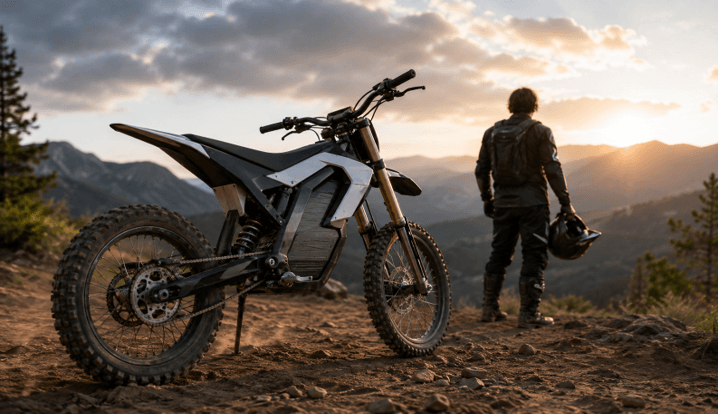
The best electric dirt bike for adults available in 2026 is a genuine off-road machine — purpose-built for dirt trails, technical terrain and sustained performance — not a commuter bike with knobby tires. Understanding what separates a serious electric dirt bike from a dressed-up e-bicycle is the starting point for making a decision you will be satisfied with in two years.
Why Adults Are Making the Switch From Gas to Electric
The shift toward electric in the adult dirt bike market is driven by practical advantages unrelated to environmentalism, though that is a real benefit too.
Instant torque changes how a bike rides. A petrol engine builds power through its rev range. An electric motor delivers maximum torque from zero RPM — which means traction and response that feels fundamentally different from a gas-powered machine, particularly in technical terrain where precise throttle control matters most.
Maintenance will be needed very minimally. One does not have to clean the carburetor at all. One will not need to change oil, spark plugs, and air filter from time to time when using an electric dirt bike. Maintenance on an electric dirt bike is minimal compared to gasoline bikes, which is essential for those who want to ride on weekends.
Noise reduction opens up riding locations. Many trail systems, parks and outdoor areas that are off-limits to petrol-powered bikes are accessible to electric riders. The significantly lower noise profile of an electric motor changes where adults can ride legally and practically.
Operating costs are lower over time. Electricity costs substantially less per mile than petrol, and without the ongoing consumables that a gas engine requires, the total cost of ownership over two or three years often favors electric despite the higher upfront purchase price.
The Specifications That Actually Matter
Electric dirt bikes have become a huge industry, so the marketing jargon has been increasing. It is important to be aware of which specs actually mean something so that you are not awed by meaningless figures.
Motor Power — Peak vs Continuous
Most electric dirt bikes advertise peak motor power, which is the maximum output the motor can sustain for short bursts. Continuous power — the output the motor can maintain for extended periods — is the more relevant figure for trail riding, where sustained climbs and technical sections demand consistent performance rather than brief acceleration.
Among adult electric dirt bikes capable of reaching 50 mph, the fully upgraded HappyRun G300 Pro features a carbon steel forged frame and a newly developed 6500W peak high-performance motor with drive wheel torque significantly increased and speed adjustable across five levels. This kind of specification represents the serious end of the adult electric dirt bike market — machines built for genuine trail performance rather than casual off-road use.
Battery Voltage and Capacity
Battery voltage determines the performance ceiling of the system. Purpose-built trail machines with 72V battery systems, full suspension, hydraulic disc brakes and top speeds up to 50 mph represent genuine off-road hardware rather than fat tire commuter bikes redesigned with knobby tyres.
Higher voltage systems — 72V versus the 48V found in more entry-level machines — deliver better sustained performance, particularly under load on climbs. Battery capacity, measured in amp hours, determines range. The relationship between capacity and range is affected by terrain, rider weight, speed and power mode selection — so manufacturer range figures should be treated as best-case benchmarks rather than guaranteed outcomes.
Suspension Travel
This is where many budget electric dirt bikes reveal their limitations. Trail riding at speed requires suspension that can absorb significant impact — rocks, roots, drop-offs — without deflecting the front wheel or bottoming out the rear. Look for front suspension travel of at least 100mm for genuine trail use, with longer travel preferred for more aggressive terrain. Rear linkage suspension outperforms simple spring systems at speed.
Braking
Hydraulic disc brakes are the appropriate standard for any adult electric dirt bike used on real trails. Cable-actuated brakes are adequate for casual use but lose stopping power progressively as temperatures rise — an unacceptable characteristic on downhill trail sections where consistent braking matters most.
Understanding Motor Configuration: Hub Drive vs Mid Drive
The motor’s position on the bike affects how it rides in ways that spec sheets do not always make clear.
Hub drive motors are positioned in the rear wheel hub. Hub-drive motors sit in the rear wheel — simpler, strong at sustained high speed. They are mechanically straightforward, require less maintenance and deliver strong sustained performance on open trails. The trade-off is that the unsprung weight in the rear wheel affects suspension response on rough terrain.
Mid-drive electric bikes use their motors in the area of the bike’s crank, thus placing the center of gravity low and centralized. As a result, this setup typically results in improved performance when riding on technical trails and during ascents since the center of gravity does not change depending on whether you use the throttle. The G300 SE offers a class-leading mid-drive 4500W motor and 48V 26Ah battery at an excellent price.
Hub drives are preferable for speedy performance on flat trails. Mid-drives offer improved balance and better climbing ability for technical trails.
Happy Run Sports: A Brand Built for Serious Off-Road Use
Among the brands producing adult electric dirt bikes that genuinely deliver on their performance claims, Happy Run Sports has established a strong presence in the US market with a lineup covering different riding priorities.
Three purpose-built models — each optimized for a different riding priority: speed, torque or range. All three include hydraulic disc brakes, full suspension, multi-mode power control, free US shipping and a 2-year warranty.
The G300 Pro is positioned as the speed-first option — a 72V battery system paired with a 6500W peak motor that pushes the bike to a 50 mph top speed, with five selectable power modes so newer riders can ease into that performance instead of being thrown into it.
The F18 2.0 is designed for steep climbs and technical terrain where torque and control matter more than top speed.
The G18 Pro prioritises all-day range and approachable power delivery — suited to riders who cover significant distance on mixed trail types rather than concentrating on short, high-intensity sections.
Every order includes free US shipping, a 2-year warranty on covered components and 14-day return support. The brand also operates dealer locations across the US where riders can test before committing — a meaningful advantage given that the feel of a bike in motion is difficult to assess from a specification sheet alone.
Matching the Bike to How You Actually Ride
The most common buying mistake in this category is selecting a bike based on maximum specifications rather than matching the machine to the actual terrain and riding style it will experience.
An electric dirt bike at 50 mph on a technical singletrack won’t go any faster than a 35 mph one with similar suspension and handling. An electric dirt bike with max range on a flat surface may not offer the same range on rough terrain. Max motor power does not mean the bike will climb better than a mid-drive system with less power but higher torque output.
Instead of comparing speed, it is better to compare the torque output of the motor, suspension travel, brake power, and suitability of the bike to the rider on the basis of a single number.
Rider fit matters independently of performance specifications. For the G300 SE, the ideal rider height would be between 3’11” and 6’1″ and the seat height would be at 29.1 inches, while the maximum load capacity would be 330 lbs. This will save you from the inconvenience of purchasing a motorcycle that is not comfortable to ride.
Power Modes and Learning Curves
One of the real benefits of electric dirt bikes for adults who have not ridden off-road previously is the use of a multilevel power system, which has become a norm in most serious electric dirt bikes.
Three-speed adjustments let new riders get acquainted with riding before using all the available power. Electric dirt bikes are quiet and require less maintenance than gas motorcycles. This gradual release of power is not just applicable for beginners only. An experienced rider who switches from gas to electric will find it useful to spend some time in low power modes to learn how to control the instant power of an electric motor in comparison to the gradual power output of a gas engine.
What to Budget and What to Expect
The electric dirt bikes market for adults in 2026 is diverse when considering pricing, and the price-to-quality ratio for this product is higher than that of many other products.
Bikes that cost less than $1,500 use 48V batteries and hub motor drive, as well as less powerful suspensions. These bikes are suitable for recreational use and learning the essentials but will be too weak for quick learners or those with experience riding off-road.
Mid-range machines between $1,500 and $3,000 begin to offer 72V systems, full hydraulic braking, meaningful suspension travel and multi-mode power systems. This is where most serious adult riders find their best value.
High-performance machines above $3,000 offer the closest experience to competitive electric motocross hardware — the specifications, component quality and performance envelope that make them suitable for riders with significant experience and specific performance expectations.
The operating cost advantage of electric begins to compound meaningfully from the second year of ownership, when the absence of fuel and consumable maintenance costs becomes a genuine financial difference compared to running a comparable petrol machine.
Frequently Asked Questions
Q: Do adult electric dirt bikes require a license to ride?
It all depends on the place where you are going to ride. In the case of private property and dedicated trails, you do not need a licence at all. When it comes to public roads, the laws differ greatly depending on the state and even the country you reside in.
Q: How long does it take to charge an electric dirt bike battery?
Charging time depends on the battery capacity and the charger output. Most adults’ 72-volt electric dirt bikes require four to eight hours of charging from empty. Some bikes come with quick charge technology that allows the bike to be fully charged in two to three hours. Partial charging does not affect lithium batteries.
Q: Can an electric dirt bike handle the same terrain as a gas-powered equivalent?
For adult recreational riding on trails, an appropriately defined electric dirt bike works very well with regard to dealing with similar terrain. Technical stretches that require high effort are likely to deplete battery power much faster than open trail riding, which reduces the bike’s range. However, in terms of competitions, gasoline bikes are still more powerful.
Q: How durable are electric dirt bikes in wet conditions?
Most adult-sized electric dirt bikes have an IP rating that indicates how well they protect against water getting inside the bike. Rain riding and crossing streams should be doable in a properly rated bike, but fully submerging them is likely beyond what any commercially made electric dirt bike can handle.
Q: What happens if the battery runs out on the trail?
Unlike the petrol bike, which can be fuelled using the fuel stored in a pack, the rechargeable batteries require an electrical source of power once depleted. Route planning with a range margin, having a charger in case of emergencies and checking the level of charge on the bike’s screen are all aspects of range management.
The Bottom Line
The adult segment of electric dirt bikes has come to the point of maturity where the vehicles are able to compete head-to-head against conventional fuel-driven machines on the trails and for fun riding purposes – without compromising and making due to the shortcomings of the design – offering real value in terms of maintenance, cost of operations, noise, and the whole riding experience of instantaneous torque delivery.
It all boils down to accuracy. Identify the terrain that you will be riding in, the performance level required, the distance you wish to travel, and the ergonomic needs that you require for comfort in the long run. Combined with the technical specifications of the bike models in question, this will give you a more accurate picture than the bikes’ speeds alone.
Popular on OTW Right Now!



About The Author

Gagan Bhangu
Founder of otechworld.com and managing editor. He is a tech geek, web-developer, and blogger. He holds a master's degree in computer applications and making money online since 2015.