
Dynamics NAV vs Business Central: A Complete Comparison
Introduction
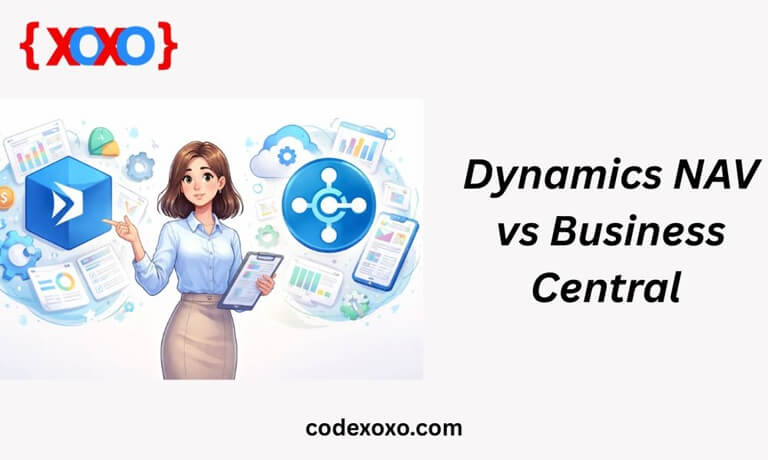
Microsoft Dynamics NAV is a long-standing ERP solution that has helped businesses manage their finance, operations, inventory, and customer relationships. With changing business needs and the power of cloud computing, Microsoft introduced Dynamics NAV and Business Central as an updated version of Dynamics NAV. Both solutions provide the same basic functions; however, Business Central offers more flexibility and the ability to automate processes in the Cloud.
User Experience and Interface Improvements
The user experience of Dynamics NAV and Business Central is one of the major contrasts between the two systems. The traditional interface of Dynamics NAV has since been upgraded to a more contemporary, clean, user-friendly dashboard in Business Central, which allows users to quickly find the information they are seeking, adapt their workspace to fit their needs, and increase productivity even if they do not have a lot of technical expertise.
Cloud-Based Accessibility and Flexibility
Business Central is designed to run in the cloud, enabling users to access it from multiple locations as long as there is an internet connection. This supports remote teams and businesses that need to grow. Dynamics NAV is used mainly on-premises and therefore requires a larger investment in both the infrastructure used and its maintenance. With Business Central, businesses can save money on hardware infrastructure and have many more options for system updates/improvements than they would with Dynamics NAV.
Better Integration with Microsoft Tools
Business Central also has the advantage of being integrated with all Microsoft applications, such as Excel, Outlook, Teams, and Power BI, allowing employees to easily share reports with others, communicate with customers, and analyze their business data efficiently. Dynamics NAV does have some integration options, but Business Central’s integration is much simpler and more advanced than those offered by Dynamics NAV.
Security, Updates, and Future Scalability
Microsoft has done an excellent job of creating a product that keeps your business current with the latest features and meets regulatory compliance. With Business Central, updates occur automatically, and Microsoft manages your cloud security. NAV generally requires additional maintenance and upgrade planning, which leads to higher operational costs over time.
Which ERP Solution Should Businesses Choose?
Companies that are already using Dynamics NAV will find that upgrading to Business Central can help them achieve faster growth and improved efficiency, scalability, and overall business success. Dynamics NAV is a proven ERP solution that can continue to meet the needs of today’s organizations; however, Business Central provides organizations with cloud-based flexibility, more advanced integrations with other applications and systems, and a technology platform that will help them grow into the future.
Conclusion
Both Business Central and ERP systems can offer you unique benefits, but in terms of digital transformation, the ERP solution is going to give you modern tools for the strategy that you want to implement in the future of your business. Your content will be original, search engine optimized, and created specifically for your target audience.
Popular on OTW Right Now!



About The Author

Gagan Bhangu
Founder of otechworld.com and managing editor. He is a tech geek, web-developer, and blogger. He holds a master's degree in computer applications and making money online since 2015.