
How to Choose Durable Countertop Materials for a Busy Palo Alto Kitchen
Countertops take more daily abuse than almost any other surface in a home. Hot pans, knife slips, spilled wine, dropped jars- all of it lands directly on the counter, day after day, for as long as the kitchen is in use. A material that looks stunning in a showroom can start showing scratches, stains, or chips within a year if it isn’t actually suited to how the kitchen gets used.
Choosing the right countertop material isn’t just a style decision; it’s a practical one that affects how much maintenance the kitchen needs and how well it holds up over time. Here’s what to weigh when comparing the most common countertop options.
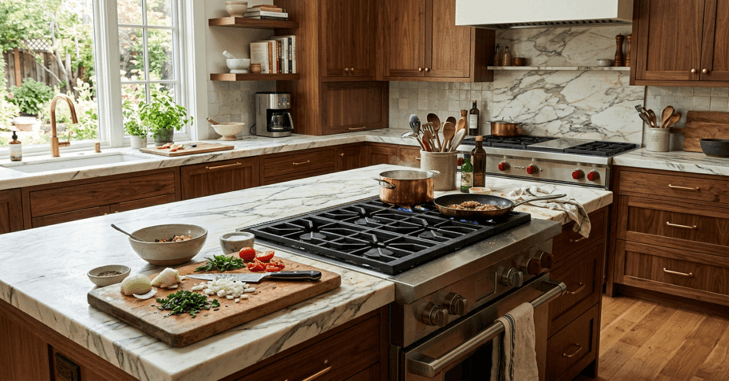
1. Quartz Offers the Best Balance of Durability and Low Maintenance
It’s no surprise that quartz has become the go-to material for fast-paced kitchens – it’s just so easy to use. It is a non-porous engineered material that doesn’t require sealing and will not stain with wine, oil, or acidic foods. It is also very durable and resistant to everyday scratches, and doesn’t need the maintenance that natural stone needs.
The downside: Quartz cannot be heated as much as granite or soapstone. Even though it does not burn on the surface, it will discolor or crack over time if it’s left on the hot plate, so a trivet or hot pad is still necessary for everyday use. In most homes, this is a small habit to add to the ones that are going to be saved by the maintenance of the quartz.
2. Granite Still Holds Up Well, With More Upkeep Required
Although granite is far from trendy anymore, it is a favorite for its natural variation and its heat resistance, and is actually one of the more durable options you can find for everyday cooking. The only thing that quartz doesn’t do very well is maintenance. Granite is porous and needs sealing from time to time, usually once a year, so liquids don’t stain the surface if left there longer than necessary.
Granite has a natural appearance that engineered materials can’t fully capture, and it’s a good option for homeowners willing to do the annual maintenance. People who don’t want to bother with all the sealing plans will tend to end up choosing the more long-term option of quartz.
3. Butcher Block Adds Warmth but Needs the Most Care
Wood countertops add warmth to a kitchen that stone or engineered materials can’t match, and they’re softer than other surfaces, so they’re easy on your dishes! However, the material’s softness also means butcher block can be easily scratched and dented, and it needs frequent oiling to prevent water absorption and cracking.
Butcher block is best for use as an accent piece, an island top, or a small area of counter in a high-action kitchen, rather than as the main worktop. When used like this, it adds character without absorbing the wear and tear.
4. Soapstone Is Durable but Develops Character Over Time
Naturally heat-resistant and non-porous, soapstone performs well for households that cook a lot. It will not stain as granite does, and will never require sealing. What it requires is patience: soapstone darkens and takes on a patina as it ages and is used; some folks embrace it, others don’t.
Soapstone is softer than granite and quartz, so it can scratch more easily too – although most scratches can be buffed out with mineral oil instead of professional repair. It’s a great choice for homeowners who want a natural material and aren’t bothered by the surface changing over the years.
5. Stainless Steel Handles Heat and Bacteria Better Than Almost Anything
As stainless steel doesn’t typically come to mind when homeowners are thinking of their home kitchens, it is a material that might be a good choice for those who cook regularly and would like something that will not be destroyed easily by heat or bacteria. It is non-porous, stain-resistant, and can handle hot pans.
The drawback is more cosmetic than functional. Stainless steel will leave fingerprints, water spots, and scratches easily visible and appears more commercial than warm. It’s a better fit for kitchens that already have a modern, professional feel than for a traditional one.
6. Laminate Has Improved but Still Has Limits
While similar to the thin, dated laminate countertops many homeowners know, modern laminate surfaces offer a wide range of textures and realistic finishes. Laminate is a relatively inexpensive material that’s a good choice for a less-frequently-used kitchen or an alternative prep space.
It still has its drawbacks, however, in a hectic kitchen. Damage to laminate can easily occur, and damage may not be mended, only replaced, whereas damage to stone and engineered surfaces can be easily mended. Overall, laminate is less permanent than a different type of flooring for a kitchen that is used daily.
7. Matching the Material to How the Kitchen Is Actually Used
Paper isn’t the most durable countertop; it’s the one that fits how a home cooks and lives. If a family cooks every day and uses very few trivets, the long-term value of using quartz or granite is greater than butcher block. If a family likes natural materials but isn’t squeamish about some maintenance, they may opt for soapstone or sealed granite.
Thinking through actual daily habits, rather than choosing based on showroom appeal alone, tends to lead to a countertop that still looks and performs well years after installation. This is often where an experienced kitchen remodeling contractor in Palo Alto, such as The Kitchen and Bath Company of Palo Alto, adds the most value, since they can weigh a household’s actual cooking habits against material tradeoffs that aren’t always obvious from a showroom sample.
Why the Decision Is Worth Getting Right the First Time
One of the costliest elements of a kitchen remodel is the countertops, and if the style doesn’t match the family’s habits, it can be a costly mistake to fix. A countertop doesn’t have to be replaced every few years like paint or cabinet hardware.
The durability, maintenance, and usage of a material can be considered before selection so that the countertop can last well beyond the first few years after installation.
Conclusion
Each type of countertop material has its own set of pros and cons in terms of durability, maintenance, and aesthetics, and the best material is the one that is most suitable for the actual usage of a kitchen rather than the most aesthetically pleasing in photos.
Quartz and granite suit most busy homes, but other materials, such as butcher block, soapstone, and stainless steel, offer more specific applications and styles.
Using a material for everyday use, along with current trends, is the only factor that can make a kitchen functional and beautiful for many years after installation.
Popular on OTW Right Now!



About The Author

Gagan Bhangu
Founder of otechworld.com and managing editor. He is a tech geek, web-developer, and blogger. He holds a master's degree in computer applications and making money online since 2015.