
Dumpster Rental Planning for Estate Cleanouts and Large Household Decluttering Projects
Cleaning an estate or doing a major decluttering job invariably involves making more decisions than you would in a normal week’s worth of cleaning. You’re likely to be sorting through furniture, boxes, damaged goods, outmoded items, and things that have been sitting in storage for years before you get to the point of actually removing anything. Having a plan for what you’ll do with everything is key to keeping it under control and preventing the whole place from turning into a heap.
Dumpster rental can help with these sorts of projects, but it’s most effective if you’ve first decided what you’re going to keep, donate, sell, recycle, and chuck. The dumpster should only be used for things that you know are waste, not as a dumping ground for things you’re not quite sure about. Sorting out what you’re going to do with the items prior to loading into the container is the key to protecting the useful stuff and getting the most out of the space in the container.
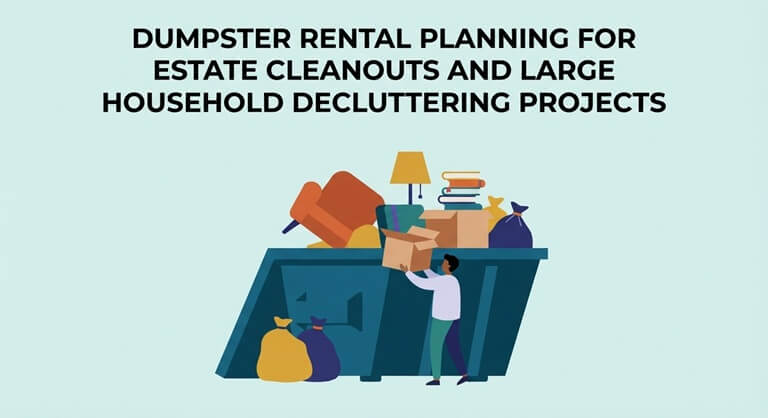
You can get Monarch Dumpster Rental in once you’ve got a good idea of how much you’re going to need to take away and what the mix of materials is going to be. With an estate property or a very cluttered house, you’re likely to have some surprises, so it’s worth looking around early. Having a good plan for how you’re going to go about it from room to room makes the whole thing a lot smoother.
Survey the Entire Property Before Removing Anything
Jumping straight into the first crowded room might seem sensible, but it can make you lose the overall picture. It’s better to walk through the whole property first and get a feel for what you’re dealing with.
Make sure you check the bedrooms, the closets, the garage, the basement, the attic, the sheds, and any of the outdoor storage areas. The spaces you don’t use all that often can end up with a lot more than you’d anticipate.
Look over everything at the outset, as that enables you to spot the big items and things that need special attention. That then allows you to plan your cleanup around what’s actually there rather than just what you see in one room.
Create Clear Categories Before the Main Cleanup
Big cleanouts can be a bit of a maze if you’re constantly having to decide what to do with every single item as you go along. Having categories in place beforehand gives everyone a clear system to work to.
Standard categories would be things to keep, things to donate, things to sell, things to recycle, and things to throw away. If you’re at all in any doubt about an item, then simply put it in a separate pile for later consideration.
Try to keep the ‘not sure’ pile small. If you put every single difficult decision in there, then you’re just moving the clutter around rather than actually making any progress.
Protect Personal and Important Items First
During an estate cleanout, you may well come across photos, documents, jewelry, keepsakes, financial records, and all sorts of other personal items. You’ll need to set these aside safely before you start on the bulk of the clearing out.
Establish a Protected Review Area
Use a separate room, a separate table or a clearly marked area to hold the items that you don’t want to throw away. Make sure everyone helping understands exactly what this area is for.
Important papers can end up getting mixed in with the regular drawers, boxes, and cabinets. It’s essential to take your time in the first pass through the files.
Work Through the Property in Manageable Sections
Suppose you go in and try to clear out several rooms at once; you can end up with a very congested hallway and loads of half-finished piles. It’s generally easier to see the progress if you finish one area before you go on to the next.
You can start with a storage room, a bedroom or indeed any other contained space. Once that area is sorted, you’ll have more space to go and sort things from the rest of the house.
Going room by room also helps everyone to keep track of what’s been sorted. The helpers won’t be guessing whether a box or piece of furniture still needs a decision.
Separate Donations Before Disposal Begins
Furniture, clothing, household goods, and the like could be of value to someone else. If you go through the donation pile early, you can keep those items separate from the stuff that’s destined for the dumpster.
Different bodies have different rules as to what they will accept. It’s worth checking with the organization you’re intending to donate to before you go in with a large pile, to ensure that you’re not ending up with stuff they won’t take.
Think about how the donations are to be collected or delivered. If the pile sits around too long, it can get in the way, and the whole thing can end up looking like it will never be finished.
Identify Items That Need Different Disposal Methods
During a major clean-up you may well come across things that don’t go in the normal skip/dumpster, i.e. paint, chemicals, batteries, electronics, appliances etc. These will generally require different handling.
If you’re not quite sure about any particular item, then do ask before putting it in the dumpster. Just set it aside until you’re sure what to do with it so as not to have any problems down the line.
Monarch Dumpster Rental can provide information about service requirements and accepted materials for the planned container. Clear questions at the beginning are easier to resolve than discovering an unsuitable item after loading has progressed.
Break Down Appropriate Bulky Items Carefully
Big furniture and other large items will take up a lot of space in terms of their shape. If it’s safe to do so, then breaking them down can be a useful way of making better use of the container space.
Don’t go tearing everything apart without thinking about it. Heavy bits, glass, sharp edges, and the like can make it much harder (and potentially more hazardous) for anyone else getting involved.
The aim is to be organized rather than to try and fit everything in the dumpster. Safety is more important than trying to squeeze in a little bit more.
Keep Hallways and Exit Routes Clear
You’ll be moving in and out of the rooms and the dumpster during a cleanout. Boxes, furniture, bags, and loose items will very quickly block the routes that people need to get through.
Try to keep the sorting areas out of the main walkways. Ensure that doors, stairs, entrances, and high-traffic paths have sufficient space to allow people to move through with large items.
Keeping the walkways clear also helps you move faster. The helpers won’t be spending time stepping all around piles or moving the same stuff over and over again to get past it.
Load According to the Overall Cleanup Plan
Don’t let the first lot of stuff you toss away take up all the space in the bin. Think about what’s left to put in before you start loading it up with the bulky or less important bits.
Dumpster rental works best when you load it with the whole cleanout in mind, not just what you find on the first day. Knowing what furniture, boxes, and debris are still to come helps you save space for later.
Monarch Dumpster Rental works well when you sort everything first, then only put approved waste in the container. This way, you make decisions inside and keep disposal as a separate step.
Schedule Time for a Final Property Review
Even if a room looks empty, there might still be things left in cabinets, drawers, closets, or hidden storage spots. Do a final walkthrough after you’ve finished the main cleanup.
Take another look at garages, sheds, attics, and outdoor spaces too. It’s easy to miss small groups of things once you start focusing on the bigger rooms.
This final check also lets you clear out any sorting supplies and open up walkways again. Taking care of these last details helps you finish the job for good, instead of letting it drag on.
Turn a Large Cleanout Into an Organized Process
Estate cleanouts and big decluttering jobs are easier when you sort everything before throwing things away. Keeping important items safe, setting aside donations, handling special materials, and working through one area at a time helps keep things clear and organized.
The best approach is to treat removal as just one element of the overall process. Work out what should be removed, where it should go, and how you’re going to move it before it starts to accumulate right up to the doors.
Having a plan will turn a massive cleanout into a series of manageable steps. With clear categories, open walkways, good disposal planning, and a final check, you can finish a big cleanout without any extra effort and keep all the things you actually want to keep.
Popular on OTW Right Now!



About The Author

Gagan Bhangu
Founder of otechworld.com and managing editor. He is a tech geek, web-developer, and blogger. He holds a master's degree in computer applications and making money online since 2015.