
How is Dallas Emerging as a Hub for Travel Technology Innovation?
The travel industry is experiencing a rapid digital transformation driven by changing consumer expectations, advancements in AI, and the growing demand for personalized travel experiences. Travelers expect apps that allow them to book flights, reserve accommodations, discover local attractions, receive instant updates, and manage complete itineraries from a single platform.
As a result, technology has become one of the most important competitive advantages in the travel sector. Across the United States, several cities are contributing to this transformation, but Dallas has gained significant attention as a leading destination for travel technology innovation.
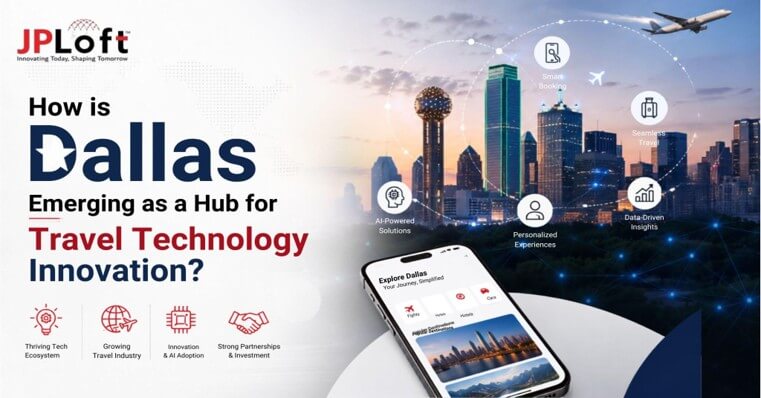
It has a flourishing startup ecosystem, a large number of corporate presences, a talent pool of tech workers, and a strategic geographic location that can support the growth of Digital Travel Solutions. Dallas is leading the way in the future of the global travel industry, from creating AI-enabled booking systems to developing travel management platforms with cloud-based capabilities.
Dallas Has Become a Strong Technology Ecosystem
Dallas is one of the fastest-growing technology hubs in the United States. The city is an attractive place for start-ups, enterprise organizations, investors, and software professionals from various industries, fostering innovation and collaboration.
The continued growth of app development in Dallas has encouraged businesses to build advanced digital products that support industries such as healthcare, logistics, finance, retail, and travel. These resources include access to skilled developers, cloud experts, AI specialists, and UX designers, who can help companies develop high-quality products quickly. These resources include experienced developers, cloud experts, AI engineers, and UX designers, enabling the company to create products of high quality in a short time.
The city’s thriving technology sector is proving to be a valuable asset for businesses seeking to create next-generation travel platforms that are safe, scalable, and user-friendly. The city’s burgeoning tech sector is becoming a key resource for companies aiming to build secure, scalable, customer-focused travel platforms. This strong ecosystem is an ideal environment where innovative travel solutions can be created that can serve users worldwide.
Travel Businesses Are Investing in Specialized Development
Customer demands have been constantly changing; a business must have more than booking apps. They require smart platforms with the ability to make tailored suggestions, safe transactions, and smooth journeys.
Partnering with an experienced travel app development company enables organizations to leverage advanced technologies such as artificial intelligence, cloud computing, predictive analytics, and real-time data processing.
Airlines, hotels, travel agencies, and tourism companies differ in their operational need,s and they are addressed by specialized development teams. Making it easier to develop an application that can stay competitive in a rapidly evolving market.
This expertise can help minimize development risks and speed up time to market.
1. Strategic Location Supports Industry Growth
The city of Dallas has a great location in the United States. The city is also a hub for transportation, with one of the world’s busiest airports, which connects to domestic and international destinations.
This strategic position benefits travel technology companies by offering:
- Strong airline partnerships
- Access to global travelers
- Business-friendly infrastructure
- International investment opportunities
- Efficient logistics
- Large customer markets
The city’s transportation network creates an ideal environment for testing and launching innovative travel solutions.
2. Access to Skilled Technology Talent
Highly skilled individuals are the key to the success of a thriving technology ecosystem. Dallas has a rich talent pool of software developers, cybersecurity experts, cloud architects, AI researchers, product managers, and UX designers.
Local universities and technical institutions continue producing graduates with expertise in:
- Artificial intelligence
- Data science
- Mobile development
- Cloud computing
- Machine learning
- Cybersecurity
- Software engineering
Businesses can make use of this ongoing talent pipeline to grow their development teams and promote long-term innovation.
3. Artificial Intelligence Is Transforming Travel Experiences
Artificial intelligence has become one of the biggest drivers of travel technology innovation.
Travel applications now use AI to deliver:
- Personalized destination recommendations
- Dynamic pricing
- Intelligent chatbots
- Automated itinerary planning
- Predictive travel suggestions
- Customer behavior analysis
Using machine learning algorithms, traveller preferences and history of travel, seasonal demand, and location data are analysed to deliver highly personalized travel experiences. AI streamlines customer support and optimizes business decisions, enhancing operational efficiency.
4. Cloud Computing Enables Global Scalability
Travel platforms in today’s day and age have to cater to millions of people from various countries and time zones. Cloud computing offers the flexibility needed to cope with demand and supply without compromising performance.
Key cloud benefits include:
- Automatic scaling
- High availability
- Global deployment
- Data backup
- Disaster recovery
- Faster application updates
Cloud-native architectures also simplify integration with third-party travel providers, payment gateways, and booking systems. This scalability allows businesses to expand internationally without major infrastructure investments.
5. Real-Time Data Improves Decision-Making
Travel is very dynamic in nature. Flights, hotel room availability, weather, transportation services, and price tags are constantly changing.
Modern travel applications process real-time information to provide:
- Live flight updates
- Hotel availability
- Traffic conditions
- Dynamic pricing
- Weather alerts
- Travel advisories
In real-time, real analytics may provide businesses with accurate information and let travellers make informed decisions during their travel.
6. Internet of Things Enhances Connected Travel
It is easy to see that connected devices are more and more fundamental in the travel industry.
IoT technology enables:
- Smart hotel rooms
- Digital room access
- Connected luggage tracking
- Airport navigation
- Vehicle monitoring
- Smart tourism experiences
These integrated services provide enhanced convenience and valuable insights for travel companies. With the growth of IoT, travel apps will be further connected with more intelligent IoT devices.
7. Cybersecurity Supports Customer Trust
Travel apps are used to handle a ton of information, such as travel papers, payment information, personal identification, etc., which is very sensitive. Robust cybersecurity protocols are crucial to safeguarding customer data.
Modern security practices include:
- Multi-factor authentication
- Data encryption
- Secure APIs
- Identity verification
- Threat monitoring
- Fraud detection
- Role-based access controls. Companies that invest in cybersecurity increase the trust customers have in the company and decrease the risk to the company when operating. International data protection regulations are also adhered to, which contributes to future growth.
8. Startup Culture Accelerates Innovation
Dallas is a thriving city of startups, where ideas are given room to grow and new products are invented quickly. Entrepreneurs can access funding, mentorship, and networking via technology incubators, Vcompaniesie,s and innovation hubs.
This entrepreneurial culture encourages companies to explore:
- AI-powered booking platforms
- Sustainable travel technologies
- Blockchain-based payments
- Virtual travel assistants
- Smart tourism platforms
- Mobility solutions
Agility in adopting new technologies is important to the city of Dallas in being competitive in the global travel technology market.
9. Strong Corporate Presence Encourages Collaboration
There are also many travel companies and Fortune 500 companies in Dallas. Technology start-ups are often called in to help large businesses make digital transformation initiatives happen faster.
These partnerships create opportunities for:
- Joint innovation
- Product validation
- Enterprise software development
- Research collaboration
- Technology commercialization
Access to enterprise customers also enables startups to scale more rapidly while gaining valuable industry experience.
The Future of Travel Technology in Dallas
Emerging technologies will continue to reshape travel experiences over the coming years.
Future innovations are expected to include:
- AI travel companions
- Autonomous transportation integration
- Augmented reality tourism
- Voice-based booking
- Hyper-personalized travel planning
- Sustainable travel optimization
Dallas’ booming technology industry, investment activity, talent pool, and innovation focus are all poised to help these innovations thrive. The future of global travel tech is likely to be shaped more and more by businesses within the city.
Conclusion
Dallas has become one of the leading travel technology hubs, and it’s growing at a near-exponential pace. Enables a dynamic technology ecosystem, world-class talent, strategic infrastructure, and collaborative business environment.
This unique emphasis on AI, Cloud, Cyber Security, Real-time Analytics and Connected Technologies has helped businesses develop smarter, faster and more personalised travel solutions for a global audience.
Organizations must look for technology partners that can provide them with secure, scalable, and future-ready digital experiences, as they have been on the rise in recent times. Dallas is poised to offer resources, expertise, and the culture of innovation to help usher in this change.
As a more and more appealing option for enterprises, revolutionizing the future of travel tech.
Popular on OTW Right Now!
-
 Top SEO Company in Dubai Picks Are Being Made Around 2026’s Newest Ranking Signals
-
 Beatbot AquaSense 2 Pro for Busy Weekly Pool Care
-
 Never Miss a Potential Case: Why Law Firms Are Switching to Virtual Receptionists in 2026
-
 Sms lån in norway: What it is, what it costs, and what you need to now before you apply



About The Author

Gagan Bhangu
Founder of otechworld.com and managing editor. He is a tech geek, web-developer, and blogger. He holds a master's degree in computer applications and making money online since 2015.