
Chinese Furniture Manufacturers: Why China Remains a Major Source for Modern Furniture
The fixtures industry has changed substantially over the past many years. Buyers these days are no longer restricted to manufacturers located in their own countries. With worldwide shipping, virtual layout equipment, and global delivery chains, organizations can supply furniture from almost everywhere. Among the most important manufacturing markets, China continues to draw interest because of its broad production capabilities, customization options, and ability to serve worldwide clients.
For retailers, property developers, interior designers, and homeowners operating on large projects, selecting the right producer can make a massive difference. Product satisfaction, materials, customization, manufacturing capacity, verbal exchange, and delivery all want to be taken into consideration before placing an order.
Why China Has Become a Furniture Manufacturing Hub
China has developed a large and diverse fixtures manufacturing environment. Instead of specializing in the best kind of product, manufacturers across the u. S . A . produce kitchen shelves, wardrobes, bedroom furnishings, workplace fixtures, toilet vanities, doors, dining furniture, and whole domestic furnishing answers.
One crucial advantage is production scale. Large factories can produce large quantities at the same time while retaining standardized production methods. This is especially beneficial for industrial businesses, hotels, residential projects, and furniture stores that need many similar products.
China’s furnishings enterprise has also invested heavily in automation and virtual manufacturing. Modern production systems can connect design specs with production methods, helping factories manage customized orders more successfully.
Customization Is a Major Advantage
One reason global buyers do not forget Chinese suppliers is the ability to customize merchandise. Standard fixtures may work for a few customers; however, large projects regularly require particular dimensions, finishes, colors, materials, garage configurations, or hardware.
Customization allows a producer to conform fixtures to a selected room or venture as opposed to forcing the layout to fit a trendy product.
For instance, an assets developer furnishing numerous condominium homes may additionally require wardrobes with unique dimensions. A hotel task can also want rest room vanities designed around existing plumbing layouts. Similarly, a property owner may additionally want kitchen shelves that are healthy and the exact shape of a room.
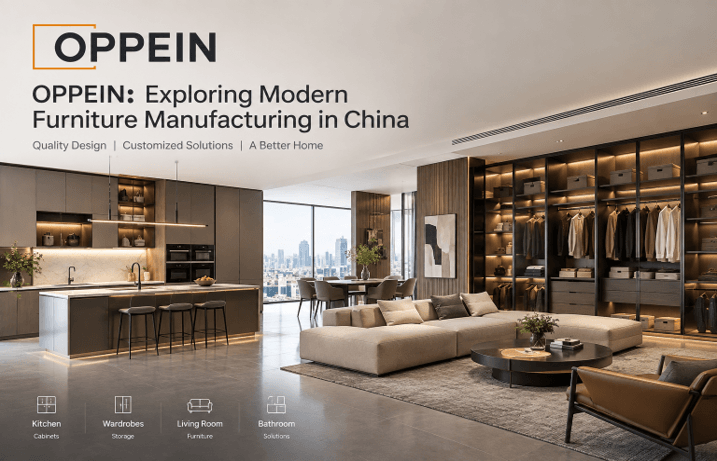
Large producers have developed production systems specifically for this kind of call for. OPPEIN, for instance, commenced as a kitchen-targeted organization and has expanded into kitchens, wardrobes, bathrooms, interior doorways, and whole-residence customization. Its reputable website says the organization operates 5 production bases in China and serves customers across 146 nations and regions.
The Importance of Quality Control
Price is frequently one of the first matters consumers consider while sourcing furnishings, but it no longer has to be the main factor. A low purchase price does not always suggest higher value if the furnishings have inconsistent finishes, vulnerable hardware, poor packaging, or production defects.
Professional buyers need to ask suppliers about their quality-control strategies before placing an order. It is beneficial to understand what substances are used, how products are inspected, what hardware is protected, and how completed furniture is packaged for worldwide transportation.
Certifications can also provide useful records, even though consumers have to verify that certifications apply to the particular materials and products being purchased.
OPPEIN states that its high-quality-managed device consists of certifications and checking out related to corporations together with SGS and FSC, at the side of material requirements related to formaldehyde emissions.
Furniture for Large-Scale Projects
The ability to deal with massive orders is another reason global agencies look more closely at Chinese manufacturers. A small workshop may additionally produce lovely furniture, but scaling manufacturing for masses or lots of rooms can be difficult.
Large manufacturers may be better placed for initiatives requiring consistent designs throughout multiple places. This is specifically relevant to inns, condominium complexes, student lodging, villas, accommodations, and industrial developments.
OPPEIN reports that it has completed more than 18,000 international tasks and operates manufacturing facilities covering more than three million square meters. The corporation additionally says its production device can manufacture more than 25,000 shelves per day under normal operating conditions.
These figures illustrate the scale of production that can be achieved while working with connected suppliers.
Technology Is Changing Furniture Production
Furniture manufacturing is not simply about slicing timber and assembling panels. Technology now plays an important role in design, production planning, precision machining, and logistics.
Computer-controlled machinery can improve slicing and drilling accuracy, while computerized manufacturing systems can help producers maintain consistency across large orders. Digital design structures additionally make it less difficult to turn customized specs into production commands.
This is particularly valued when fixtures need to be precisely in step with certain architectural drawings. Instead of relying entirely on manual interpretation, virtual structures can link design data with production systems.
Modern producers are also exploring artificial intelligence and other virtual technologies. OPPEIN, for instance, describes an AI-supported layout platform that may produce layout drafts and quotations and join finalized specs with manufacturing documentation.
What Buyers Should Check Before Ordering
Finding a manufacturer is the best start. Before committing to an order, consumers ought to carefully examine the provider.
Start by reviewing the organization’s product range and manufacturing abilities. Ask whether the producer produces the furnishings in-house or outsources to third parties. Request fabric specs and product samples when possible.
Communication is similarly important. A reliable supplier must be able to provide an explanation for dimensions, finishes, minimum order quantities, manufacturing schedules, packaging, transport preparations, and setup requirements.
Buyers ought to also clarify payment terms and assurance arrangements before production begins. Written specs can save you misunderstandings later, mainly for custom-designed furniture.
For larger tasks, traveling to a factory or arranging an impartial inspection can offer additional confidence. A sample order can also be beneficial before moving to full-scale production.
Choosing the Right Manufacturer for Your Project
There is no single producer that suits every consumer. A furnishings store may also want extraordinary capabilities from a resort developer or an individual homeowner.
Retailers can also prioritize product range, pricing, packaging, and repeat orders. Developers can also focus more closely on production potential, consistency, assignment control, and transport schedules. Homeowners, meanwhile, may also care most about layout, customization, materials, and after-sales support.
This is why evaluating suppliers based on your actual task necessities is more beneficial than selecting solely on fee.
The Future of Chinese Furniture Manufacturing
The Chinese furniture industry continues to evolve as customers demand higher designs, greater customization, advanced materials, and more environmentally friendly production. Automation and virtual production are supporting established companies to manage more and more complicated orders.
At the same time, worldwide shoppers have more access to producers than ever before. They can communicate without delay with providers, review product catalogs online, request quotations, evaluate specifications, and coordinate worldwide projects remotely.
For groups looking for Chinese furniture manufacturers, the secret is to look beyond the factory rate. Manufacturing capability, customization, fine control, communication, logistics, and after-sales service all contribute to the final value of a fixtures order.
Companies along with OPPEIN demonstrate how a traditional fixtures producer can evolve right into a broader home-furnishing issuer. Since its establishment in 1994, OPPEIN has expanded from kitchen production into multiple categories and entire-residence customization.
Ultimately, successful furnishings sourcing depends on matching the proper manufacturer with the right undertaking. With careful research and clear specs, global buyers can take advantage of China’s great production capabilities even as they construct furnishing solutions that meet their precise design and practical needs.
Popular on OTW Right Now!



About The Author

Gagan Bhangu
Founder of otechworld.com and managing editor. He is a tech geek, web-developer, and blogger. He holds a master's degree in computer applications and making money online since 2015.