
What Is In Fiberglass? A Complete Breakdown of Its Composition, Types, and Uses
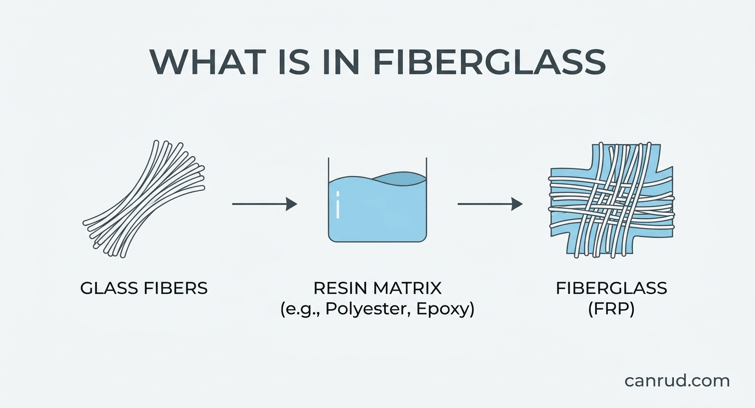
From the hull of a fishing boat to the circuit board inside a laptop, fiberglass shows up in an enormous range of everyday products — yet most people who handle it daily couldn’t say exactly what it’s made of. The short answer is that fiberglass is a composite made up of two primary components: extremely fine strands of glass, produced from a variety of minerals such as silica sand, limestone, soda ash, and boron compounds, and a resin matrix that holds these strands together to form a strong or flexible final product. There are a number of glass formulations, various resin chemistries, and just a few additives, all selected to drive the final product to meet performance requirements.
This guide not only explains what fiberglass contains, but why each component is in it and where else inside fiberglass the same basic material — purified glass fiber — is being found, albeit in a far less obvious place: batteries’ research laboratories.
What Is Fiberglass, Exactly?
Fiberglass – also known as glass-reinforced plastic, GRP or GFRP – is a fiber-reinforced composite. This implies it is not a single substance, but a matrix of material around the reinforcing fibers that is able to hold fibers in place and to distribute mechanical loads between fibers. Fiberglass has spun glass as the reinforcement and polymer resin as essentially its only matrix.
This 2-piece design is responsible for the unique properties of fiberglass. When a window is broken, en it breaks apart because cracks can spread throughout the material. Make those same strands extremely thin and secure them with resin, and the fibres are less likely to crack, and the resin distributes the stress over thousands of individual fibres, making it strong and impact-tolerant.
What Is In Fiberglass? The Core Ingredients
The Glass Fiber Component
The raw material used for the production of glass fiber is a blend of naturally occurring minerals, which are melted and pulled into filaments. The most popular raw materials are:
- Silica sand (silicon dioxide) — the base ingredient of all glass, forming the backbone of the fiber’s molecular structure.
- Limestone (calcium carbonate) — increases the chemical resistance and strength of the final fiber.
- Soda ash (sodium carbonate) — reduces the melting point of the silica, making the batch easier and more cost-effective to process.
- Boron compounds (borax or boric acid) — increase fiber-forming qualities of molten glass and add to electrical insulation.
- Alumina (aluminum oxide), plus smaller amounts of magnesia, iron oxide, and other oxides — fine-tune strength, heat resistance, and processing temperature depending on the glass grade.
They are weighed, mixed, and melted at temperatures far over 1,000°C and extruded through small bushings of platinum to produce long, thin filaments, less than 1 micron (less than a human hair) in diameter. Canrud’s own breakdown of the raw materials and step-by-step manufacturing process behind fiberglass goes deeper into how each stage, from batching to fiber drawing, shapes the finished product.
The Resin Matrix
When you use glass fiber, it’s so brittle and rigid that it can’t be twisted into a final product; that’s the reason you almost always mix it with a resin. Three resin families are predominant in fiberglass manufacture:
- Polyester resin — the most widely used, lowest-cost option, common in boat hulls, automotive panels, and bathroom fixtures.
- Epoxy resin — has higher strength and good bonding to the glass fibers, but is used when the performance is more important than the cost, like wind turbine blades and aircraft components.
- Vinyl ester resin — sits between the two, valued for chemical and corrosion resistance in tanks, pipes, and chemical processing equipment.
Additives and Sizing Agents
The remaining ingredients complete the recipe. Sizing agents are typically silane-based agents that are directly applied to the surface of the glass fiber to cause the resin to chemically bond to the surface of the glass fiber and not merely adhere to the surface. These are then combined with fillers, catalysts, curing agents, and pigments to adjust the cure rate, surface finish, fire resistance, and color of the resin.
The Main Types of Fiberglass — and How Their Composition Differs
Not all fiberglass is made with the same glass recipe. The proportion of oxides in the glass batch defines a fiber type, which in turn defines its use:
- E-glass — An alkali-free, aluminoborosilicate glass (52-56% silica, 12-16% alumina, 16-25% calcium oxide and 5-10% boron oxide) making up the bulk of the world’s fiberglass production. It is used predominantly in printed circuit boards, wind blades, and in general in composites because of its balance of strength, low cost, and good electrical insulation.
- S-glass, which is constructed with higher amounts of magnesium, aluminum, and silicon oxides, and which has a significantly higher tensile strength and heat resistance than E-glass. It is more expensive and is used only in applications where weight reduction and strength are paramount, such as in aerospace, defense, and ballistic armor.
- C-glass — a formulation with the addition of chemical-resistant oxides, for areas where the fiberglass will be exposed to acids or corrosive conditions, like chemical storage tanks and protective surface veils.
- AR-glass (alkali-resistant glass) — contains zirconium oxide to withstand the highly alkaline environment of cement and concrete; the most common glass fiber-reinforced cement (GRC) is made with this.
- Fiberglass wool — made from shorter, discontinuous fibers with little or no resin, this fluffy, low-density form is used for thermal and acoustic insulation in homes, HVAC ducting, and appliances.
How This Composition Produces Fiberglass’s Signature Properties
Once you know what’s in fiberglass, its properties stop looking mysterious and start looking like a direct result of its ingredients:
- High strength-to-weight ratio comes from the glass fiber’s tensile strength combined with the resin’s ability to spread load evenly across thousands of strands.
- Corrosion and chemical resistance are provided by the chemical inertness of glass as well as by a resin barrier between the glass and the moisture and chemicals, particularly vinyl ester or epoxy.
- Electrical insulation is a direct legacy of E-glass’s alkali-free, boron-containing formulation, which is why it’s the standard substrate for circuit boards and electrical housings.
- Thermal stability depends on the type of glass used and the type of resin used – pure glass fiber can withstand several hundred°C, whereas the resin matrix typically is the first part to suffer degradation when heated.
- Moldability refers to the process of molding the fiberglass resin into almost any geometry prior to its setting, which is accomplished during the curing process.
A Specialized Use Case: Fiberglass Composition in Battery Research
Most fiberglass information stops at construction, transportation, and insulation. However, in a niche application, the glass fiber part of the story — with no resin matrix at all — has become a must: separator materials for laboratory-scale battery research.
For coin-cell and other small-format test cells, a thin layer of porous material that has both physical separation of the positive and negative electrodes and allows easy movement of the ions through the electrolyte is required. The original pure glass fiber filter membranes are made from the same silica-based fibers as structural fiberglass, but the binder is left out, and they are found to be very good for this purpose. They absorb electrolytes rapidly, are chemically inert to the reactions studied, and have a porous, non-woven structure that is capable of withstanding temperatures that would break most polymer separators. Such a combination makes them a popular choice for testing new chemistries, such as sodium-ion, potassium-ion, zinc-ion, and lithium-air batteries, which have not been optimized yet.
The fiberglass part that Canrud, a battery materials and R&D solutions company with research institutions in over 30 countries, works directly with is this one. Canrud offers glass fiber membrane separators, as well as other groups of cathode, anode, electrolyte, and separator materials used by researchers to develop and test new cell chemistries. For teams that need to go beyond sourcing materials — selecting separator porosity for a new chemistry, fabricating electrodes, assembling test cells, or running failure analysis — Canrud’s battery R&D services cover that full workflow, from material evaluation through cell-level testing.
Why Understanding Fiberglass Composition Actually Matters
Fiberglass knowledge is not a matter of trivia; it’s a matter of specification. E-glass is used for a project that requires the maximum electrical insulation, not S-glass. Not a polyester-bonded E-glass laminate is used for a chemical storage tank; it is a vinyl-ester-bonded C-glass laminate. The new sodium-ion chemistry requires a binder-free glass fiber membrane, but not a structural composite. The composition dictates the use each time.
Frequently Asked Questions
Is fiberglass just glass?
No. Fiberglass is a combination of glass fibre and a resin matrix (or, in some forms, it is glass fibre alone). The glass itself is chemically akin to regular glass, but is made into thin fibers and attached to resin, creating mechanical properties that are not found in regular glass.
Is fiberglass the same as glass fiber?
The terms are sometimes used interchangeably, although “glass fiber” is generally used to indicate the individual glass fibers, and “fiberglass” is typically used to describe the composite product (which includes fibers and resin) or the product containing glass fibers without resin, such as a filter membrane or insulation.
Is fiberglass safe to handle?
Cured fiberglass composites are not inherently hazardous to handle unless they are being cut, sanded, or produced, in which case the fine glass fibers may cause skin and respiratory irritation, and this is why protective equipment is always used during fiberglass manufacture.
Popular on OTW Right Now!




About The Author

Gagan Bhangu
Founder of otechworld.com and managing editor. He is a tech geek, web-developer, and blogger. He holds a master's degree in computer applications and making money online since 2015.