
Build Smarter Robots with a High-Torque Quasi-Direct Drive Motor
In today’s robotics, motion systems are required to provide high torque, high precision, and light weight, while maintaining high efficiency. In the construction of humanoid robots, robotic arms, exoskeletons,s or legged platforms, engineers require actuators that can perform complex movements with accuracy and reliability. To achieve these goals, high-torque motor technologies have become key – both for responsiveness and for minimizing mechanical losses, and also for enabling compact robot designs. By grasping the principles behind quasi-direct drive technology, designers can create robots that are more agile, efficient, and versatile for a variety of intelligent automation tasks.
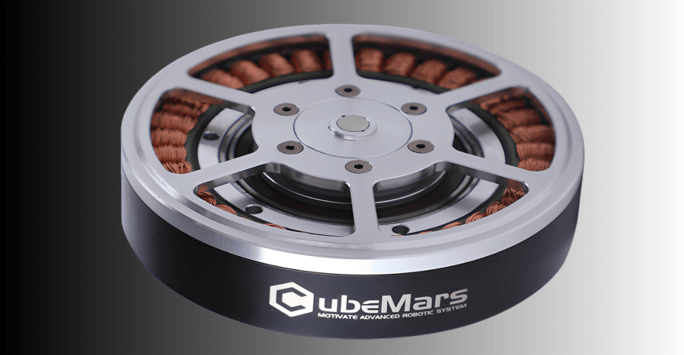
1. Why High-Torque Actuation Matters in Modern Robotics
All robotic systems require actuators to convert electrical energy into a controlled mechanical motion. This motion determines positioning accuracy, payload capacity, stability, and operational efficiency.
With traditional drive systems, it’s common to have to compromise between torque output, weight, speed, ed and precision. Too heavy actuators make it more difficult to conserve energy, and too little torque makes it more difficult for the robot to accomplish a difficult task.
The high-torque actuation overcomes these problems and allows for strong driving forces in a small space. This is especially critical for advanced robotic platforms that have several joints working together and each gram of weight has a significant impact on the system performance.
Applications that especially benefit from high-torque actuators include:
- Humanoid robots performing dynamic movements
- Exoskeletons supporting natural human motion
- Collaborative robots working safely alongside people
- Legged robots navigating uneven terrain
- Robotic arms handling precision assembly tasks
The need for intelligent robotic systems that are powerful, responsive, and mechanically efficient is growing as robots become more intelligent.
2. The Advantages of Integrated Motor and Gearbox Design
The most important breakthrough in robotic actuators has been the combination of the motor and the planetary gearbox in one compact unit. Integrated designs, instead of treating these separately, make sure that both are optimized to work together efficiently.
This allows us to minimize the overall system size and to simplify installation and mechanical alignment. It also reduces unwanted transmission losses, which can impact responsiveness and positioning accuracy.
Integrated actuator modules also provide engineering benefits by decreasing the number of components and maintenance. They are modular so that developers can set robotic joints more efficiently and ensure uniformity of performance in various robot architectures.
Many modern advanced robotics manufacturers have come to focus on integrated drive systems for their compact size, torque delivery,ery and long life.
3. How a Quasi Direct Drive Motor Improves Robotic Motion
A Quasi Direct Drive Motor is a high-performance brushless motor with a precision planetary gearbox to deliver high torque and excellent motion control. Quasi-direct drive technology is focused on minimizing backlash, ensuring smooth power transmission,sion and delivering quick response as compared to conventional high-ratio gear technologies.
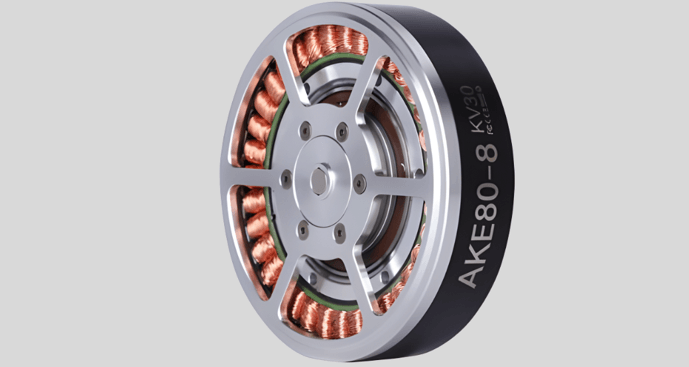
This design enables the robotic joints to produce a significant torque while maintaining precise movement. Low backlash assures accurate positioning, making the technology ideal for applications that require multiple, coordinated movement of the joints.
Several characteristics distinguish modern quasi-direct drive solutions:
Key Performance Advantages
- High torque density for powerful output
- Ultra-low backlash that improves positioning accuracy
- Lightweight construction that reduces system mass
- Modular architecture for flexible installation
- Precision planetary gearing for smooth operation
CubeMars has created an integrated series of quasi-direct drive actuators designed for use in robotics and exoskeletons. The solutions are compact mechanical design and precision manufacture, which are suitable for demanding motion-control requirements and can be customized to meet the requirements of special projects.
4. Selecting the Right Motor for Different Robotic Applications
Not all robotic projects have the same requirements for the characteristics of the actuators. The motor should be selected based on the load to be carried, space available, speed desired, and the function of the joint.
Compact robotic systems typically have lightweight motors, which lead to less inertia and higher overall efficiency. As robot size increases, torque density is needed for heavy lifting, yet precise motion control is essential.
Different actuator configurations can support various robotic applications:
Typical Selection Considerations
- Peak torque requirements for the intended joint
- Motor dimensions based on available installation space
- Overall actuator weight
- Backlash performance for positioning accuracy
- Mounting flexibility during mechanical integration
For instance, small actuator packages such as the AKE60-8 KV80 focus on lightweight design for robotic joints and exoskeletons. The mid-sized systems (e.g., AKE80-8 KV30) provide balance torque, maximum responsiveness and flexibility in installation, and the larger systems (e.g, AKE90-8 KV35) deliver much higher peak torque for more demanding robot systems with higher load requirements.
The choice of actuator at the start of the design process can help to optimize mechanical performance throughout the robot’s life.
5. Why QDD Technology Supports Next-Generation Intelligent Robots
As robots increasingly demonstrate the ability to perform complex tasks, their motion systems must be even more precise, compact and energy efficient. The QDD technology is designed to meet these evolving demands by making torque multiplication possible while simplifying the mechanics.
Low-backlash planetary gearing provides more predictable joint behavior, particularly in continuous motion and quick direction changes. This enhances the stability of robots during dynamic walking, balancing, manipulation, and assisted movements.
Another benefit is better thermal performance. Optimized winding processes minimize copper losses and assist in keeping the operating temperature down for a more efficient operation over long service life.
In addition, the modular design of QDD actuator systems makes maintenance and future upgrades simple, enabling engineers to change the robotic platforms without having to redesign complete drive assemblies.
These features make QDD technology applicable to fields such as humanoid robots, robotic manipulators, collaborative automation systems, legged robots, and wearable robotic assistance devices.
6. Engineering Features That Improve Long-Term Performance
In the case of robotic actuators, they are required to work in harsh environments where they need to be durable as well as precise. Quality engineering practices have a great impact on reliability and consistent performance over a long period of time.
Precision planetary gear structures aid in load distribution and minimize operating noise. Optimized manufacturing processes additionally enhance efficiency by reducing internal mechanical losses.
Modern actuator modules may even have a carefully designed winding technique that maximizes the slot fill rate while minimizing copper losses. This helps to maintain lower temperature increases while running and helps to ensure consistent performance over multiple workloads.
Lightweight housing materials also provide an opportunity to save weight in the robotic system without sacrificing structural strength. These design developments, together with modular construction, enable robotic maintenance to be easier and scalable system development.
These mechanical details can significantly enhance the stability and reliability of the equipment’s performance over time, especially for engineers designing advanced automation systems.
7. Building More Efficient Robots Through Better Motion Control
It is not only the processing power and artificial intelligence that determine the performance of robots. One of the most important parameters that still define if a machine can function smoothly, accurately, and efficiently in a real-world environment is the quality of its motion.
When actuators feature high torque density, low backlash, compact design, and easy integration, it makes it possible for more natural and dependable robotic motion. All the above are features that benefit everything from meticulous industrial automation to sophisticated wearable robotics.
With the further development of robotic technology, integrated actuators will become more important in order to reduce weight, increase responsiveness, and simplify system architecture. CubeMars and other manufacturers are continuing to develop robotic power systems that embody these engineering priorities and offer practical solutions for the next generation of automation in various industries.
Conclusion
Designing intelligent robots starts with selecting motion solutions that offer strength and accuracy. Integrated actuators with high torque are compact, responsive,e and provide efficient power transfer and overcome many mechanical limitations of traditional drive systems.
Choosing the appropriate actuator technology enables enhanced motion, more precise positioning and higher efficiency – whether in the design of exoskeletons, humanoid robots, robotic arms or collaborative automation equipment. Through the knowledge of quasi-direct drive systems and modern robotic actuators, intelligent robots can be designed that can work reliably and satisfy the ever-increasing demands of advanced automation.
Popular on OTW Right Now!




About The Author

Gagan Bhangu
Founder of otechworld.com and managing editor. He is a tech geek, web-developer, and blogger. He holds a master's degree in computer applications and making money online since 2015.