
Money Feels Different When Fear Is Driving
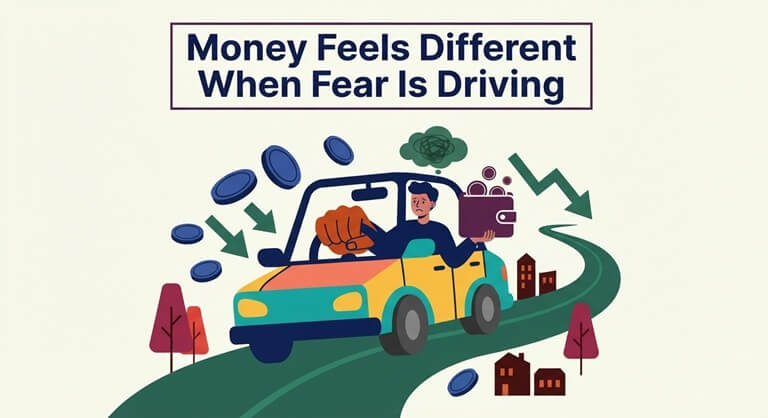
When fear takes over, money ceases to be simple arithmetic and starts to feel dangerous. A bill is no longer just a figure; it’s a threat. A savings account is no longer just a tool for the future; it can become the one thing that keeps you from going under. That’s the point, really. Once fear is in charge, the financial decisions you make are rarely about money at all. They’re about coping.
A lot of money advice assumes people are calm when they make decisions. It assumes they can compare options, think long term, and tolerate a little uncertainty. Real life is messier than that. Anyone who has stared at a bank balance at 2 a.m. knows that panic changes the whole experience. Even reading about support options from National Debt Relief can feel less like research and more like looking for the nearest exit in a burning building.
The APA states that stress can damage the prefrontal cortex (the area of the brain responsible for planning, decision-making, and emotional regulation) and that this, in turn, makes it very difficult to think clearly and make good decisions. The University of Minnesota Extension goes further and says financial uncertainty can lead to grief, denial, and avoidance, so that some people simply end up freezing in place rather than taking action. If that’s what you’re experiencing, then it’s not laziness at all; you’re just overwhelmed. For more on how stress can disrupt decision making, the APA explains it in its overview of how stress alters decision making, and the University of Minnesota Extension outlines practical steps for financial recovery after income loss.
Fear Shrinks Time
Fear can make time seem to go by quicker. Normally, a six-month saving period is perfectly reasonable. When you’re in a state of fear, though, six days can seem like a very long time away. The future becomes all blurred, and the present becomes incredibly pressing and urgent.
This is why people will sometimes make decisions that appear utterly irrational. They may spend their entire savings on a quick fix, avoid looking at a bill altogether because it’s just too painful, or spend money in a very impulsive way for the sake of a moment of comfort. It’s not necessarily a lack of discipline that’s at play here. It’s often just a way of getting away from the emotional pain of the moment.
Fear tells your brain to deal with the immediate threat first. Money management, however, generally works best with patience, consistency, and waiting for the results. So when you’re in survival mode, your instincts are going to be at odds with what good money management requires.
Risk Stops Looking Rational
Fear can also distort your perception of risk. A small probability of something bad can seem certain, while the actual long-term problems can seem a very long way off and quite unreal.
This is why someone might be so frightened of making a mistake that they do nothing. It’s also why someone might be focused on one bill and completely ignore another which is actually more pressing. Fear doesn’t deal well with prioritization. It amplifies whatever is most emotionally charged.
Sometimes the most intimidating thing isn’t actually the greatest risk. To call a creditor may seem like the scary thing to do, but in fact the real risk might be doing nothing. Your total debt may look absolutely staggering, but the risk of doing nothing and just sitting on it is probably greater. When you’re in a state of high anxiety, strong feelings can easily appear to be useful information, and they often aren’t.
Money Becomes Personal in a Different Way
People will often say that money is emotional as it’s so closely tied to identity, status, and self-worth. That’s absolutely true. The addition of fear, though, is what makes it even more emotional. It turns money into a test of safety. Every purchase can suddenly feel like a test of whether or not you’re safe.
This is why small expenses can be such a source of guilt. It is why a simple shop for groceries can be such a stressful thing. It is why buying a pair of new shoes when you actually need them can seem utterly irresponsible. Fear has changed the meaning of spending. It’s not just about buying things anymore. It’s about spending, and it feels like a judgment.
This mental pressure is absolutely draining. It can leave you hyper-alert, constantly second-guessing yourself and ruminating on what you’ve done in the past. It doesn’t just damage your budget over time; it actually makes it harder to make sensible decisions in the future.
The Goal Is Not Perfect Calm
Lots of advice out there is that you should wait until you’re feeling better before making any money decisions. Fear doesn’t disappear when you wish it would. A better objective is to make decisions that are still valid even when you’re feeling emotional.
This could be about having fewer decisions to make. Automate as much as you can. Write down when your bills are due. Work out in advance what you consider to be an emergency. Make a short list of the first things you’d do in a difficult week (i.e., check your balances, pay your essential bills, and defer all the other decisions until tomorrow).
A simple routine will do because fear breeds in chaos. If you’re treating money as an emergency, then you don’t need a complicated plan at all. You need something basic and straightforward to follow, even if your mind is in a state of disarray.
Small Clarity Beats Big Motivation
When people are frightened, they’ll often be waiting for a spark of motivation to get on with their finances. That spark of motivation may never come. Clarity is more reliable than motivation.
Start with smaller steps than you think you ought to. Open the account. List your bills. Write down the amount. Find the next deadline. One clear fact is worth far more than ten murky worries. Often, when fear is no longer so mysterious, it’s actually less frightening.
This is not about pretending everything is alright. It’s about not letting panic take over your entire narrative. Fear is very loud, but it’s not necessarily correct. It will tell you that every problem will go on forever, that every mistake is the end of the road, and that any delay is a failure. None of that is true.
Money feels different when fear is in control, as fear alters your thinking, narrows your focus, and muddies your sense of risk. The aim is not to eliminate your emotions. The aim is to create sufficient calm, structure, and honesty so that fear doesn’t take over. When that happens, money doesn’t feel like a threat anymore; it just feels like something you can deal with, step by step.
Popular on OTW Right Now!


About The Author

Gagan Bhangu
Founder of otechworld.com and managing editor. He is a tech geek, web-developer, and blogger. He holds a master's degree in computer applications and making money online since 2015.