
Which Vacuum Truck Parts Wear Out Most Often?
A vacuum truck is a beast. It’s constantly pulling abrasive sludge, corrosive liquids and all sorts of nasty debris through hoses, valves and pumps and all of those components get worn. Even a good truck will eventually need replacement parts and it’s the operators who know which bits are likely to fail first that are the ones that can avoid the downtime.
Understanding which vacuum truck parts wear out most often helps you plan your maintenance budget, stock the right spares, and catch problems before they strand a truck on a job site. A failed seal or cracked hose is usually a minor repair when found early, but it can become a major expense when ignored.
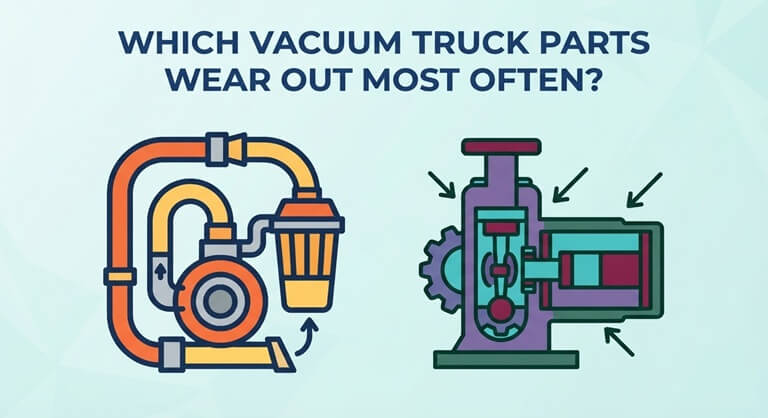
This guide covers the components that need the most attention, the warning signs of wear, and the habits that make equipment last longer.
Why Wear Happens in Vacuum Trucks
Vacuum trucks face a unique mix of stresses that most vehicles never encounter. Knowing the causes of wear makes it easier to prevent.
- Abrasion. Sand, grit, and solids scrape the inside of hoses, pipes, and pump housings.
- Corrosion. Chemicals, salt, wastewater, and moisture attack metal surfaces and seals.
- Heat. Pumps and engines generate heat, which dries out rubber and breaks down lubricants.
- Pressure and vacuum cycling. Constant changes in pressure flex hoses, gaskets, and valves until they fatigue.
- Vibration. Road travel and pump operation loosen fittings and stress welds and brackets.
- Poor cleaning habits. Residue left in tanks and lines hardens, corrodes, and clogs components.
The vast majority of failures are due to a combination of these factors. A hose, for instance, can be abraded from the inside, flexed from the outside, and baked by the sun all at the same time.
Vacuum Pump Components
The pump is the heart of the truck, and it contains several of the most commonly replaced vacuum truck parts.
Vanes and Rotors
In a rotary vane pump the vanes (carbon or composite) slide against the casing as the rotor turns and are worn down by friction. As they get thinner, the suction drops and it takes longer to do the job. They are a planned wear item and most manufacturers will have a recommended replacement interval.
Bearings
Pump bearings carry the spinning rotor and are subject to high loads. Their life is reduced by heat, contamination, and poor lubrication. Warning signs are grinding or squealing noises, excessive vibration and increasing pump temperature.
Seals and Gaskets
Shaft seals are there to keep the oil in and the contaminants out. When they fail, you can see oil leaks, you can lose your vacuum, and you can have oil in the exhaust. The gaskets between the pump sections can also harden and leak over time.
Lubrication and Oil System Parts
Many pumps rely on oil pumps, filters and lines to keep them cool and lubricated. Clogged filters and degraded oil will, of course, hasten wear right through the pump. Regular replacement of oil and filters is one of the most cost-effective ways of protecting a very expensive component.
Liquid Ring Pump Wear Items
Liquid ring pumps wear in a different way. The impellers and the housing can be eroded by abrasive liquids and the mechanical seals can fail if the service liquid is dirty or too hot. Keep the service liquid as clean and cool as possible to maximize the life of the pump.
Hoses and Couplings
If you ask veteran operators which parts they replace most often, hoses usually top the list.
- Suction hoses. These drag across pavement, get stepped on, and carry abrasive material. Look for cracks, soft spots, bulges, and exposed reinforcement wire.
- Discharge hoses. These face pressure and flexing during unloading. Check for leaks at the ends and along the length.
- Hose couplings and cam locks. Gaskets inside quick-connect fittings flatten and tear. Locking arms bend or break with rough handling.
- Clamps and bands. Corrosion and vibration loosen them, which can cause air leaks that reduce suction.
A small air leak at a coupling can have a massive effect on vacuum performance so these connections should be checked regularly. Hoses should be stored coiled and off the ground whenever possible and should never be dragged over sharp edges.
Valves and Seals
Valves control the flow of material and air throughout the system, and they open and close thousands of times in their lifetime.
- Ball valves. Seats and seals wear from abrasive material and can cause leaks or sticking handles.
- Gate valves. Gates can scar or jam when debris collects in the track.
- Butterfly valves. Rubber liners harden and crack, especially with chemical exposure.
- Pressure relief valves. Springs and seats weaken over time, which can affect safety performance.
- Check valves and flappers. These small parts stick or tear and may allow backflow.
- Rear door and tank seals. The large gasket on a rear tank door compresses and ages, leading to leaks and lost vacuum.
Because valves are often hidden behind panels or under the truck, they are easy to overlook until they fail. Add them to your regular inspection route.
Tank Components
The tank itself is built to last, but a number of the internal and surrounding components wear out much more quickly than the hull.
Interior Lining and Walls
Corrosive liquids and abrasive solids will, of course, slowly erode tank surfaces. Steel tanks will rust and pit, particularly in the welds and in the low spots where liquid will pool. Coated tanks can suffer chipping and peeling.
Baffles and Internal Hardware
Baffles reduce sloshing but can crack at the weld points due to the constant movement and stress. Loose or broken baffles could be a hazard inside the tank.
Sight Gauges and Level Sensors
These units are subject to waste, sunlight, and impact. The gauges are often cloudy, and the sensors are prone to failure, so you don’t always know when the tank is full, which in turn increases the risk of overfill.
Hatches, Lids, and Hinges
Hinges and latches wear as a result of the constant opening and closing. The seals around the hatches dry out and crack which results in leaks.
Shutoff Devices
Overfill protection (ball float or auto shutoff) can stick or corrode. Always test them regularly to ensure they work when you need them to.
Filters and Separators
Filters protect the pump and engine from contamination, which means they take on a constant load of debris.
- Intake filters and screens. These catch solids before they reach the pump and clog frequently.
- Primary and secondary separators. These keep liquid from reaching the pump. Floats, screens, and drains inside them can wear or jam.
- Air filters. Dusty job sites clog them quickly and starve the engine and pump of clean air.
- Oil filters. These need replacement on schedule to prevent premature pump wear.
- Muffler and exhaust filters. On some pumps, oil mist collects here and requires periodic service.
Cleaning or replacing filters is one of the least expensive tasks in the maintenance plan, yet skipping it can cause some of the most expensive failures.
Drivetrain and Power Components
Many vacuum trucks run their pumps from the main engine, so the power delivery system also takes on stress.
- Power takeoff (PTO). The PTO transfers engine power to the pump. Clutches, gears, and bearings wear with use, and a failing PTO may slip, grind, or overheat.
- Drive shafts and U-joints. These rotate under heavy load and need regular greasing. Dry joints fail quickly.
- Belts and pulleys. On trucks with belt-driven components, belts stretch, crack, and fray.
- Hydraulic hoses and cylinders. On trucks with hydraulic tank lifts, rear doors, or boom systems, hoses and seals leak and fail with age.
- Auxiliary engines. Separate pump engines need the same attention to oil, filters, spark plugs or injectors, and cooling.
Electrical and Control Parts
Modern vacuum trucks rely on switches, wiring, and sensors that live in harsh environments.
- Switches and control panels. Moisture and rough use damage buttons and toggles.
- Wiring harnesses and connectors. Vibration, heat, and corrosion break down insulation and cause intermittent faults.
- Lighting. Work lights, beacons, and marker lights take impacts and need frequent bulb or lens replacement.
- Gauges. Vacuum and pressure gauges can drift or crack and give false readings.
- Remote controls and sensors. Batteries, antennas, and connectors wear out with regular use.
Dielectric grease, sealed connectors, and routine cleaning help electrical parts survive longer.
Chassis and Wear Items
Do not forget the truck itself. Heavy loads and constant stops put extra pressure on standard vehicle components.
- Brakes. Pads, rotors, and drums wear faster under the weight of a full tank.
- Tires. Heavy payloads and off-road work shorten tire life.
- Suspension. Springs, shocks, and bushings sag and wear.
- Wheel bearings and seals. These carry the full weight of the loaded truck.
- Batteries and charging components. Long idle times for pumping can strain the electrical system.
Early Warning Signs of Worn Parts
Catching wear early can save thousands of dollars. Watch for these signals:
- Reduced suction or longer pumping times
- Unusual noises such as grinding, squealing, or rattling
- Oil leaks around the pump or seals
- Visible cracks, bulges, or soft spots in hoses
- Hissing sounds that suggest air leaks
- Rising pump or engine temperature
- Odors from tank seals or fittings
- Sticking valves or hard-to-turn handles
- Vibration at the pump, PTO, or driveshaft
- Warning lights or erratic gauge readings
Train every operator to report problems immediately instead of working around them.
How to Extend the Life of Vacuum Truck Parts
Good habits cost little and pay back many times over.
- Inspect before every shift. Walk around the truck, check fluids, and look at hoses, seals, and fittings.
- Clean after every job. Flush hoses, rinse tanks, and clear separators so residue does not harden.
- Follow the manufacturer’s maintenance schedule. Change oil, filters, and wear items at the recommended intervals.
- Use quality replacement parts. Cheap substitutes may save money at first but often fail sooner.
- Avoid running the pump dry. Dry operation overheats and damages seals and vanes.
- Handle hoses with care. Do not drag, kink, or drive over them.
- Keep detailed records. Track replacement dates and costs so you can spot patterns and plan ahead.
- Stock critical spares. Keep vanes, gaskets, filters, and common fittings on hand to reduce downtime.
- Train your crew. Operators who understand the system treat it better and notice problems sooner.
Frequently Asked Questions
Which vacuum truck parts wear out the fastest?
Hoses, couplings, gaskets, pump vanes, filters, and valve seals typically wear fastest. These components handle abrasive material, flex repeatedly, or rub against moving parts.
How often should pump vanes be replaced?
It depends on the pump model, workload, and materials handled. Many vanes last several thousand hours, but you should follow the manufacturer’s guidance and inspect them regularly.
What causes a vacuum truck to lose suction?
Common causes include worn vanes, leaking hoses or couplings, damaged tank door seals, clogged filters, full separators, and failing valves. Start with the simplest checks, such as hose connections and filters.
How can I tell if a hose needs replacement?
Look for cracks, bulges, flattened areas, exposed wire, or soft spots. Also replace any hose that leaks or collapses under vacuum.
Are aftermarket vacuum truck parts reliable?
Many are, especially when made by reputable suppliers to match original specifications. Avoid unknown brands with no testing or warranty, and ask for compatibility information before buying.
How much should I budget for maintenance?
Costs vary with truck age, usage, and the materials you handle. Many operators set aside a monthly amount per truck and increase it as the equipment ages.
Does the type of waste affect wear?
Yes. Abrasive solids, acids, caustics, and hot liquids wear parts faster. Match your equipment and seals to the materials you handle.
Why do seals and gaskets fail so often?
They are made of flexible materials that harden, crack, or compress with age, heat, and chemical exposure. They also sit at the points where pressure differences are greatest.
Should I keep spare parts on the truck?
Yes. Carry items that are inexpensive and likely to fail, such as gaskets, cam lock seals, clamps, and a spare hose section. This can save a trip back to the shop.
How long do vacuum trucks usually last?
With good maintenance, many last 15 to 20 years or more. Pumps, hoses, and seals may be replaced several times over that span, while the tank and chassis can remain in service much longer.
Conclusion
Every vacuum truck eventually needs new components, but the pace of wear depends largely on how the truck is used and maintained. Hoses, couplings, seals, pump vanes, filters, and valves lead the list of frequent replacements, while bearings, PTO parts, and electrical items follow close behind.
By learning to recognize early warning signs and keeping a steady inspection and cleaning routine, you can catch problems while they are small and inexpensive. Stock the right spares, follow the manufacturer’s schedule, and invest in quality vacuum truck parts when replacements are needed. Do that, and your truck will stay productive, safe, and ready for the next job.
Popular on OTW Right Now!




About The Author

Gagan Bhangu
Founder of otechworld.com and managing editor. He is a tech geek, web-developer, and blogger. He holds a master's degree in computer applications and making money online since 2015.