
AI on the PLC: How Small Factories Add Machine Learning Without Replacing Controls
AI integration with a PLC means using machine-learning models, AI software, or AI-assisted engineering alongside the programmable logic controller that already runs the machine. The practical goal is usually to improve prediction, inspection, optimization, or engineering productivity without removing the deterministic control layer that keeps equipment operating safely and consistently.
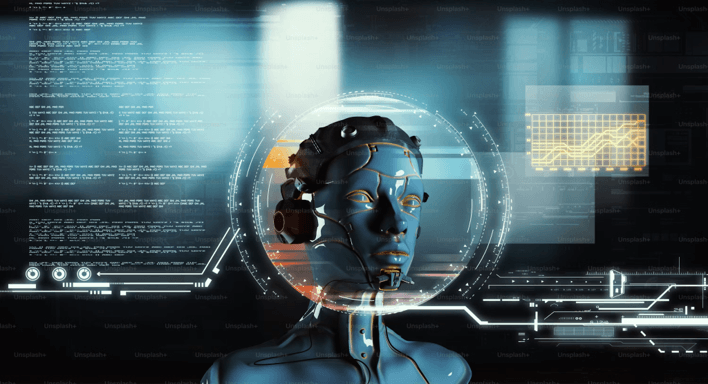
How do plc and ai work together?
PLCs and AI work together by giving each technology a different job.
The PLC handles deterministic control tasks such as sequencing, interlocks, timing, motion commands, sensor inputs, and machine states. AI can analyze production data, recognize patterns, predict failures, classify images, optimize process parameters, or provide recommendations.
A typical architecture looks like this:
Sensors » PLC/industrial network » edge or AI model » prediction » PLC decision logic » machine
The AI model does not necessarily need to run inside the PLC itself. It can run on an industrial PC, edge device, dedicated AI accelerator, or another computing layer that communicates with the automation system.
Siemens’ current Industrial AI architecture, for example, supports AI execution at the edge close to machines, while its AI Motion technology can deploy certain AI-generated control strategies directly as SCL function blocks on SIMATIC PLCs.
What is an ai integrated plc?
An AI-integrated PLC is a PLC-based automation system connected to AI capabilities that can process machine or production data and use the resulting predictions or decisions within an automation workflow.
There are several ways to create this integration:
- AI inference running on an edge computer
- An AI accelerator connected to the automation system
- Machine-vision inference connected to PLC logic
- Cloud AI sending higher-level recommendations
- AI-generated PLC code reviewed and deployed by engineers
- AI models deployed directly to compatible automation hardware
The important distinction is that “AI-integrated” does not necessarily mean the PLC itself contains a large language model or neural network.
Siemens’ AI Model Deployer documentation describes architectures in which trained models receive sensor data, perform inference, and return results to the PLC.
How is ai in siemens plc systems used?
AI in Siemens PLC systems can be used for machine optimization, inspection, prediction, and automation engineering.
One example is AI Motion, where reinforcement learning can generate optimized control strategies and deploy them as SCL code for SIMATIC PLCs or as Python on Industrial Edge.
Another use is AI-assisted PLC engineering. Siemens’ Eigen Engineering Agent is integrated with TIA Portal and can generate PLC code, create HMI visualizations, configure devices, and check its own work. Siemens reported pilot results from more than 100 companies showing substantially faster engineering workflows, although those results are vendor-reported and should not be treated as a guaranteed factory-wide productivity gain.
For a small factory, the more immediate opportunities are usually narrower: inspection, anomaly detection, predictive maintenance, process optimization, and engineering assistance.
How does ai plc programming work?
AI PLC programming works by using an AI system to generate, explain, translate, analyze, or optimize PLC code rather than expecting the AI to operate the machine without engineering oversight.
A practical workflow is:
- Describe the machine sequence and requirements.
- Provide relevant PLC architecture and existing code.
- Ask the AI system to generate or modify a specific routine.
- Review the generated logic.
- Test it in a simulator or engineering environment.
- Validate I/O behavior and safety requirements.
- Deploy it to a controlled test environment.
- Commission the machine.
- Monitor the result.
This can reduce repetitive programming work, but generated code still requires engineering review.
Siemens specifically positions its current engineering agent as a way to accelerate PLC development while allowing engineers to remain responsible for the resulting automation project.
What is the ai integration meaning in simple terms?
AI integration simply means connecting an AI capability to an existing business, machine, or software system so the AI can use real data and produce a useful output.
In a factory, that could mean:
Sensor data » AI model » prediction » PLC logic
For example, a vibration sensor might produce a signal that an AI model classifies as abnormal. The PLC can then receive that result and trigger an alarm, slow a process, or request an operator inspection.
The AI provides the prediction; the automation system determines what action is permitted.
What is a good ai integration roadmap?
A good AI integration roadmap starts with one measurable production problem instead of trying to “add AI” everywhere.
1. Choose one use case
Start with a problem such as:
- Detecting product defects
- Predicting equipment problems
- Reducing energy consumption
- Optimizing cycle parameters
- Reducing nuisance alarms
- Assisting PLC programming
2. Identify available data
Check whether the required sensor, PLC, historian, SCADA, or machine-vision data actually exists and is reliable.
3. Establish the control boundary
Define exactly what the AI can recommend and what the PLC, safety system, or operator must control.
4. Test at the edge
For many small factories, edge inference can be more practical than sending every machine signal to the cloud, especially where latency, connectivity, or data governance matters.
5. Validate before deployment
Test AI predictions against known production conditions and verify how incorrect predictions will be handled.
6. Measure the business result
Track metrics such as downtime, scrap, cycle time, inspection labor, energy consumption, or engineering hours saved.
What are some ai integration examples?
AI integration examples in manufacturing include:
- Machine vision detecting defects and sending pass/fail results to a PLC
- Vibration models identifying abnormal equipment behavior
- AI predicting when a motor or pump requires inspection
- AI optimizing a temperature or pressure process
- AI recommending machine settings based on historical production data
- AI assistants generating PLC documentation
- AI assistants explaining existing ladder or structured-text code
- AI generating draft PLC routines for engineer review
The strongest early projects usually have a measurable input, a clearly defined output, and a limited operational boundary.
What is plc copilot?
A PLC copilot is an AI assistant designed to help automation engineers with PLC programming, troubleshooting, documentation, or related engineering tasks.
It can potentially generate code, explain existing logic, identify programming issues, translate code, or help engineers locate relevant technical information.
Siemens’ Eigen Engineering Agent is a current example of this direction. It operates within TIA Portal and can generate PLC code and assist with other automation engineering activities.
The useful distinction is between a PLC copilot and an autonomous machine controller. A copilot assists an engineer; an autonomous controller would be responsible for real-time machine decisions. The latter requires substantially stronger validation and safety controls.
How do I use ai for plc programming?
Use AI for PLC programming by giving it a constrained engineering task rather than asking it to design an entire machine from a vague description.
A good request might specify:
- PLC platform
- Programming language
- I/O list
- Machine sequence
- Operating states
- Alarm requirements
- Existing code conventions
- Naming conventions
- Required comments
- Safety boundaries
- Expected inputs and outputs
Then have the AI produce a draft, review it manually, simulate it, and validate it against the machine requirements.
Never treat generated PLC code as automatically correct merely because it compiles.
What is the best ai for plc programming?
The best AI for PLC programming is the one that understands the target PLC environment, engineering workflow, programming language, and machine context.
For a Siemens-based factory, a TIA Portal-integrated solution can have an advantage because the AI operates closer to the actual engineering environment rather than requiring engineers to copy code between unrelated tools. Siemens’ current Eigen Engineering Agent is specifically designed around TIA Portal.
For other PLC ecosystems, the best choice may instead be an AI assistant integrated with the vendor’s engineering environment or an industrial automation platform.
The deciding factors should be code quality, integration, security, traceability, testing, and engineer review—not simply which AI model produces the most convincing-looking code.
How is plc ai used in automation?
PLC AI is used in automation when machine data can be converted into a prediction or optimization that improves a controlled process.
Common applications include predictive maintenance, quality inspection, adaptive process optimization, anomaly detection, and intelligent motion control.
The safest architecture is generally layered: deterministic PLC logic and safety systems remain responsible for defined control and protection functions, while AI provides predictions, classifications, or optimization within an approved boundary.
Siemens describes an Industrial AI Orchestration Layer specifically around this principle, placing policy, safety, validation, and traceability between AI outputs and real-world machinery.
What is the best plc ladder diagram ai generator?
The best PLC ladder diagram AI generator is one that can produce code or logic compatible with the target PLC environment while preserving the engineering team’s conventions and allowing thorough validation.
However, generating a ladder diagram is only the first step.
A useful tool should also help engineers understand the generated logic, document it, test it, identify potential errors, and integrate it into the existing project. For complex machines, an AI-generated ladder routine should be treated as engineering output requiring review—not as an automatically approved control system.
Can chatgpt plc programming replace engineers?
ChatGPT PLC programming cannot replace automation engineers for complete machine design, commissioning, safety validation, or responsibility for industrial control systems.
AI can reduce repetitive work. It can help explain code, draft routines, create documentation, brainstorm troubleshooting steps, and accelerate certain programming tasks.
But engineers still need to determine whether the proposed logic matches the machine’s physical behavior, safety requirements, electrical design, process constraints, and applicable standards.
That distinction becomes even more important as AI tools become capable of generating more complete automation projects. Current industrial AI systems are moving toward automated engineering, but vendors continue to position these systems as tools that accelerate engineering rather than eliminating the need for engineering judgment.
Start AI beside the PLC, not by replacing it
Small factories do not need to replace an existing PLC infrastructure to begin using AI.
The practical starting point is usually one narrow problem: detect a defect, predict a failure, optimize a process, or reduce repetitive engineering work. Connect the required data, run the AI model at an appropriate edge or computing layer, define exactly what the AI is allowed to influence, and keep deterministic control and safety functions under established automation logic.
That approach makes AI integration easier to test, easier to measure, and far less disruptive than attempting to rebuild the entire control system around AI.
Popular on OTW Right Now!


About The Author

Gagan Bhangu
Founder of otechworld.com and managing editor. He is a tech geek, web-developer, and blogger. He holds a master's degree in computer applications and making money online since 2015.