
TSCA PFAS Reporting: The New Deadline and What Small Importers Must Report
EPA has postponed the start of the TSCA Section 8(a)(7) PFAS reporting period. Under EPA’s April 9, 2026 update, the reporting period will begin 60 days after the effective date of a forthcoming revision to the PFAS reporting rule, with a January 31, 2027 backstop for the start of the submission period. Companies should therefore avoid relying on the previously announced October 13, 2026 and April 13, 2027 dates unless EPA confirms the applicable timing after the forthcoming revision.
The rule matters to manufacturers and importers because TSCA Section 8(a)(7) requires covered persons to report information about PFAS manufactured or imported during the applicable historical period, generally covering January 1, 2011, through December 31, 2022. Potentially reportable information includes chemical identity, uses, production or import volumes, disposal, exposures, and environmental and health effects information.
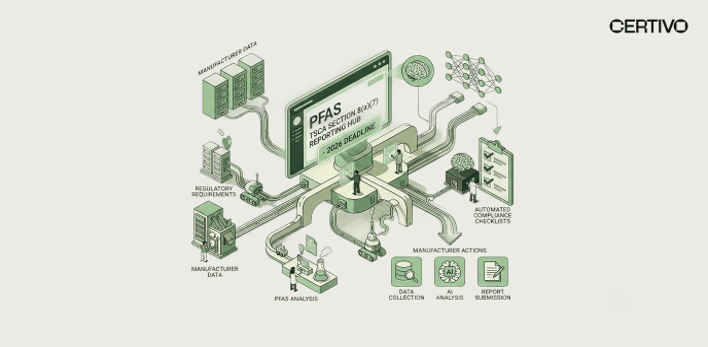
For small importers, the delay is an opportunity to review historical purchasing, supplier, product, customs, and import records before the final reporting requirements and timing are established.
How does pfas reporting tsca work?
PFAS reporting under TSCA works as a historical reporting and recordkeeping requirement for covered manufacturers and importers. EPA’s October 2023 final rule requires persons that manufactured, including imported, PFAS or PFAS-containing articles in any year since January 1, 2011, to electronically report specified information to EPA.
The historical reporting period generally covers each calendar year from January 1, 2011, through December 31, 2022, subject to the rule’s definitions, exclusions, and any amendments that EPA ultimately finalizes.
Reporting is performed electronically through EPA’s Central Data Exchange (CDX) using the TSCA Section 8(a)(7) reporting system. EPA’s current rule page says manufacturers will have six months to provide their data once the submission period begins, with an additional six months for small manufacturers whose reporting obligations arise exclusively from article imports under the applicable provisions.
For a small importer, the first step is therefore determining whether the company has a reporting obligation under the rule as ultimately revised.
What are the epa pfas regulations?
EPA’s PFAS regulations under TSCA cover multiple requirements, so manufacturers should distinguish the Section 8(a)(7) reporting rule from other PFAS programs.
The Section 8(a)(7) rule is specifically concerned with reporting information about covered PFAS manufactured, including imported, during the historical lookback period. The information can include uses, production or import quantities, byproducts, disposal, worker exposure, and available environmental and health effects information.
Other EPA PFAS programs have different purposes and requirements. For example, EPA’s Toxics Release Inventory program has separate PFAS reporting requirements. Manufacturers should not assume that compliance with one PFAS reporting program automatically satisfies another.
The practical lesson is to identify the exact EPA authority that applies before collecting data or filing a report.
What is the tsca pfas reporting rule?
The TSCA PFAS reporting rule is EPA’s implementation of Section 8(a)(7) of the Toxic Substances Control Act.
The October 2023 final rule requires persons that manufactured, including imported, PFAS or PFAS-containing articles during the applicable historical period to provide information to EPA. The rule covers chemical identity, uses, quantities, disposal, exposures, and available environmental and health effects information, among other data.
It is better described as a historical reporting and recordkeeping requirement than as a routine annual PFAS report. EPA’s own reporting instructions describe it as a one-time reporting event intended to provide information about PFAS manufacturing, use, disposal, and environmental and health effects.
For small companies, the difficult part may be reconstructing historical activity rather than completing the electronic form itself.
What are the tsca reporting requirements?
Covered reporters may need to provide information including:
- PFAS chemical identity and molecular structure
- Uses and proposed categories of use
- Quantities manufactured or processed
- Byproducts
- Disposal methods
- Worker exposure information
- Existing environmental and health effects information
- Other information required by the reporting rule
EPA’s rule specifically requires information described in TSCA Section 8(a)(2)(A) through (G).
The standard is not simply what the company remembers. EPA’s reporting framework requires companies to use information that is known to or reasonably ascertainable by them when completing the applicable reporting fields.
For a small importer, this makes historical supplier records, product specifications, import documentation, purchase orders, and other business records important sources of evidence.
What are the pfas reporting requirements?
The PFAS reporting requirements apply to covered manufacturing and importing activity, including certain imports of PFAS-containing articles under the rule as currently structured.
A small importer should determine:
- Whether it manufactured or imported a covered PFAS or PFAS-containing article.
- Whether the activity occurred during the applicable 2011–2022 lookback period.
- Whether the material falls within the regulatory definition of PFAS.
- Whether an applicable exclusion or exemption applies.
- Whether the company qualifies for any small-business treatment.
- What reporting category and electronic form apply.
These questions are particularly important because EPA proposed changes in November 2025 that would modify the scope of the rule. The proposal included potential exemptions for certain PFAS in mixtures or products at concentrations of 0.1% or lower, imported articles, certain byproducts, impurities, research and development chemicals, and non-isolated intermediates. Those changes were proposed, not final, and should not be treated as settled requirements until EPA issues its final action.
What are the tsca pfas reporting deadlines?
The TSCA PFAS reporting timeline has changed several times.
EPA’s May 2025 interim final rule had moved the start of the reporting period to April 13, 2026. Under that schedule, most manufacturers would have been required to submit by October 13, 2026, while small manufacturers whose reporting obligations arose exclusively from importing articles would have received an additional six months, until April 13, 2027.
EPA subsequently changed the start date in April 2026. The April 2026 final rule provides that the submission period will begin 60 days after the effective date of a forthcoming final action on the substantive requirements of the PFAS reporting rule, or January 31, 2027, whichever is earlier.
EPA also retained the existing six-month submission period for now, with an additional six months for small manufacturers whose reporting obligations under the rule are exclusively from article imports. The subsequent substantive rule is expected to address the final duration and other implementation details.
Therefore, the old October 13, 2026 and April 13, 2027 dates should be treated as subject to change rather than as guaranteed final filing dates.
When is the epa tsca pfas reporting deadline?
There is not currently a single replacement filing deadline that companies should simply substitute for October 13, 2026 or April 13, 2027.
Instead, EPA’s April 2026 final rule establishes the start of the reporting period as 60 days after the effective date of the forthcoming substantive revision, with January 31, 2027 serving as the current backstop for commencement. The existing submission period remains six months for most reporters, with an additional six months for qualifying small manufacturers whose obligations arise exclusively from article imports.
This distinction matters because EPA has not simply announced a new fixed six-month filing deadline in the April 2026 action. The agency said the subsequent final action will establish the duration of the submission period while accounting for changes to the reporting requirements.
Companies should therefore monitor EPA’s Section 8(a)(7) reporting page rather than building a compliance calendar around the older dates.
What are the tsca pfas reporting requirements?
A small importer should build a defensible reporting file before the submission period opens.
Useful records include:
- Historical supplier lists
- Product and material specifications
- Safety data sheets
- Import records
- Customs documentation
- Bills of lading
- Purchase orders
- Annual quantities
- PFAS chemical identifiers
- Supplier declarations
- Historical product formulations
- Internal records showing how materials were used
The company can then map potentially relevant products to PFAS, suppliers, import years, quantities, and supporting documentation.
This is particularly important when suppliers have changed formulations or when current product documentation does not describe materials imported many years ago.
When is the tsca reporting deadline?
The safest answer is that the previously announced October 13, 2026 and April 13, 2027 dates should not be treated as final planning dates without checking EPA’s subsequent rulemaking.
EPA’s April 2026 final rule establishes a new mechanism for starting the reporting period: 60 days after the effective date of the forthcoming substantive revision, subject to the January 31, 2027 backstop.
That means companies should use the delay to prepare historical data rather than wait for EPA to publish the final implementation details.
A company that waits until the reporting period begins could face a significant data-collection problem, particularly if relevant imports date back more than a decade.
Where can I find an epa pfas reporting template?
EPA’s official Section 8(a)(7) materials provide reporting instructions, FAQs, implementation guidance, the electronic reporting process, and other compliance resources. They should be treated as the primary source rather than relying on an unofficial spreadsheet template.
EPA also provides a public list of TSCA PFAS covered by the rule and a small-entity compliance guide on its Section 8(a)(7) resource page.
For internal preparation, a manufacturer or importer can create a working spreadsheet with columns such as:
- Product
- Supplier
- PFAS name
- CAS number
- Import year
- Imported quantity
- PFAS concentration
- Article or mixture status
- Supporting document
- Reporting determination
- Data owner
- Verification status
The spreadsheet is an internal preparation tool. It does not replace EPA’s required electronic submission through CDX.
What is the epa pfas reporting rule?
The EPA PFAS reporting rule is a TSCA Section 8(a)(7) reporting and recordkeeping requirement covering persons that manufactured, including imported, PFAS or PFAS-containing articles during the applicable historical period.
The rule is separate from EPA’s other PFAS programs, including the Toxics Release Inventory. A company should therefore determine which reporting authority applies before assuming that an existing PFAS inventory or environmental report is sufficient.
EPA’s November 2025 proposal also means that companies should distinguish the current codified rule from proposed future changes. The proposal would narrow or modify certain reporting obligations, but those changes should not be presented as final until EPA completes its rulemaking.
What is the tsca section 8(a)(7) pfas reporting rule?
TSCA Section 8(a)(7) is the statutory authority requiring EPA to establish reporting requirements for persons that manufactured, including imported, PFAS in any year since January 1, 2011. The resulting rule requires specified information about covered PFAS activity to be submitted to EPA.
The practical significance for manufacturers and importers is that the requirement reaches back into historical activity. A company does not necessarily escape the rule simply because a PFAS-containing product is no longer sold or a supplier has changed its formulation.
For article imports in particular, companies should examine whether their activity falls within the current rule and whether any future exemption or modification becomes final.
Prepare the PFAS data before EPA opens the reporting window
Small importers should not wait for EPA’s final 2026 revision before starting historical data collection.
The practical sequence is:
- Identify products and materials imported between 2011 and 2022.
- Determine which products may contain PFAS covered by the rule.
- Collect supplier, product, customs, and import documentation.
- Determine whether each activity falls within the applicable reporting scope.
- Identify any relevant exclusion, exemption, or small-business treatment.
- Organize supporting evidence for every reporting decision.
- Monitor EPA for the final substantive revision and confirmed reporting schedule.
EPA’s April 2026 final rule makes the timing more flexible, but it does not eliminate the underlying preparation problem. The agency expects the substantive revision later in 2026, while the current rule establishes January 31, 2027 as the backstop for commencement of the submission period.
The key takeaway for small importers is therefore simple: prepare the historical PFAS data now, but do not lock your compliance calendar to the old October 13, 2026 or April 13, 2027 dates until EPA’s forthcoming revision establishes the applicable timing.
Last reviewed: October 2026.
Popular on OTW Right Now!




About The Author

Gagan Bhangu
Founder of otechworld.com and managing editor. He is a tech geek, web-developer, and blogger. He holds a master's degree in computer applications and making money online since 2015.