
Understanding Foldable Phone Protection – Is There a Right Galaxy Z Fold 8 Ultra Case?
Protecting a foldable phone involves different trade-offs than protecting a conventional smartphone. A case must work around two displays, a folding body, and a hinge while keeping the device comfortable to use.
That gives shoppers several approaches when choosing a Galaxy Z Fold 8 Ultra case. Some cases stay as thin as possible and focus on everyday coverage. Others add more material for stronger protection, while multi-purpose designs build features directly into the case.
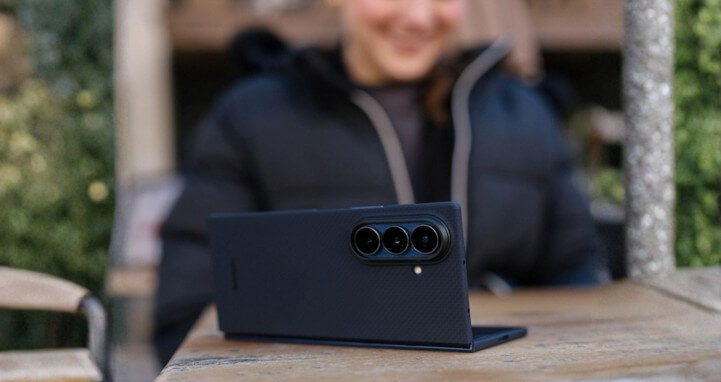
There is no one method that suits all owners of the Galaxy Z Fold 8 Ultra. By understanding the differences between these various levels of protection, you should be able to identify which type is most appropriate according to the way you actually use your phone.
Why Foldables Require a Different Kind of Protection
A conventional phone has a single, solid body, whereas a foldable phone consists of two sections that open and close repeatedly. Some cases have a separate front and rear portion, and in some instances the hinge is left exposed, while in others it is covered to provide extra protection.
The greater the amount of coverage, the more material there will be. With a foldable phone, this can cause the device to become thicker and heavier when it is closed. Hinge protection can provide an extra degree of security, whereas an exposed hinge design helps the case to be thinner.
There is therefore a fundamental trade-off since greater physical coverage usually results in increased bulk, whereas a thinner design retains more of the phone’s original size and shape. It is for this reason that foldable protection should be considered in terms of different levels rather than assuming that one case style is suitable for all.
Galaxy Z Fold 8 Ultra Case and Level of Protection: Which Type Is For You?
Foldable cases can generally be divided into three main categories: the ultra-thin or minimalist type, the rugged or heavy-duty type, and the functional or multi-purpose type.
Each one addresses a separate problem.
Ultra-Thin / Minimalist
Best for: Those who are careful and for individuals who opt for caseless usage yet still want some ordinary level of protection.
Ultra-thin cases focus on preserving the Fold 8 Ultra’s original feel. They typically use lightweight materials such as thin plastic or aramid fiber rather than thick, impact-absorbing layers.
The ThinBorne Galaxy Z Fold 8 Ultra case is an appropriate example since it is made with 600D aramid fiber and is only 0.04 inches (0.90 mm) thick, weighing about 0.75 ounces; the front and back sides are covered, but the hinge remains exposed in order to maintain a slim appearance.
The visible hinge is a result of the compromise; this category of device is mainly intended to cope with scratches, scuffs, and minor bumps rather than with severe drops. For users who are careful, it may be worthwhile to accept less protection if the main concern is keeping the phone as close as possible to its original size and feel.
ThinBorne also shows that minimalist cases can still be functional. Built-in magnets support compatible removable stands and grips, and it includes a tempered glass screen protector.
Pros:
- Adds very little thickness and weight
- Preserves more of the phone’s original feel
- Suitable for everyday protection
- Magnetic designs can support removable accessories
Cons:
- Less drop protection than rugged cases
- Hinge may remain exposed
- Not ideal for frequent phone droppers
Rugged / Heavy-Duty
Best for: Those who frequently drop their phones, individuals working in tough environments, and users who desire greater security due to the increased protection.
Rugged cases place a greater emphasis on providing coverage and protecting against impact than on keeping the Fold 8 Ultra close to its original dimensions; they typically make use of materials including TPU, polycarbonate, or a combination of rigid and shock-absorbing layers.
Some of these designs include reinforced corners, raised edges, and hinge protection. The additional coverage can give people greater reassurance about the vulnerable areas, particularly when it comes to a foldable device that is frequently switched between open and closed positions.
The disadvantage is that the device becomes larger. Adding more protective material can make a foldable phone that is already large appear even thicker and heavier. This may alter the phone’s original feel and make it less pleasant to hold for certain users. In some cases, the extra bulk can cause the device to be more difficult to grasp securely, depending on the size of the hand and the case design.
For people who are at a higher risk of dropping the device, it may be better to take on the extra weight rather than leaving more of the device exposed.
Pros:
- Higher level of drop and impact protection
- More extensive physical coverage
- Often includes reinforced corners and raised edges
- Some designs protect the hinge
Cons:
- Adds noticeable thickness and weight
- Changes more of the phone’s original feel
- Can make a large foldable less comfortable to hold
- May be unnecessary for careful users who only need everyday protection
Functional / Multi-Purpose
Best for: People who would like to have features such as a kickstand, a grip, or a stylus holder incorporated directly into their case.
By adding functional cases, the foldable protection becomes more than just a case and turns into an accessory. On the Fold 8 Ultra, for example, the built-in kickstand is very useful as it allows the larger inner screen to be displayed upright when watching videos, making calls, or using the phone without having to hold it. Additionally, the grips make it simpler to hold the phone when it is unfolded.
These cases often use TPU, polycarbonate, or a combination of materials to support the additional hardware. The advantage is convenience: frequently used features stay attached to the phone instead of being carried separately.
The phone can end up being thicker and heavier as a result of this convenience, and the built-in components may also influence its feel in the hand, the way it sits on a surface, and the way it opens and closes.
For those users who want functionality but don’t wish to carry all the components with them, there is a slim case with built-in magnets which can be used with removable stands and grips whenever required. On the other hand, users who find it inconvenient to attach and detach accessories might prefer to have these features permanently incorporated.
Pros:
- Adds practical features to the case
- Built-in stands work well with a foldable’s larger display
- No need to carry frequently used accessories separately
- Different designs can suit specific uses
Cons:
- Added features can increase thickness and weight
- May affect handling or folding comfort
- Some built-in features may go unused
- Less flexible than removable magnetic accessories
Verdict: Is There a Single Right Case?
There is no one Galaxy Z Fold 8 Ultra case that is suitable for every individual. You should first consider how much protection the phone actually needs before determining how much extra bulk and features you are prepared to carry.
The case category that is best suited to you is the one whose trade-offs correspond with the way you actually use your foldable.
Popular on OTW Right Now!


About The Author

Gagan Bhangu
Founder of otechworld.com and managing editor. He is a tech geek, web-developer, and blogger. He holds a master's degree in computer applications and making money online since 2015.