
How Rebuilding a Worn Cylinder Quietly Saves Tonnes of Raw Material
A hydraulic cylinder doesn’t look like much on a workbench. A steel barrel, a polished rod, a few seals and end caps. But inside that humble assembly sits a surprising amount of material, energy and craftsmanship. When it wears out, the choice between replacing and rebuilding carries more weight than most people realise.
What Goes Into a New Cylinder
The process of making a cylinder from scratch begins well before work starts on the factory floor. The iron ore has to be mined, processed and then converted into steel. This steel is then formed into tubes and bars, is machined to very close tolerances and is usually coated with chrome in order to resist wear and corrosion.
Each stage consumes energy, water and transport; when you multiply that by the thousands of cylinders used in construction, farming, mining and shipping the total figure becomes large very quickly.
The Rebuild Alternative
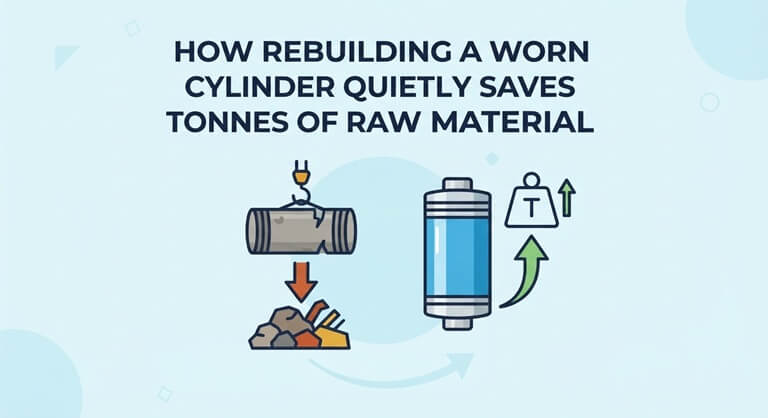
In most instances there is no need at all to replace a worn cylinder since the main failures are due to seals, these being small and cheap items. The rods can generally be straightened, polished or have their chrome reapplyed and the barrels can be honed in order to obtain a smooth internal surface.
A rebuilt cylinder, after having been reassembled and tested, can work just as well as when it was new, the heavy steel parts—which make up the majority of the material—continuing to be in service.
Small Parts, Big Savings
Consider the large cylinder used on an excavator or a crane; the barrel and rod together can weigh hundreds of kilograms. When reconstructing it, only the seals and maybe a few small fittings need to be replaced, the rest being reused.
Across a fleet of machines, over years of operation, that approach keeps a serious amount of steel out of scrapyards and reduces demand for fresh manufacturing. Few people notice this quiet saving, but it’s real.
Tough Environments, Same Principle
Marine settings put cylinders under particular stress. Salt spray, humidity and constant movement accelerate corrosion. Vessels use marine hydraulics for steering, winches, cranes and hatch covers, and all of these components eventually need attention.
It is just as reasonable to rebuild equipment at sea as it is on land since specialists are able to remove the corroded parts, renew the surfaces and install seals suitable for wet conditions, thus extending the working life of the equipment which would otherwise have to be replaced.
Saving More Than Material
Rebuilding can also help to save time. When it comes to obtaining a new cylinder—especially one that is needed for older or more specialised machines—the process can involve long delays. However, an experienced workshop is usually able to get the rebuilt equipment back into action more quickly.
A Craft Worth Valuing
Rebuilding a cylinder well requires a certain level of skill. The technicians have to measure the extent of wear accurately, select the correct seals and reassemble all the parts to exact specifications. The work is considered to have been done properly only after it has been tested under pressure before the unit is put back into service.
Although it doesn’t often appear in the headlines, it shows a careful way of handling resources and it makes sense to keep good steel in use.
The Bigger Picture
When industries are searching for practical methods of reducing waste, reuse stands out as a possibility that has already been proven; it doesn’t call for new technology or large-scale investment, it only requires a decision to repair rather than replace.
Each time a cylinder is rebuilt it represents a small achievement, and when you add up all these achievements they amount to something important.
Popular on OTW Right Now!




About The Author

Gagan Bhangu
Founder of otechworld.com and managing editor. He is a tech geek, web-developer, and blogger. He holds a master's degree in computer applications and making money online since 2015.