
How Digital Payment Technology Is Changing the Way Drivers Buy Car Insurance
Buying car insurance used to involve a fairly predictable process. A driver contacted an agent, discussed coverage options, received a quote, and made an initial payment before the policy became active.
That process still exists, but technology has changed what many consumers expect from it.
Online quoting systems, automated payment platforms, electronic signatures, mobile apps, and instant policy documents have made it possible to move from comparing coverage to activating a policy without visiting an insurance office. As a result, drivers are paying more attention not only to the total premium, but also to how and when that premium has to be paid.
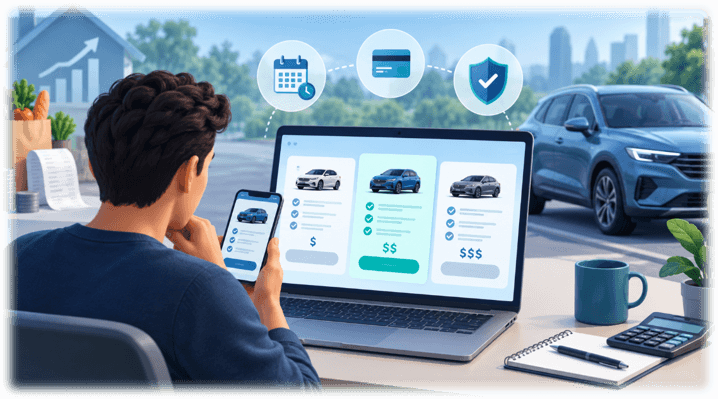
For households managing several recurring expenses at once, the payment structure can influence the buying decision almost as much as the advertised monthly price.
Insurance Shopping Is Starting to Look More Like Digital Checkout
Consumers have become accustomed to seeing prices, payment options, and order details before completing an online purchase.
Insurance is more complicated than buying a normal consumer product, but parts of the purchasing process are beginning to feel similar.
A driver can often enter information about a vehicle, location, driving history, and desired coverage online. Depending on the insurer or comparison platform, the user may then be able to review estimated premiums, select a payment schedule, submit an initial payment, electronically sign documents, and receive proof of coverage digitally.
The technology behind that process removes much of the friction that once required telephone calls or office visits.
It also makes the initial cost of starting a policy much more visible.
Instead of focusing only on an annual premium, consumers may see several numbers at once:
- the amount required to activate coverage;
- the recurring monthly payment;
- the policy term;
- installment or processing fees;
- deductibles;
- optional coverage costs.
That visibility can change how drivers compare policies.
The Upfront Payment Has Become Part of the Comparison
Two policies with similar monthly premiums can require very different amounts when coverage begins.
For someone with substantial savings, that difference may not matter much. For a household managing rent, utilities, loan payments, repairs, and other expenses, however, the amount due today can influence which policy is financially practical.
For households managing several recurring expenses at once, the amount required to start a policy can matter almost as much as the monthly premium. This helps explain the growing interest in flexible car insurance plans, particularly among drivers trying to balance coverage requirements with short-term cash-flow constraints.
A smaller initial payment can reduce the immediate cash required to put coverage in place. But it is important to distinguish payment flexibility from a lower overall insurance cost.
Paying less at the beginning does not necessarily mean paying less over the entire policy term.
A payment plan may simply distribute the premium differently.
Technology Makes Flexible Billing Easier to Manage
Flexible payment structures are not entirely new. What has changed is how easily insurers and customers can manage them.
Modern billing systems can automate recurring payments, send reminders, process electronic transactions, provide digital receipts, and update account information without requiring manual processing for every payment.
For consumers, this can make monthly billing more convenient.
For insurers, automation can reduce some of the administrative work involved in maintaining installment plans.
Mobile access also matters. A policyholder may be able to check an upcoming payment, change a payment method, view billing history, or download insurance documents from a phone.
The result is a purchasing process in which payment management becomes part of the digital customer experience rather than something handled separately after the policy is issued.
A Low Initial Payment Does Not Tell You the Total Cost
Digital interfaces can make purchasing easier, but convenience can also cause consumers to focus too heavily on the number displayed most prominently.
A low amount due today may look attractive while obscuring other costs.
Before choosing a policy based on its initial payment, drivers should review the complete payment schedule.
For example, suppose one policy requires $150 to start and another requires $50. The second option is not automatically cheaper.
The remaining payments, installment fees, policy length, deductibles, and coverage limits could make the second policy more expensive over time.
The important calculation is not simply:
How much do I have to pay today?
It is also:
How much will this policy cost over the entire term, and what protection am I receiving for that amount?
Digital insurance tools are most useful when they make both numbers easy to understand.
Comparison Technology Still Requires Comparable Coverage
Online comparison can save time, but price comparisons are meaningful only when the underlying policies are reasonably similar.
A liability-only policy should not be compared directly with a policy containing higher liability limits plus collision and comprehensive coverage without accounting for those differences.
Drivers should check several variables before deciding that one quote is cheaper:
- liability limits;
- collision and comprehensive coverage;
- deductibles;
- uninsured or underinsured motorist coverage where applicable;
- roadside assistance;
- rental reimbursement;
- payment fees;
- policy length;
- amount due at activation.
Even relatively small differences can affect the final premium.
This is one area where better user-interface design could improve insurance shopping. Instead of presenting only a headline price, digital platforms can help users understand why two quotes differ.
Automated Payments Add Convenience — and Responsibility
Automatic billing has become another important part of digital insurance.
Autopay can reduce the risk of forgetting a payment, but consumers should still monitor their accounts. A failed card, expired payment method, insufficient balance, or changed billing information can potentially create problems if the issue is not corrected.
Drivers should understand an insurer’s rules regarding failed payments, cancellation notices, reinstatement, and grace periods.
This matters because a lapse in auto insurance can create consequences beyond temporarily losing coverage. Depending on the jurisdiction and circumstances, a lapse can create registration issues or affect future insurance costs.
Technology can automate the payment, but it cannot eliminate the responsibility of making sure the policy remains active.
Mobile Access Is Changing Expectations After the Sale Too
The digital transformation does not end when a policy is purchased.
Many insurers now provide online or mobile access to functions that previously required contacting an agent.
Depending on the company, policyholders may be able to:
- access digital insurance cards;
- review policy documents;
- update payment information;
- report a claim;
- upload photographs or documents;
- check claim information;
- contact support;
- make certain policy changes.
Not every insurer provides the same tools, and availability varies by state and policy.
Still, consumers increasingly expect insurance to be manageable through the same types of digital interfaces they use for banking, shopping, and other financial services.
Payment Flexibility Should Be a Feature, Not a Distraction
The ability to start a policy with a smaller initial payment can be useful, particularly for drivers trying to manage short-term cash flow.
But payment flexibility should not replace an evaluation of the policy itself.
The cheapest amount due today can become expensive if the policy carries high recurring payments, substantial fees, inadequate limits, or coverage that does not match the driver’s needs.
A better approach is to treat the initial payment as one variable in a broader comparison.
Consumers should examine both affordability and protection:
What does it cost to start the policy?
What will it cost over the full term?
What happens if a claim occurs?
Digital tools make answering those questions faster than before, but the quality of the decision still depends on understanding the numbers behind the interface.
The Next Phase of Digital Insurance Shopping
Insurance technology will likely continue reducing friction between receiving a quote and activating coverage.
Better comparison interfaces, automated billing, digital identity verification, mobile policy management, and data-driven pricing are already changing different parts of the customer journey.
For drivers, the most useful innovation may not be a dramatic new insurance product. It may simply be greater transparency.
A good digital insurance experience should make it easy to see what is due today, what will be due later, what coverage is included, and what trade-offs come with changing any of those variables.
Technology can make buying insurance faster.
The more important question is whether it can also make the decision easier to understand.
Popular on OTW Right Now!




About The Author

Gagan Bhangu
Founder of otechworld.com and managing editor. He is a tech geek, web-developer, and blogger. He holds a master's degree in computer applications and making money online since 2015.