
Universal Testing Machine for UK Laboratories: Improving Testing Accuracy, Efficiency, and Reporting
Testing of materials plays an integral role in the creation of a product. Reliable data is required in laboratories for comparison of materials, evaluation of product performance, and finding its weaknesses before production. A universal testing machine in the UK can support these requirements by allowing laboratories to perform different mechanical tests on one testing platform. This can help testing teams maintain consistent processes while managing different material-testing needs.
Accuracy is just one factor in efficient laboratory testing. Calibration, fixtures, testing methods, and data collection processes also determine the quality of results. Modern testing tools can improve testing efficiency by making it easier to collect, analyze, and report data. This combination of qualities can enable UK laboratories to utilize their testing time more effectively.
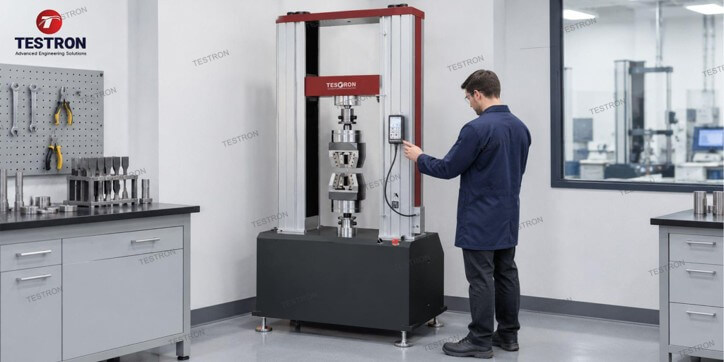
What Is a Universal Testing Machine?
A universal testing machine (UTM) is a device that applies force to a material specimen in a controlled manner and analyzes the reaction of the specimen to this applied force. It can perform tests in tension, compression, bending, shear, peeling, and tearing modes, depending on the particular design.
A tensile tester is widely used for the determination of the material behaviour under tensile stress. The information provided includes strength, elongation, and other properties. A tensile testing equipment setup may support research, quality control, and product development.
The equipment can be adapted for different materials and test methods, making it a practical universal testing machine in the UK for varied laboratory work. This flexibility is one reason a universal tensile testing machine can be useful when a laboratory handles several types of testing.
How Does a UTM Improve Testing Accuracy?
Testing accuracy depends on how consistently a machine performs each test. A well-controlled testing process helps laboratories obtain results that can be compared with greater confidence.
Consistent Test Conditions
Testing accuracy starts with consistency. The specimen must be positioned correctly, the force applied in a controlled way, and the response recorded reliably.
A suitable tensile test apparatus helps reduce variation between tests. This is important when a laboratory is comparing different materials, production batches, or product designs.
The same principle applies to other forms of tensile test equipment. A suitable tensile test apparatus should also make specimen handling consistent.
Calibration Supports Reliable Measurements
Universal testing machine checks whether the measurement system is performing as expected against an appropriate reference.
A laboratory should schedule universal testing machine calibration according to its quality procedures.
The UK measurement system places strong emphasis on traceability and reliable measurement. The UK National Measurement System provides laboratories and industry with measurement science and standards designed to deliver traceable and increasingly accurate measurements.
Choosing the Right UTM Configuration
Not every laboratory needs the same type of machine. The right choice depends on materials, test methods, expected loads, space, and usage.
| UTM type | Typical laboratory use |
| Bench-top single column | Lower-force routine testing and research |
| Bench-top double column | General-purpose material testing |
| Servo-electronic | Flexible testing across many materials |
| Electro-hydraulic | Higher-force testing applications |
| Response time | <300 ms |
| Oxygen stability time | <30 seconds |
Servo hydraulic universal testing machines can be considered when a laboratory works with applications that require higher testing forces. Smaller bench-top systems may be more practical where space and lower-force testing are priorities.
There are single-column, double-column, servo-electronic, and electro-hydraulic configurations. It presents these as options that can be matched to different laboratory requirements.
Assess the complete testing programme rather than capacity alone.
Improving Efficiency Through One Testing Platform
Improving efficiency involves more than completing tests quickly. A suitable testing platform can help laboratories manage different testing requirements with a more organised workflow. This need is reflected in the wider market. As per the reports of Mobility Foresights, the UK Material Testing Equipment Market is projected to grow from USD 3.1 billion in 2025 to USD 5.7 billion by 2031, at a CAGR of 10.3%, as laboratories increasingly invest in equipment that can support multiple test types and standards on one platform.
Supporting Multiple Tests
One major advantage of a universal/tensile testing machine is its ability to support different testing requirements. A second benefit is simpler workflow management.
A laboratory may need tensile testing for one material and compression or bending testing for another. One platform can reduce the need for several machines, simplify training, and use laboratory space better.
The test range depends on configuration and fixtures. Laboratories should identify current and expected test methods before purchasing.
Making Daily Testing Easier
Efficiency is also affected by how easy the system is to operate. Digital controls can help operators set conditions, monitor tests, collect results, and complete calculations.
This can make a universal testing machine UTM easier to use.
The UK-focused data on UTMs describes software-supported data acquisition, real-time test curves, automatic result calculations, data storage, and report generation. These functions can shorten the path from testing to usable results.
From Test Data to Clear Reports
The value of any test is determined by its ability to be interpreted and applied. Modern tensile testing equipment can record and format such data into an organized system.
A clear report can include the test method, specimen information, results, and relevant test details. This makes results easier to review later.
Good reporting also supports traceability. UK government guidance on measurement data emphasises the importance of being able to trace records to the measurement device and its status.
What to Consider Before Buying a UTM?
The need for evaluation of current and future testing requirements before the purchase of a UTM is crucial. The proper unit must match the testing needs of the lab.
Look Beyond the Initial Price
The universal testing machine price is important, but it should not be the only buying factor. A lower purchase cost may not provide the best value if the equipment does not support the laboratory’s required tests or future needs.
Consider:
- Required test methods
- Material types
- Expected testing loads
- Available fixtures and grips
- Measurement and calibration requirements
- Software and reporting functions
- Ease of operation
- Laboratory space
- Maintenance and technical support
- Training and after-sales service
UK pricing guidance also highlights installation, warranty, customisation, and long-term laboratory requirements when evaluating a UTM purchase.
A second factor is future flexibility. A universal tensile testing machine may fit laboratories needing one platform for several tasks.
The Role of the Manufacturer and Support
Choosing a universal testing machine manufacturer should involve more than comparing equipment prices. Support after installation can affect how effectively the machine is used over its working life.
Ask whether the supplier can provide:
- Installation assistance
- Operator training
- Calibration support
- Maintenance guidance
- Technical troubleshooting
- Spare parts
- Software assistance
- Documentation
A supplier that understands laboratory workflows can help users select suitable fixtures. This is where a reliable universal testing machine manufacturer can add value.
When comparing the machine price options, consider the complete ownership picture rather than the purchase figure alone.
Making a Better Testing Investment
A universal testing machine can bring accuracy, flexibility, and better data management into a laboratory’s testing workflow. The right setup can help teams perform different tests, maintain consistent procedures, and produce clearer results. For laboratories considering a new system, they must focus on practical requirements. The machine should match materials, test methods, workload, reporting needs, and quality procedures.
Testron Group offers universal testing machine solutions for laboratories looking to strengthen their material-testing workflows. If you are evaluating a system for UK laboratory use, discuss your testing requirements with their team to identify a suitable configuration and support package.
Popular on OTW Right Now!
-
 How Sales Performance Data Helps Teams Actually Improve Their Results
-
 How Modern Salons are Boosting Profits with Intelligent Management Tools
-
 The Silicon Soul: How Social Work is Re-engineering the Tech-Driven Society
-
 11 Things Enterprise Buyers Should Check Beyond Star Ratings When Comparing DME Platforms




About The Author

Gagan Bhangu
Founder of otechworld.com and managing editor. He is a tech geek, web-developer, and blogger. He holds a master's degree in computer applications and making money online since 2015.