
Why the Same Messaging App Has Different Names Around the World
Global apps travel more easily than language does. A company may keep one official brand name worldwide, while users in different markets invent translations, abbreviations, phonetic spellings, or nicknames that are easier to remember and search for.
That sounds harmless until someone is trying to find a client, follow a setup guide, or work out whether two search results refer to the same product. Local vocabulary can make software easier to discover, but it can also blur the line between a familiar nickname, a third-party guide, and an official source.
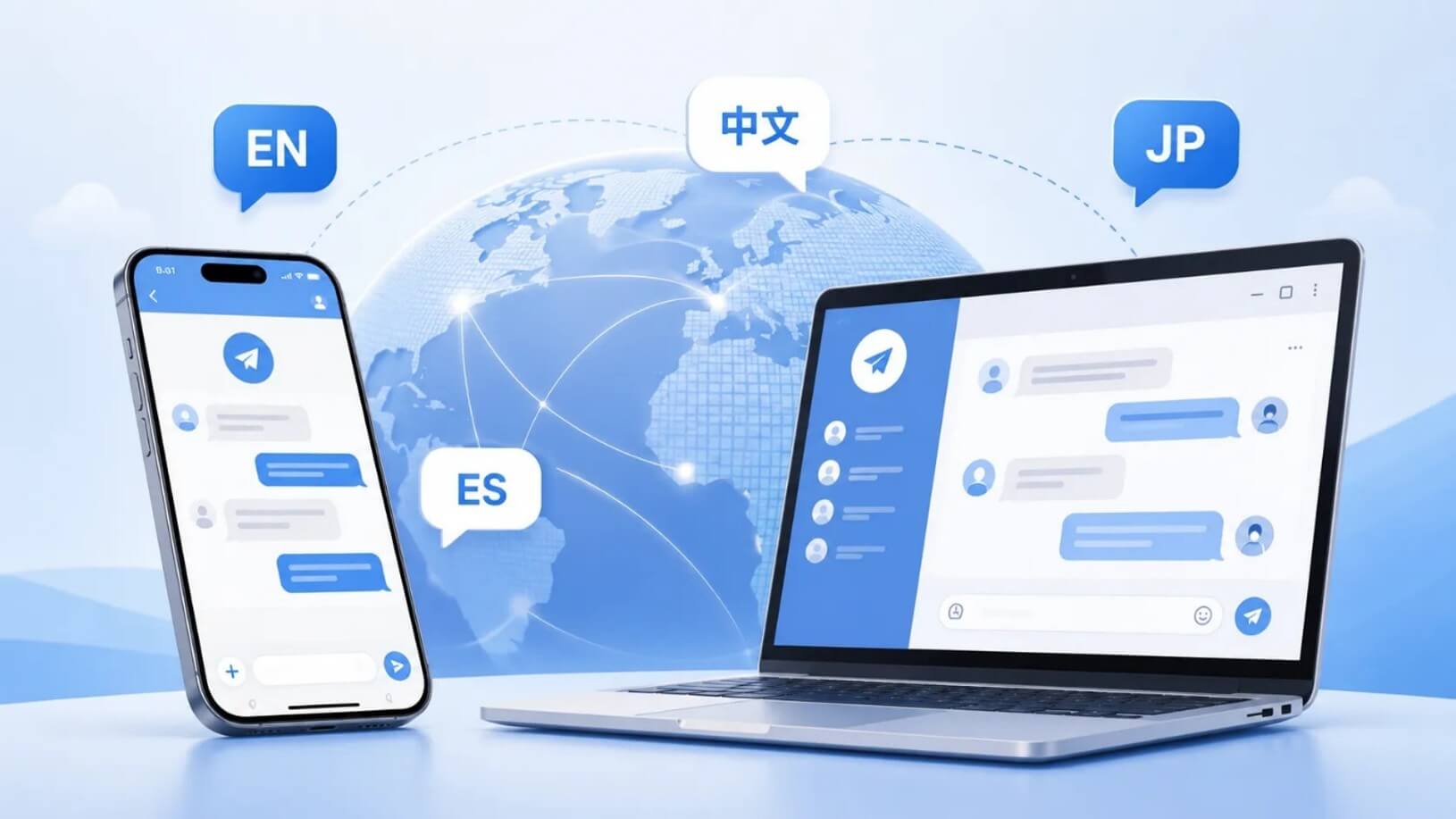
Telegram is a good example. The service keeps its international name, yet Chinese-speaking communities also use terms such as “电报” and “纸飞机.” Neither term creates a separate app; they are part of the vocabulary that has grown around the same messaging platform.
How local names take hold
Local nicknames are not usually given for one sole reason. In some instances, the translation of a brand name is evident. Sometimes, users shorten it as typing the original name might be cumbersome. Other times, an icon or visual association is more familiar than the word under it.
When you see a term in group chats, tutorials, or videos, or in the forums, the term becomes reinforced in your search. Publishers then “borrow” the wording as it matches the words people actually type. The nickname comes in handy as search terms before long, though it does not qualify as a product name.
Why “电报” appears in Chinese searches
“电报” is historically associated with telegram or telegraph communication, so the connection with the English word “Telegram” is easy to see. In everyday Chinese-language discussions, the term often functions as shorthand for the messaging service rather than the name of another platform.
That matters when a new user starts with a localized search term and then finds Windows, Android, iPhone, macOS, Linux, or web references under the international brand. A resource such as an 电报下载指南 can help explain the terminology and basic client choices, but it should still be treated as guidance rather than as proof of who publishes the software.
The distinction is simple but useful: a page can explain a product without being the product developer’s own distribution channel.
The “paper plane” nickname is visual, not technical
Another popular nickname is “纸飞机,” which comes from the paper-plane image in Telegram’s logo. It is forgettable, easy to describe, and it is widely known, so much so that some people use the nickname instead of the brand name.
Nicknames for visuals can be particularly confusing if there is a similar word used for another app or design element or third-party page. The meaning of the keyword is more important than the constant.
That is why searches may also surface phrases such as 纸飞机客户端下载, particularly when someone is comparing mobile and desktop client options. In that context, “纸飞机” is community shorthand for Telegram; it should not be read as the name of a separate official application.

A nickname does not tell you what kind of page you found.
Real confusion is not in the nickname. It’s all about the combination of pages that can rank for the same keyword. A search can result in a developer’s website, an application store listing, a troubleshooting article, a community tutorial, a software directory, and/or a third-party download page. These pages can serve different purposes and still discuss the same app.
The best way to prevent errors is to understand the page’s role before taking action. A tutorial is not necessitated by hosting software. A directory may be used to describe versions without the developer’s involvement. It is possible to have good practical advice as part of an unofficial discussion thread.
The service and the client are not the same thing.
The other is that a messaging service is not the same as the client. This is the experience provided by Telegram, which users can access via any of the platforms currently available, including Android, iOS, Windows, macOS, Linux, and the web.
Menus and feature placement may vary from one site to another. Updates may be sent to desktop and mobile devices at different times, and a screenshot on one operating system might not look exactly the same on another. These differences do not represent three distinct services; rather, Telegram, 电报, and 纸飞机 are three different names for the same product.
A practical way to research an unfamiliar local name
When you only know a regional nickname, a short verification routine is usually enough. It does not require specialist knowledge; it simply separates identity, source, and compatibility.
- Work out the international brand name by comparing several reliable references instead of trusting the first result.
- Check the developer or publisher shown in recognized app stores or established product documentation.
- Make sure the instructions match your operating system. Windows, Android, iOS, and macOS setup steps are not interchangeable.
- Separate explanatory guides from software sources, and be cautious with repackaged installers or modified clients.
- After setup, review privacy and account settings such as two-step verification, active sessions, phone-number visibility, group invitations, and automatic downloads.
Localization goes beyond the product name.
Names are just the tip of the iceberg when it comes to localization. The language of an interface, whether it’s the terminology for privacy settings, the date format, slang, or the text of a tutorial, can make or break an app’s ability to be easy to learn.
As a result, two users can use the same service and have completely different onboarding experiences. An experienced user may know what a setting is from its location or icon, whereas a new user might be confused if the translated label is different from an English tutorial. That’s where good regional guidance fits in, not as an official version of the software, but as guidance.
Search terms are clues, not proof.
It’s good practice to always consider the meaning of each word, from the etymological root to the brand name, any translation or nickname, or an abbreviation. Search engines mirror the language people use, not the surety that every search result is run by the software developer.
Before downloading anything or following instructions on any account, check the product, the page’s purpose, the platform the instructions refer to, and whether the software source can be verified elsewhere. It’s a strategy that works for Telegram and nearly any other app that’s acquired regional names on the journey.
Conclusion
Global software often develops a local vocabulary as it spreads. In Telegram’s case, “电报” and “纸飞机” are useful examples of how translation and visual shorthand can become part of everyday search behavior.
While those terms make local information easier to find, they work best when people keep one thing in mind: a familiar name indicates what people might be talking about, but not who runs the page they are looking at. Find the product that is underlying, confirm the source, and then select the client for your device.
Popular on OTW Right Now!
-
 What Should Efficient Enterprise Software Training Look Like During Digital Transformation?
-
 Is Brazil a Safe Destination for Your Digital Life? Let’s Talk Online Security Before You Pack Your Flip-Flops
-
The Precise Work of Being Visible When Everything Is Changing
-
 How to Turn a PDF Into an Interactive Online Catalog




About The Author

Gagan Bhangu
Founder of otechworld.com and managing editor. He is a tech geek, web-developer, and blogger. He holds a master's degree in computer applications and making money online since 2015.