
Choosing Medical Providers After Injury for Straightforward Care and Complex Recovery
How can a family make sound medical decisions after a car accident when the full extent of an injury is not yet clear? Early symptoms, preliminary treatment plans, and initial insurance estimates often provide only part of the picture. For injured people in Charlotte, choosing medical providers after injury can influence both physical recovery and the information used to evaluate a claim.
A provider’s role extends beyond diagnosing pain. Medical records may explain how an injury affects sleep, mobility, work, household responsibilities, and the ability to care for children. When questions arise about how those records may affect compensation, speaking with a Charlotte car accident attorney can help a family understand the connection between treatment and the claims process.
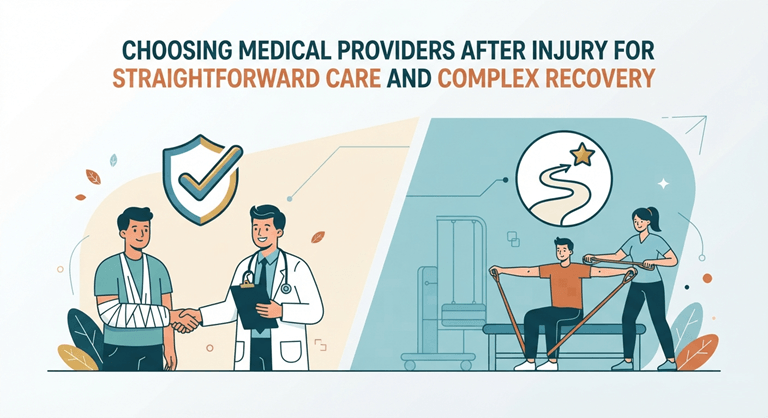
Attorney Corey Rosensteel often reminds injured people that “recovery does not always follow a straight line.” Someone who initially expects to improve within a few weeks may later require imaging, physical therapy, injections, or evaluation by another provider. That developing medical picture is one reason an early claim estimate may change substantially over time.
How Medical Care Shapes the Value of an Injury Claim
Losses for a claim are usually assessed by the losses that can be documented and not just the severity of the collision. Important as medical bills are, they’re a component of the calculation. Insurers may also consider lost income, future treatment requirements, physical restrictions, pain, and the impact that the injury has had on daily life.
The provider you choose can influence how those losses are explained. A primary care physician can treat any overall symptoms and arrange for referrals. A bone, joint, or soft tissue injury can be assessed by an orthopedic physician. Sometimes, the neurologist is involved when a person has headaches, numbness, dizziness, or changes in the brain. The medical record as a whole is a compilation of information from each provider.
Why Initial Estimates May Be Incomplete
Initial estimates are sometimes made with few facts. The medical record from the ER will not include information about chronic problems or damage to the neck, back, or shoulders. As swelling increases or upon return to normal activity, some symptoms become more apparent.
Imagine a Charlotte parent who is the rear-end crash victim in a driver’s home. Parent seeks urgent care for stiffness in their neck and is advised to rest. The pain is interfering with sleep and getting the young child up, and it’s interfering with work tasks several days later. Follow-up exam results in imaging and a couple of weeks of physical therapy. The value of the claim might be very different when these developments are recorded.
A preliminary figure may change because of:
- Additional diagnoses discovered through follow-up examinations or imaging.
- Longer treatment periods than originally expected.
- Referrals to providers who address particular injuries or symptoms.
- Time missed from work or reduced earning capacity.
- Ongoing limitations affecting family responsibilities and daily routines.
It is not necessarily an indication of fault if an individual embellished an injury, however. It is important for them to demonstrate that there was a time lag and a need to carefully assess the medical condition before the full impact could be appreciated.
Continuity of Care and Medical Documentation
Regular care can help providers determine if symptoms are improving, stable, or worsening. It also provides a timeline that links the accident to the reported symptoms and the diagnosis and recommended treatment. That timeline might matter in determining whether treatment was warranted, or if an injury was caused by the collision, as far as the insurance company is concerned.
Long treatment breaks can leave questions unanswered. Perhaps there is a good reason, for example, not finding a provider or transportation issues, caretaking responsibilities, or concerns about the cost. Rather than giving up on care, patients should bring these obstacles to the attention of their provider(s) if at all possible.
Medical records will be most helpful when they are accurate and reflect the patient’s experience. One person needs to tell them where the pain is, how often the symptoms occur, which activities are more difficult to do, and if treatment is helping. Clear information enables informed decision-making by the provider and a better record of the recovery.
When Additional Medical Opinions May Be Appropriate
If symptoms continue, a diagnosis is not confirmed, or if treatment is not helping, a second opinion or referral may be appropriate. Getting a second opinion will not mean that the first provider was “incorrect. Certain injuries and wounds need contributions from various medical fields.
Patients should not choose treatment just because they think it will get them more compensation. Medical care should continue to be of a legitimate nature. Insurers and legal professionals may question the necessity, frequency, and duration of treatment.
Before accepting a settlement, an injured person may benefit from understanding whether treatment is complete and whether additional care is reasonably expected. A car crash law firm in Charlotte can review how current records, outstanding bills, and future medical recommendations fit into the broader claim.
How the Claim Process Develops Alongside Recovery
Claims can start during injury treatment. The insurance company may ask to see records, statements, wage data, etc., or documentation of other losses. When bills are rolling in, it may almost seem like it is offering relief to accept an offer from the settlement company early – but it could be too early.
After a settlement is agreed, usually the claim is resolved. If the symptoms become more severe or are recommended for additional treatment by a provider later, this may not result in additional compensation. The key to assessing an offer is to consider the timing.
A thorough review could involve the cost of current medical care, the cost of future medical care, lost wages, diminished work capacity, and loss of quality of life due to the injury. Not all claims are the same, and no single formula resolves them all. All this can affect the outcome, including the strength of the documentation, prior medical conditions, and available insurance coverage and evidence of fault.
Keeping Ongoing Questions in Perspective
Medical and legal issues may unfold at different paces. A doctor may require some time to determine a person’s recovery, and an insurance company may request that information, or may make an initial offer. Keeping medical records, bills, work notes, referrals, and insurance letters will help you understand what has occurred and what remains unresolved.
Families need to be aware of practical issues as well. The expenses associated with getting to appointments, childcare services while receiving treatment, lack of income, and assistance with household chores can be a real financial stress. It’s more likely these effects will be recorded when they happen than reconstructed months later.
Finding a Clear Path Forward
The attorneys at Rosensteel Fleishman Law Firm are able to provide general answers to questions about the medical documentation and future care that may impact a Charlotte car accident claim. You can contact the firm at 1-704-714-1450 for a complimentary case consultation, so an injured individual can discuss their situation without assuming their recovery or claim will be the same.
Unless medical needs require otherwise, a gradual selection of providers, sensible treatment, and delaying permanent decisions about compensation are the best options. Keeping precise records and thoughtful follow-up can help ensure a person’s recovery as well as the family’s financial interests.
Popular on OTW Right Now!




About The Author

Gagan Bhangu
Founder of otechworld.com and managing editor. He is a tech geek, web-developer, and blogger. He holds a master's degree in computer applications and making money online since 2015.