
VPN vs Proxy: Who Wins in the Battle for Internet Freedom and Efficiency
In 2024, over 200 million users worldwide rely on tools to bypass restrictions and protect their online privacy. Among the most popular solutions are VPNs and proxy servers. Platforms like Private Residential Proxies demonstrate that in many scenarios, proxy servers outperform VPNs in speed, flexibility, and cost-effectiveness, offering reliable access to blocked content and the ability to switch IP addresses in real-time.
How VPNs and Proxies Work
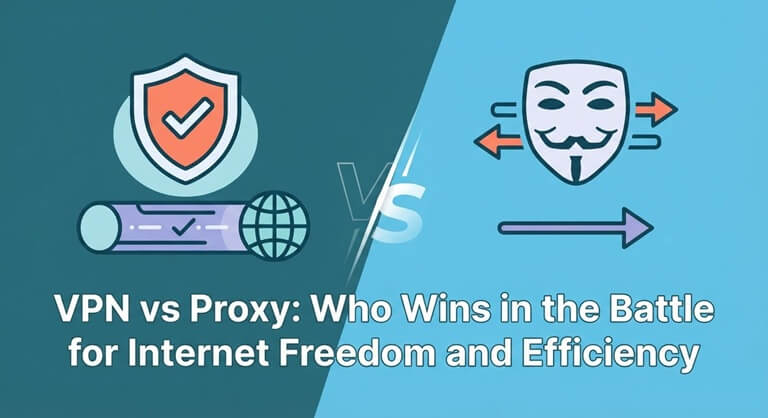
A VPN (Virtual Private Network) encrypts data and sends it all through the tunnel between your device and the VPN server. This guarantees high security and anonymity. A proxy server, however, is a gateway at the application level, typically on a browser. Does not encrypt data, but lets users alter IP addresses, circumvent restrictions, and view region-specific information.
Why Proxy Servers Often Outperform VPNs
- Speed and Lightweight Operation
Unlike VPNs, which encrypt all traffic, proxy servers do not encrypt traffic and therefore do not slow down connections. It plays a vital role in web scraping, data parsing, and making multiple requests to a server simultaneously. - Flexibility and Scalability
Having several IP addresses at once with proxies is incredibly useful for testing applications, managing social media accounts, or bypassing geographic restrictions. Private Residential Proxies has a wide selection of IPs designed for such work. - Cost-Effectiveness
Most proxy servers are either free or low-cost. Free VPNs may have speed caps, log your data, and even use your device for their own purposes. - Ease of Use
Proxies are easy to configure on PC and smartphone, and they can be set up in the form of IP: port. Proxies are a good option for non-confidential work. - Proven Track Record
In the early 2000s, proxy servers were popular to hide the identity of the user behind the IP address on many sites, such as those that banned people from accessing chat rooms. Users could change their proxies and keep on using online communities. Today, similar high-level proxy alternatives exist, such as Private Residential Proxies, that can be used for business needs and bulk operations.
When VPNs Make Sense
VPNs are a better choice when privacy is critical: Sending sensitive information, using public Wi-Fi, or maintaining complete privacy. For regular work or entertainment, however, proxies are usually much quicker, easier, and less expensive.
The Bottom Line
Despite their downfalls, proxy servers are still a valuable tool for businesses and advanced users. They are often cheaper, faster, and more flexible than VPNs, and can be used for jobs that might be best suited for VPNs. IT companies are 4 times more likely to rely on proxies for their regular activities, such as data scraping or running multiple accounts, than VPNs, according to research conducted by Cybersecurity Ventures.
Proxy servers are faster and more convenient than VPNs, especially for daily use or handling high volumes of data, and they can also be a valuable asset to digital infrastructure. Platforms such as Private Residential Proxies make this approach even more reliable and accessible, reinforcing why proxies remain the preferred choice for professional users worldwide.
Popular on OTW Right Now!


About The Author

Gagan Bhangu
Founder of otechworld.com and managing editor. He is a tech geek, web-developer, and blogger. He holds a master's degree in computer applications and making money online since 2015.