
How to Make AI-Generated Text Sound Human (And Bypass Content Detectors)
Let’s be real for a second—everyone is using generative AI right now. Whether you are a freelance writer trying to scale up your daily blog output, a student looking for a quick way to outline a daunting term paper, or a small business owner drafting weekly marketing emails, these tools are absolute lifesavers. They can cure a bad case of writer’s block in a matter of seconds. But there is a massive elephant in the room that we need to talk about. Search engines, clients, and educators have caught on, and they are cracking down on synthetic text faster than ever before. Before you finally hit the publish or submit button on your latest project, you have probably nervously copied and pasted your draft into a free ai checker just to see if it lights up like a Christmas tree. And if you are just copying straight from the prompt window, it almost certainly fails the test.
So, why does this happen even when the text looks perfectly grammatically correct? It comes down to how these language models actually work behind the scenes. They aren’t “writing” with emotion, personal experience, or opinion; they are simply predicting the next most logical word based on statistical math. This results in sentences that are mathematically perfect but completely lack personality. An algorithm doesn’t know how to use internet slang, it doesn’t naturally vary its sentence lengths, and it has an incredibly annoying obsession with transition words like “furthermore,” “crucial,” or the dreaded “delve.” It reads exactly like a sterile, boring textbook.
If you want your readers to actually enjoy your content—and if you want to avoid getting your website flagged by Google’s latest spam updates—you have to actively humanize ai output. You simply cannot just use the raw text and call it a finished product. You have to get in there and break up those massive, blocky paragraphs. You need to swap out those robotic transitions, throw in a personal anecdote, and rewrite a few sentences so they sound like something you would actually say out loud to a friend in a coffee shop. You have to put the messy, organic human element back into the perfectly calculated math to make the content actually readable.

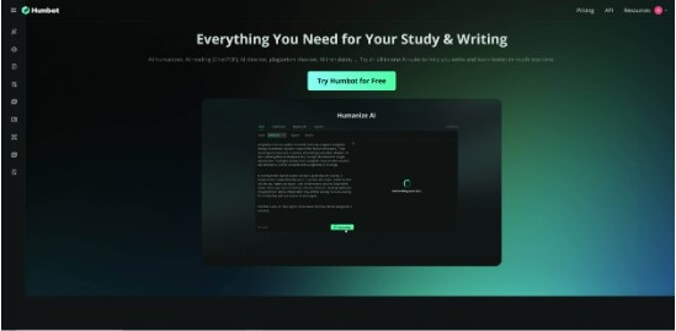
However, doing all of this manual editing can take almost as much time as just writing the article from scratch. If you are juggling multiple freelance deadlines or trying to keep up with a demanding daily content schedule, spending two hours tweaking vocabulary just isn’t practical. This is exactly why many digital writers are updating their daily workflows with specialized text refiners to speed up the mundane parts of the editing process. Running your initial, stiff drafts through a dedicated platform like humbot.ai can instantly help scramble that predictable robotic syntax and restore a conversational, natural flow to your text. It acts as a necessary bridge between machine efficiency and human readability. Ultimately, AI is a fantastic brainstorming buddy, but making sure your final draft actually has a heartbeat is the only way to survive on today’s internet.
Popular on OTW Right Now!
-
 The Future of Digital Innovation Through AI Development Marketplaces
-
 How AI-Generated 3D Assets Are Changing Visual Content for Social Media
-
 The AI Homework Shortcut Is Costing Students the Exam, Not Just the Assignment
-
 From Flat Images to Functional Prototypes: How AI Is Reshaping Rapid 3D Modeling


About The Author

Gagan Bhangu
Founder of otechworld.com and managing editor. He is a tech geek, web-developer, and blogger. He holds a master's degree in computer applications and making money online since 2015.