
The Evolution of Digital Media: How Alternative News Platforms Are Changing Information Consumption
The way we consume news and information has transformed dramatically over the past two decades. What once relied on morning newspapers, evening broadcasts, and a handful of trusted TV anchors has exploded into a 24/7 digital ecosystem. Today, audiences actively seek out diverse perspectives beyond traditional gatekeepers. This shift has given rise to a vibrant landscape of alternative news platforms that are reshaping journalism, audience engagement, and public discourse.
Digital media has been developing at an unprecedented pace ever since the birth of blogging to the complex and advanced independent media networks of today. Let’s take a look at how these came about and why other platforms are now so significant in the way millions stay informed.
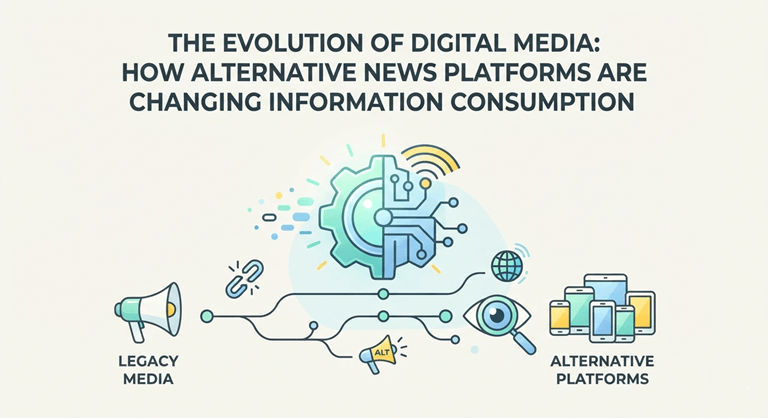
From Traditional Gatekeepers to Digital Disruption
During the pre-internet era there were a handful of outlets who were the ones to have the information. There was a centralisation of editorial decision-making, and stories tended to be predictable, as a result of the institutional priorities.
This model was opened up by the advent of the internet. Blogs, forums, and early social media helped enable the voice of everyday people to be heard globally. Citizen journalists could outdo legacy journalism with their ability to break stories. The Arab Spring, Occupy Wall Street, and so many other campaigns showed how information can be shared in a decentralized manner.
With the rise of social media algorithms, however, new issues arose: echo chambers, misinformation and loss of trust in the “traditional” media. Other research indicates that the trust in traditional media has reached its lowest point in many countries in history. The trust was lost, and independent and alternative news outlets flourished.
Why Audiences Are Shifting to Alternative Sources
The news media itself is not being rejected; it is simply that people are seeking news from sources that are more in tune with their values, provide more timely information, or provide more context. This is the reason for the migration:
- Desire for Unfiltered Perspectives: Some readers believe that the mass media sometimes have an institutionalized bias that fails to provide information. Raw footage, on-the-ground reporting, and primary documents are often offered by alternative platforms.
- Niche Expertise and Specialization: Independent outlets may focus on particular areas of the field, like technology, geopolitics, finance, or culture, which may be more in-depth than a generalist network.
- Community and Interaction: Readers can write comments, discuss, and even share tips directly. This is a 2-way street, which traditional one-way broadcasts do not do as effectively to build loyalty.
- Speed and Agility: Independent sites can publish without layers of approval, responding to breaking events in real time.
- Transparency: The funding structure and editorial position of many alternatives are transparent, while legacy media are opaque.
This evolution reflects broader changes in digital journalism trends, where audiences demand authenticity and accountability.
The Rise of Independent Digital Journalism Platforms
Traditional outlets are enhanced by technology-driven independent platforms that, in some cases, are more successful than traditional outlets. The resources, such as live streaming, data visualization, podcasting, and AI-powered research, can help smaller teams deliver quality content in a timely manner.
One standout example in this space is amgnews.net, a platform exemplifying how modern independent digital journalism operates by focusing on timely, alternative viewpoints and direct engagement with readers.
These networks often function differently from corporate media. They tend to prioritize:
- Investigative reporting on undercovered stories
- Multimedia formats tailored for mobile consumption
- Strong emphasis on reader privacy and data independence
- Cross-platform distribution strategies
For deeper insight into how these networks function and the reasons behind the shift toward them, exploring resources like the amg-news-com-alternative-media page offers valuable context on the operational models and philosophies driving this segment of digital media.
Emerging Players Shaping the Landscape
The alternative media ecosystem continues expanding with innovative entrants. magtimes.net stands out as another emerging example of digital magazines and media portals that blend in-depth analysis with modern design, contributing to the rich tapestry of options available to today’s information consumers.
These platforms aren’t just replicating old models in new clothing — they’re experimenting with sustainable business approaches, including:
- Reader-supported subscriptions
- Transparent sponsorships
- Merchandise and community events
- Decentralized technologies like blockchain for content verification
Challenges Facing Alternative Media
Despite their growth, independent platforms face significant hurdles:
- Monetization pressures: It is challenging to create a profitable business without undermining editorial integrity.
- Distribution battles: Algorithm changes and platform policies can dramatically impact reach.
- Credibility building: With skepticism in the air, it is vital to fact-check and be transparent with others to gain and maintain their trust.
- Legal and regulatory risks: Businesses may find themselves facing intricate legal and regulatory environments when working outside conventional business models.
But there are plenty of outlets out there that are able to overcome those barriers and build a loyal community with a sense of independence.
The Impact on Information Consumption Habits
This evolution has fundamentally altered how people interact with news:
- Fragmented attention: Users often follow multiple sources rather than relying on one.
- Cross-verification: Consumers make informed judgements after reading across platforms.
- Personalized feeds: Algorithms and individual preferences result in very specific information diets.
- Multimedia dominance: More and more, video, podcasts, and interactive content are substituting for long-form text.
- Global-local balance: Platforms bring local stories to a global audience, with cultural sensitivity.
This leads to a more lively and sometimes more abundant information landscape that pays attention to critical thinking and media literacy.
The Future of Digital Media: Opportunities and Outlook
Looking ahead, several trends will likely define the next chapter of digital media:
- AI and automation: Content creation, fact-checking, and personalization tools will be even more advanced, but a human touch will be needed for quality and ethics.
- Decentralized platforms: The Web3 technologies could provide potentially more censorship-resistant platforms and better models for content ownership.
- Immersive experiences: The virtual and augmented reality technologies could revolutionize the ways in which stories are told and experienced.
- Sustainability focus: Eco-friendly hosting, ethical use of AI, and multiple revenue sources will be more significant.
- Collaborative journalism: Joint ventures between independent news outlets may be able to have even more impact without losing their voice.
It looks like the future will be more pluralistic, with the ability of more media to compete, side by side with traditional ones, and often against them. What ultimately comes out of this competition—better standards, more divergent perspectives, and novel storytelling formats- is good for audiences.
We are all consumers and are therefore all responsible for this ecosystem. We support quality independent journalism, are critical and sceptical, and we take part in a thoughtful way, so digital media stays a force for informed citizenship, not division.
Digital media is not simply a technological development; it’s a process of taking control of understanding and making sense of our world. From in-depth investigations to timely updates, and from community-based discussion to something entirely different, today there’s no shortage of choice. The success of the platforms will be those that are fast, accurate, truthful, and respectful to their audiences.
In the exciting times of alternative media growth, it may be the most important attribute to have, to be curious and to see all sides.
Popular on OTW Right Now!



About The Author

Gagan Bhangu
Founder of otechworld.com and managing editor. He is a tech geek, web-developer, and blogger. He holds a master's degree in computer applications and making money online since 2015.