
How Branded Mobile Units Are Reshaping Experiential Marketing Campaigns
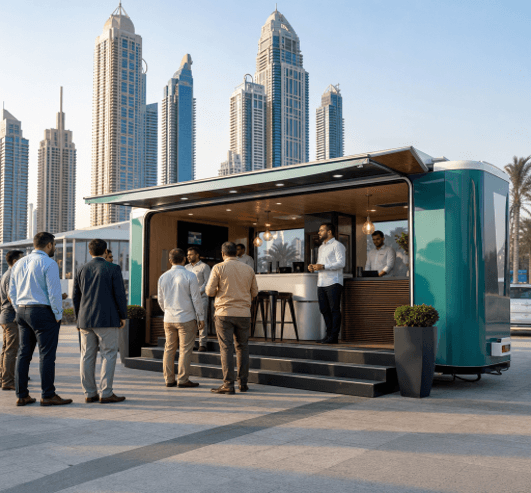
Experiential marketing has evolved far beyond pop-up tents and branded booths. Today, the most impactful campaigns are built around mobile infrastructure — purpose-built units that travel directly to audiences, create immersive environments, and leave lasting impressions. As brands compete for attention in increasingly crowded spaces, the physical vehicle of engagement has become just as important as the message it carries. Mobile marketing units, when designed and deployed strategically, can transform a brand’s presence from passive to participatory.
The Rise of Mobile Brand Experiences
Consumer behavior has shifted dramatically over the past decade. People no longer respond to static advertising the way they once did. They want to touch, feel, and interact with brands in real time. This shift has pushed marketers to think beyond digital channels and invest in physical experiences that create genuine emotional connections. Mobile marketing units — whether they appear at music festivals, sporting events, retail parking lots, or corporate campuses — offer brands a controlled environment to tell their story on their own terms.
One of the strengths of these units is that they are extremely versatile. One properly designed mobile unit can be a product demonstration space, a sampling station, a media studio, or can be completely branded as a retail environment. It is the build quality and purpose of design that’s key. Investing in quality mobile infrastructure always results in better performance than resorting to lower-quality temporary solutions.
Engineering Meets Brand Strategy
There’s one thing about mobile marketing that is often overlooked: engineering a functional, attractive unit. A mobile unit’s structure needs to be robust enough to be moved numerous times, survive an ever-changing climate, and endure extensive foot traffic while still upholding a high-quality brand image. This is where manufacturing precision and creative design are key factors.
Today, there are ways to create extremely customised units featuring complex geometry, technology systems integrated into the unit, and modular configuration. In some cases, advanced manufacturing processes are important to brands that need complex interior structures or specific exterior panels. Understanding how 5-axis CNC machining can reduce production cycles for complex components is increasingly relevant for fabricators working on tight campaign timelines. Faster, more precise manufacturing means brands can get their mobile units to market without sacrificing quality or detail.
Customization as a Competitive Advantage
Memorable experiences aren’t likely to occur when the solution is generic. The brands that make the most noise about their mobile campaigns are the ones that have units dedicated to their brand, their target customers, and their campaign goals. Customizing a trailer isn’t merely a matter of putting a logo on the side. It involves everything from the interior design and the materials used to the lighting design and how the technology is implemented, as well as how the unit unfolds to passersby.
This sort of information calls for a fabrication partner that has extensive experience in structural engineering and brand-forward design. The end result is a mobile unit that is a 3D representation of a brand, one that conveys quality, creativity, and purpose before a single word of communication.
Craftsmen Industries: Building Experiences That Move
When brands are serious about mobile marketing, they turn to specialists who understand both the physical demands of the road and the creative demands of brand storytelling. Custom trailers and containers from Craftsmen Industries represent the standard for experiential marketing infrastructure. Craftsmen Industries has authored decades of mobile unit innovations and designs for some of the world’s most iconic brands, and they have the structural know-how, thoughtfully creative design skill, and savvy understanding of what it takes to make a mobile campaign successful at scale. They are designed to travel thousands of miles and dozens of activations with no loss to the ‘brand experience’ they are designed to deliver.
From Concept to Activation
Choosing and developing a mobile marketing unit is a lot more than brands think. It kicks off with a comprehensive discovery phase that involves defining campaign goals, audience segments, and requirements. From then on, design teams start to conceive ideas that incorporate effective function while appealing to the eye. Structural engineers then turn those ideas into viable specifications, considering how weight is distributed, road compliance, utility connections, and how the interior will work.
Quality control is the most important aspect of the whole process of fabrication. Each weld, each panel, each electrical connection should be to the standards needed for a unit that will represent a brand in public-facing situations. The end product is not only a vehicle, but it’s also a brand asset that needs to trip without a misstep in any pressure scenario.
Managing a Fleet of Mobile Marketing Units
Fleet management becomes an important factor to consider when brands are running multiple campaigns or mobile campaigns that are ongoing. There is a need for both maintenance scheduling and driver logistics across all units to ensure they are all on the road at the same time, with compliance paperwork and the same brand across all activations. The visual image of the fleet is an identity that evolves as the campaigns do, and this needs to be carefully planned to be implemented without interrupting already in-session campaigns.
Brands managing larger mobile fleets can benefit significantly from structured rebranding and maintenance strategies. Following proven tips for successful fleet rebranding ensures that visual updates are rolled out consistently, cost-effectively, and without unnecessary downtime. A well-maintained, consistently branded fleet communicates professionalism and attention to detail — qualities that reinforce the brand experience at every touchpoint.
Longevity and Return on Investment
One of the most striking benefits of investing in high-quality mobile marketing infrastructure is that they offer a long-term ROI. The dollars spent on mobile don’t disappear once a campaign is over; they are there for multiple campaigns, multiple years, and multiple brand activations. The initial investment in quality fabrication will yield dividends in maintenance cost reductions, longer service life, and the option to rejuvenate the unit’s appearance by not having to rebuild.
Brands that have a long-term outlook on mobile marketing, rather than treating it as a “short-term solution,” keep getting more returns from their mobile marketing efforts. They create equity in a platform that is a physical artefact which can evolve with their brand, change with new campaigns,s and still be structurally sound and reliable in the field.
Conclusion: The Future of Brand Engagement Is Mobile
As the brand expectations continue to go up, and the digital channels become more crowded, brands with high-quality mobile experiences will have a clear competitive edge. The creativity of taking a complete brand experience right to the audience – on the street, at the stadium, or in a corporate plaza – is something that can’t be achieved by a digital campaign. With careful construction and strategic implementation, mobile marketing units can be one of the most potent marketing tools at today’s marketers’ disposal. Quality infrastructure investment is not only a production choice, but it’s also a brand choice and one that will yield any number of returns.
Popular on OTW Right Now!




About The Author

Gagan Bhangu
Founder of otechworld.com and managing editor. He is a tech geek, web-developer, and blogger. He holds a master's degree in computer applications and making money online since 2015.